

Your Car Is Ready
for the Road.
Is It Ready for the Track?
Everything you need to know before your first HPDE event — or your next one. Car preparation, safety requirements, what to bring, what most people get wrong, and when a track day car needs to become a track car.
A Track Day Is the Best Day You'll Have in a Car.
Until You Show Up Unprepared.
High Performance Driver Education events are where serious enthusiasts learn what their cars and their driving are actually capable of. The track removes the variables of public roads — no oncoming traffic, no blind intersections, no speed limits, consistent pavement. The feedback is immediate and unambiguous. A driver who has spent years on public roads thinking they know how to drive will learn more about vehicle dynamics in a single track day session than in a decade of commuting.
But the track also removes the forgiving pace of public roads. At highway speeds and beyond, a mechanical problem that would be a minor inconvenience on the street — a soft brake pedal, a tire near the end of its life, a loose wheel bearing — becomes a safety event that can harm the driver, other participants, and the car.
Track day prep is not about making the car go faster. It's about making sure the car can handle being driven at the limit without failing in a way that creates danger. This guide covers everything from a first HPDE on a stock car through building a dedicated track vehicle. We're telling you exactly what to check, what to do yourself, and when the work needs to be done by a shop that understands the environment.
An HPDE (High Performance Driver Education) event is an organized performance driving day at a race track, typically run by a car club or sanctioning body (NASA, PCA, SCCA). Participants are grouped by experience level — typically four run groups from absolute beginner to experienced — and each group gets several 20–30 minute on-track sessions throughout the day.
Beginner and novice groups run with an instructor in the passenger seat — an experienced driver who talks you through braking points, turn-in points, and car control feedback in real time. Passing is typically not permitted in novice groups. Intermediate and advanced groups run independently with passing permitted in designated zones.
Most organizations run tech inspection before the event — a walk-through checking basic safety items. The inspection is a baseline check that catches obvious problems. This guide goes significantly further than what tech inspection requires.
What You Need
Before the Gates Open.
Baseline requirements for most HPDE events run by NASA, PCA, SCCA, and similar organizations. Specific events may vary — confirm with the organizing body before arriving.
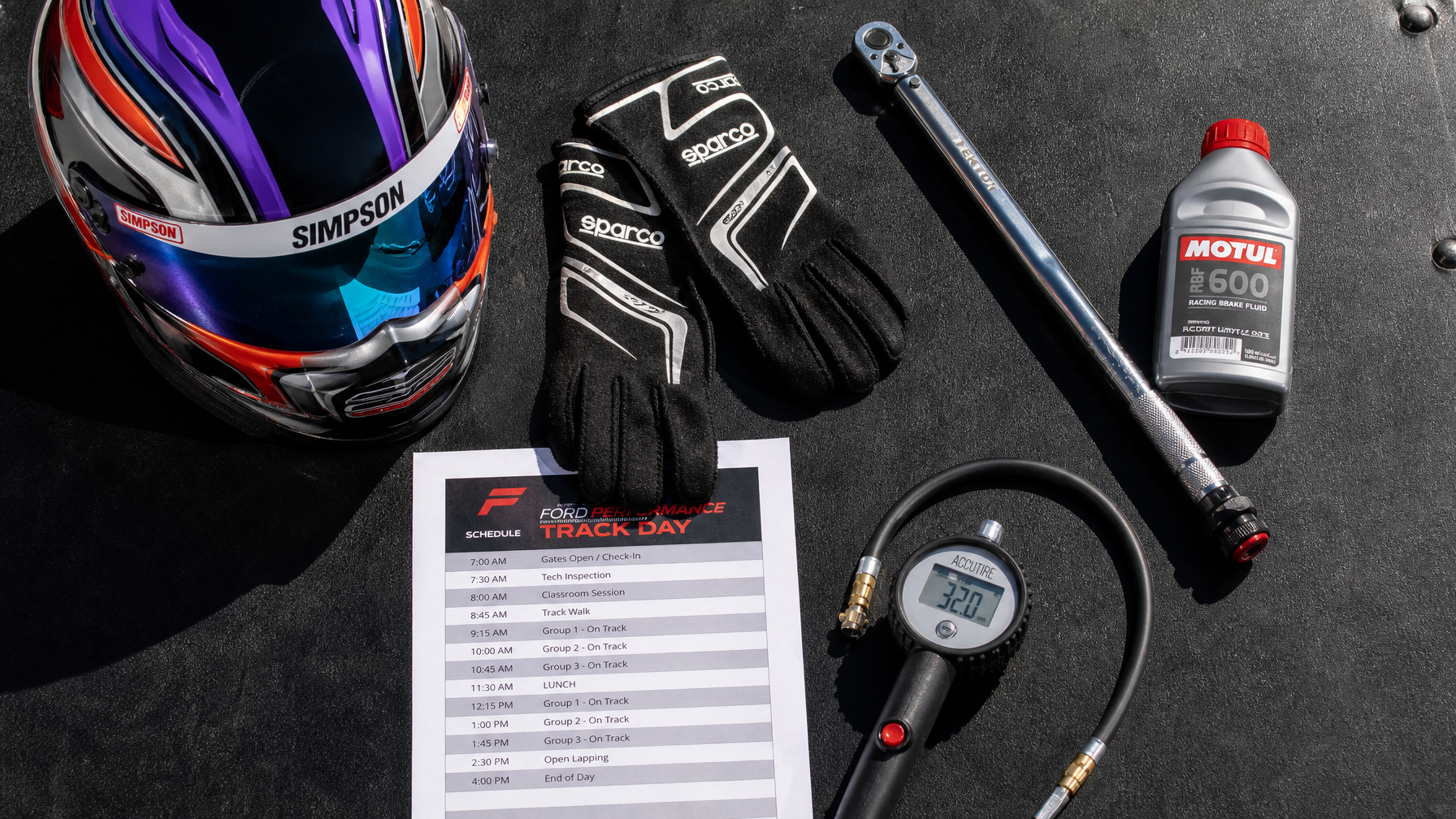
Required at virtually every HPDE event. Most organizations require SA-rated (special application, full-face) or M-rated (motorcycle) helmet from a current or recent rating period. Current accepted Snell ratings are SA2020 and SA2015 — SA2010 helmets are being phased out by many organizations as of 2025. If you're buying your first helmet, buy SA-rated, buy a current date code, and size it properly — a helmet that moves on your head is not protecting you correctly. An M-rated motorcycle helmet is typically accepted at lower run group levels but may not be accepted for advanced groups or time trial events.
Most HPDE events at novice and intermediate level do not require a fire suit — long sleeves and long pants are typically sufficient. However, any event where a roll cage or roll bar is present, or where the car has been significantly modified for competition, should be treated as one where fire-resistant clothing is appropriate even if not mandated. Nomex driving suits, gloves, and shoes are the correct answer for any car running forced induction, any car with a competition safety system, and any car being pushed to the limit. The incremental cost of Nomex gear relative to the cost of a track day is small.
Remove all loose items from the interior — floor mats, sunglasses, water bottles, anything that can become a projectile under braking. Remove wheel center caps if not positively retained. Verify lug nuts are torqued to spec. Confirm battery is securely fastened (hold-downs in place). Verify no active fluid leaks. Tape over any cracked glass or lighting. Most organizations also require the car's interior to be clean of non-factory items — the tech inspector is looking for anything that might become airborne under braking or cornering loads at track speeds.
This is the one that catches the most first-timers. Factory brake fluid absorbs moisture from the atmosphere over time. Moisture lowers the fluid's boiling point. On track, sustained hard braking builds heat that street driving never generates. If the fluid boils, it creates gas bubbles in the brake lines — gas compresses where fluid doesn't, and the result is a pedal that goes to the floor. This is not a gradual warning. It is a sudden and complete loss of braking confidence. Fresh high-temp brake fluid (Motul RBF600, ATE Type 200, or equivalent) before every track day is not optional. It is the single most important prep item on this list.
What to Check,
What to Change,
What to Not Ignore.
This checklist goes well beyond what tech inspection will catch. Work through it in order — the safety-critical items are at the top. Click any section to expand the full detail.
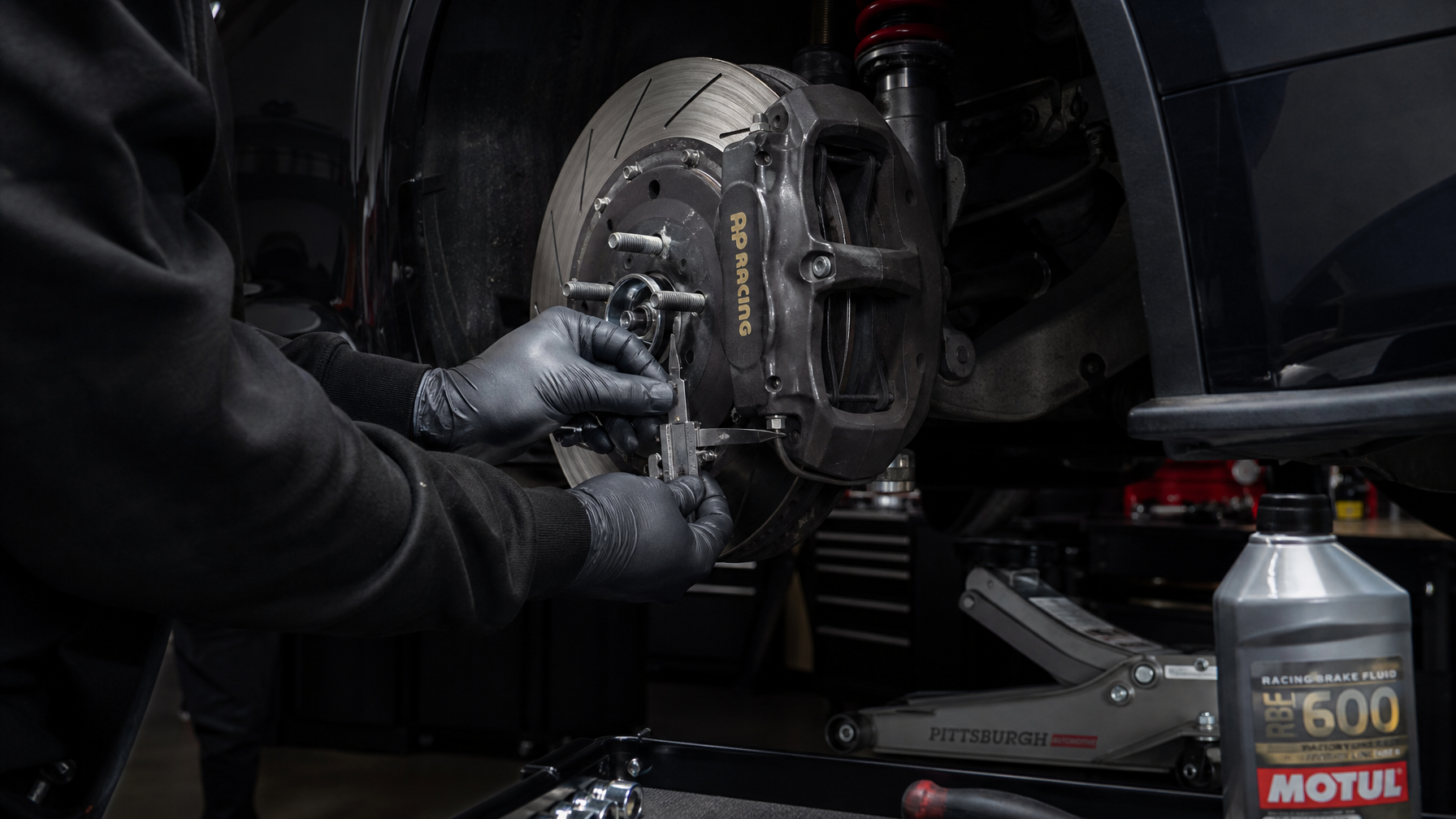
Flush and replace with fresh high-temp fluid every track day — Motul RBF600, ATE Type 200, or equivalent. DOT 3/4 factory fluid absorbs moisture and boils under sustained track braking. Boiled fluid = no brakes. 30 minutes and $30 in materials. Do it every time without exception.
Inspect remaining pad thickness. Factory pads fade at track temperatures — street pads lose friction dramatically at heat levels track driving generates. Performance street pads (Hawk HPS, EBC Yellowstuff) are acceptable for occasional track days. Dedicated track pads (Hawk DTC series, Pagid, Carbotech) are the correct answer for regular use. Replace if worn more than 50% regardless of formulation.
Inspect for heat cracks radiating from vane holes, deep scoring, and minimum thickness (check manufacturer spec, cast into the rotor hat). A rotor at minimum thickness will warp or crack under track heat. Heat-cracked rotors are done — no resurfacing fixes a heat crack.
Factory rubber brake hoses expand under pressure and pressure, producing a spongier pedal that worsens with age. Stainless steel braided lines eliminate hose expansion entirely and produce a firmer, more consistent pedal feel at all temperatures. A meaningful upgrade for any car seeing regular track use.
Check that all caliper slide pins move freely and are lubricated. A seized pin causes one pad to drag constantly, building uneven heat in one corner and producing uneven wear. Extremely common on cars that have lived in Houston's humidity and are never addressed in routine service.
A first-time track day driver often goes through more pad material than expected as they become more confident across sessions and start braking later and harder. Having a spare set in the paddock avoids ending the day early or driving home on dangerously thin pads.
Minimum 3/32" tread for track use. Below this, the tire's ability to handle heat and resist chunking deteriorates. Measure at multiple points across the tread width — if wear is uneven, there is an alignment or pressure issue that needs addressing before the event.
Tires over six years from the date code (molded into the sidewall as a four-digit week/year format) should be replaced for track use regardless of tread remaining. The rubber compound hardens with age, reducing grip and increasing the risk of sudden structural failure at track temperatures and sustained lateral loads.
Set cold pressure to manufacturer spec or slightly above. Monitor hot pressure (checked immediately after a session) and adjust cold pressure to achieve desired hot — typically 36–40 psi hot for most performance tires. Running too low cold means correct pressure for only part of the session as tires heat up.
Inspect sidewalls for cracking, bulging, or damage. Any tire with a sidewall crack — regardless of depth — is done. Sidewall integrity is what prevents a blowout under lateral load. A cracked sidewall at track speeds and temperatures is not a risk worth carrying under any circumstances.
Fresh oil before the event. Track driving is significantly harder on engine oil — higher sustained RPM, higher temperatures, more frequent near-redline operation. If you're more than a few thousand miles from your next change, do it before the track day. Full synthetic, rated for the engine's specifications. Forced induction or high-power builds should consult with a performance shop about viscosity selection for track conditions.
Verify coolant level and condition. Check for leaks at hoses, radiator, and overflow tank. If coolant is more than two years old, change it. Critical: most tracks prohibit ethylene glycol-based coolant (traditional antifreeze) on track because it makes surfaces dangerously slippery when spilled. Many organizations require waterless coolant (Evans) or distilled water with a corrosion inhibitor. Check the specific event's rules.
Inspect level and condition. At track temperatures with sustained parking-lot-speed steering loads during low-speed sections, a power steering system operating at reduced capacity can fail mid-session.
Often overlooked in standard prep. Track driving works the differential harder than street driving — particularly at corner exit with significant throttle application. If these fluids haven't been changed recently, this is a good time. Many performance cars have factory-fill differential fluid that was never intended to be left in indefinitely.
Watch the temperature gauge during every session. Coolant temperature that climbs and stays elevated is a sign the cooling system is at its limit. Drive in — not hoping it stabilizes. An engine that overheats on track may have warped a head gasket or cooked the coolant. The cost of a short session is a fraction of the cost of an overheated engine.
Torque to spec immediately before the event and verify after the first session with a torque wrench — not a hand check or a kick. Wheels can settle slightly after installation, and track vibration can allow them to work loose before they seat fully. This is why most organizations require lug nut torque verification between sessions. Bring a torque wrench to every track day.
Grab each wheel at the top and bottom and try to rock it — any movement indicates a worn wheel bearing. A marginal wheel bearing on the street may fail entirely at track speeds under sustained cornering loads. Find this in your garage, not mid-corner.
Inspect for play. Acceptable looseness at low street loads becomes handling unpredictability at track loads. Worn tie rods produce vague, inconsistent steering response that makes it impossible to develop accurate reference points for braking and turn-in.
Check for torn or collapsed bushings, particularly on strut mounts. A failed strut mount produces a sudden change in steering geometry on hard bumps — not something you want to discover mid-corner at track pace. Collapsed control arm bushings produce inconsistent camber behavior through corners.
Floor mats, sunglasses, water bottles, coins, loose change, anything in door pockets, charging cables, phone mounts — everything that isn't bolted to the car comes out. Under hard braking, a water bottle becomes a projectile. Under lateral load, loose items in the footwell can jam under the brake pedal.
Four Levels of
Track Car Preparation.
Not everyone needs a full cage and a set of Öhlins. But everyone needs more than stock when they start using the track regularly. Here's how the upgrade path looks at each level of commitment.
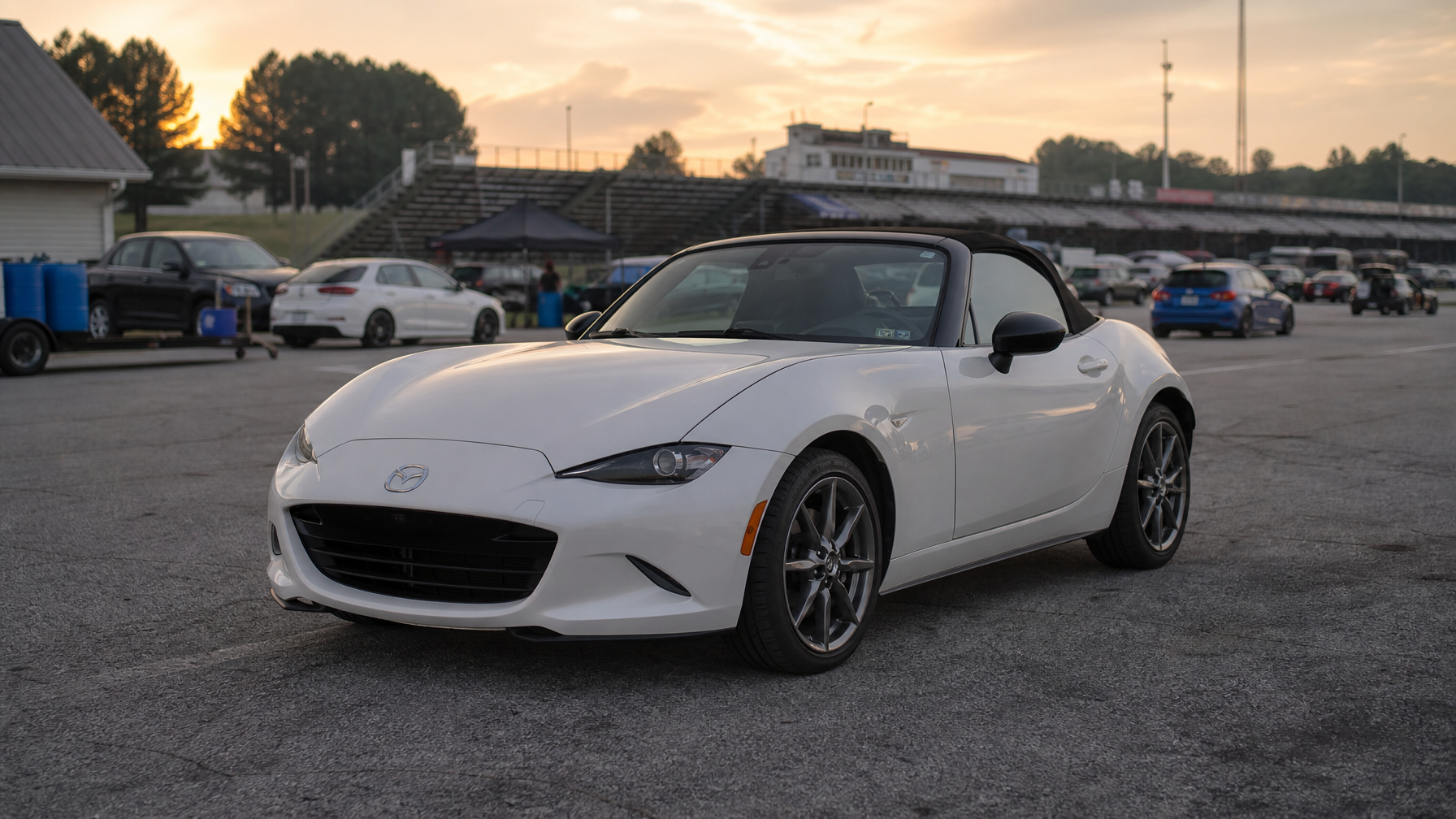
Execute the car prep checklist completely. Fresh brake fluid is the single non-negotiable item — everything else is inspection and verification. A completely stock car in good mechanical condition is appropriate for a first event in a novice group with an instructor. The car's limits are not the constraint at this stage — your familiarity with the environment is. You will not be driving at the limit of the car in a novice group.
First Upgrade to ConsiderPerformance brake pads and fresh brake fluid. The stock pads will likely fade in the second or third session as you become more confident and start braking later. Budget this before the first event, not after you've experienced brake fade.
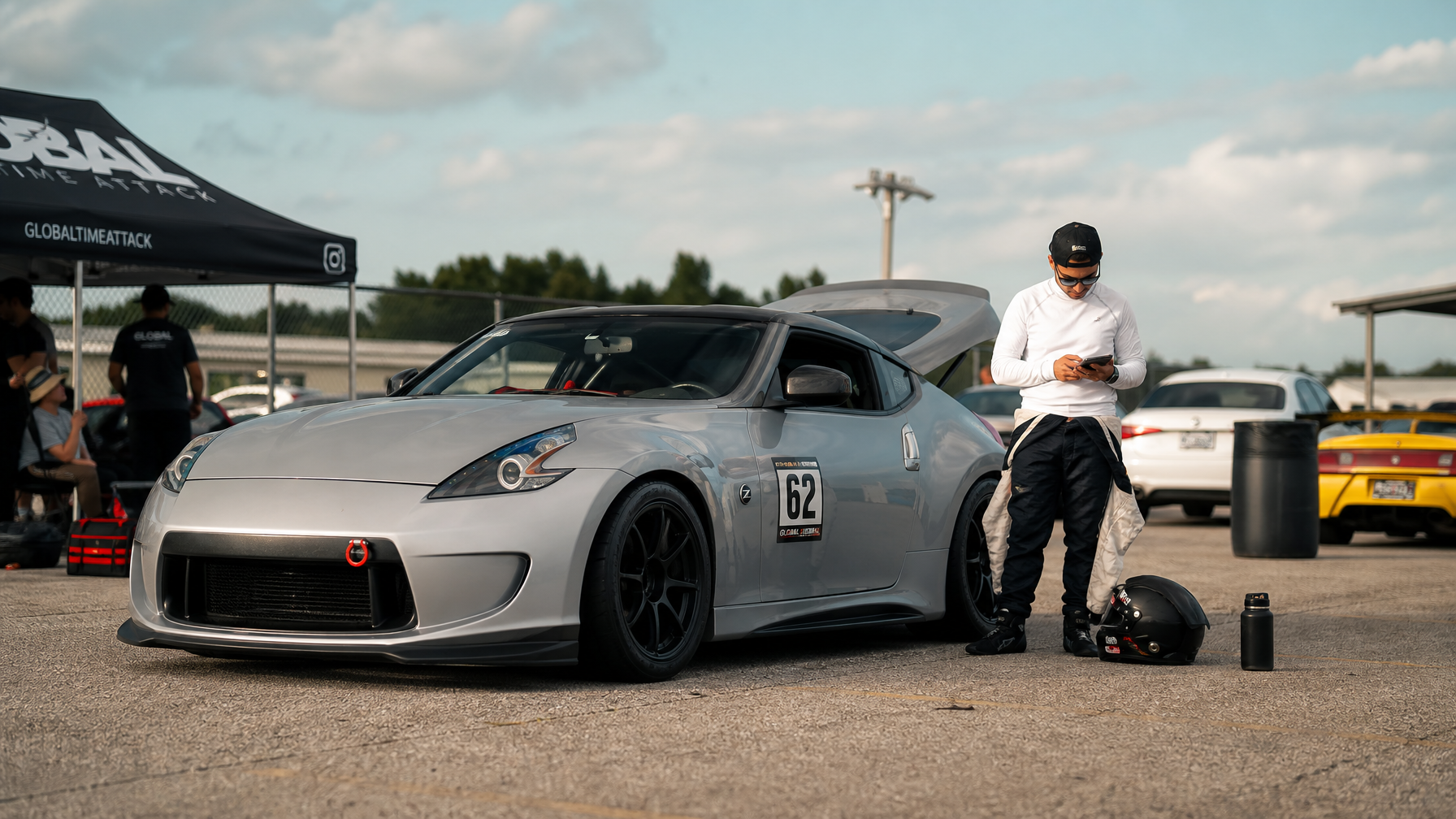
Performance brake pads are now the baseline, not the upgrade. If factory tires are showing wear or are more than three years old, put a set of performance street tires on dedicated track wheels — the difference in grip and feel is substantial, and a second set saves the street tires from track abuse. Brake fluid flush before every event remains mandatory.
Upgrades to ConsiderCoilover or upgraded shocks, followed by a performance alignment. The factory suspension produces understeer that limits cornering capability and masks feedback a developing driver needs. Stainless steel brake lines for consistent pedal feel.
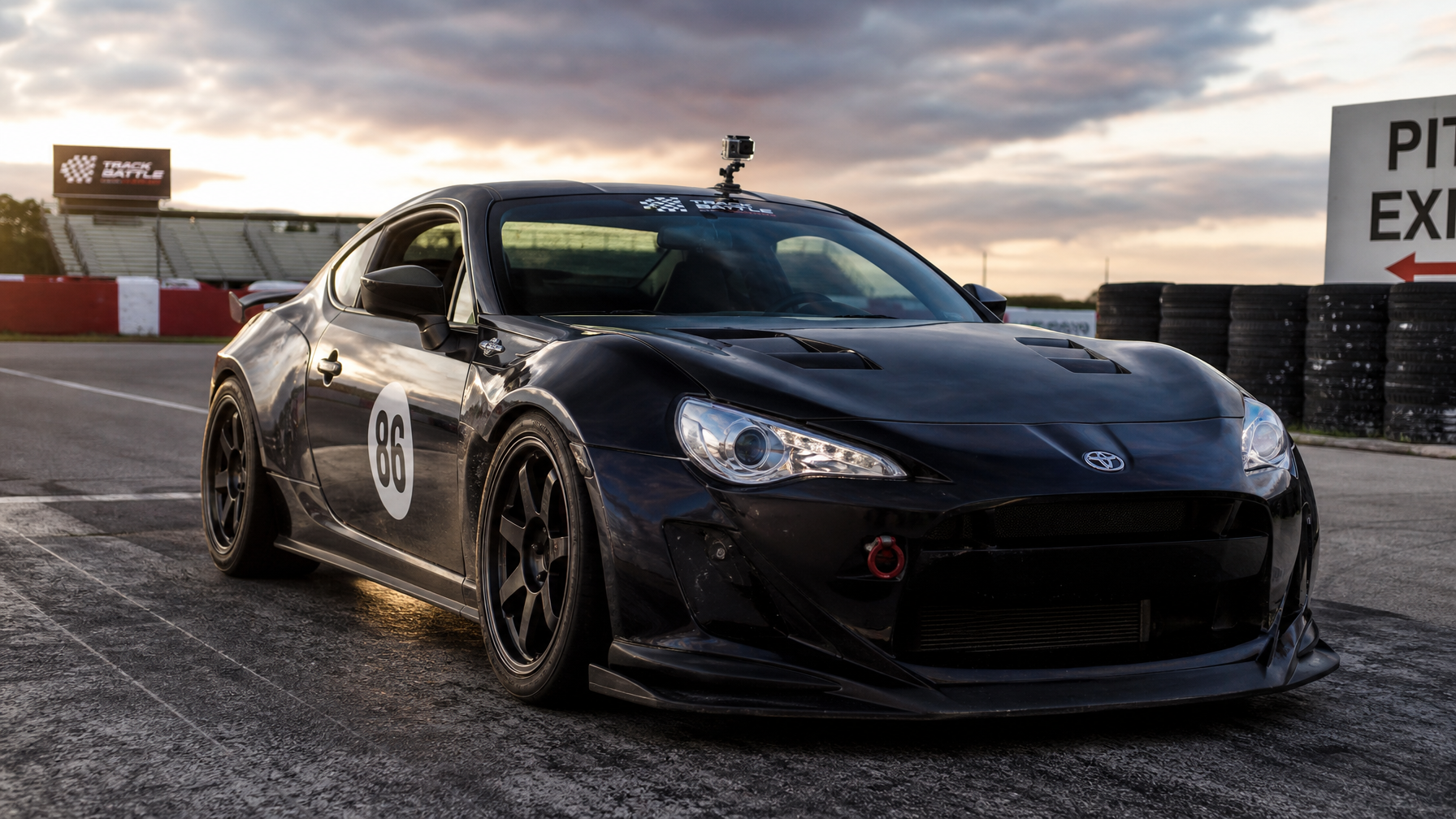
Dedicated track tires (Michelin Cup 2, Bridgestone RE-71RS, Falken RT660) produce a step change in lap time compared to performance street tires. Suspension must be set up correctly for the car's power level and driving style — coilovers with adjustable dampers, aggressive camber, corner balance. Engine and fuel system prep becomes relevant: sustained high RPM for extended periods will reveal any weakness.
Upgrades to ConsiderFull coilover setup with corner balance and performance alignment. Dedicated track wheels and tires. Dyno tune if forced induction is on the car. Oil catch can for extended high-RPM sessions. Weld-in roll bar — at competitive time trial speeds, this is the appropriate minimum safety system.
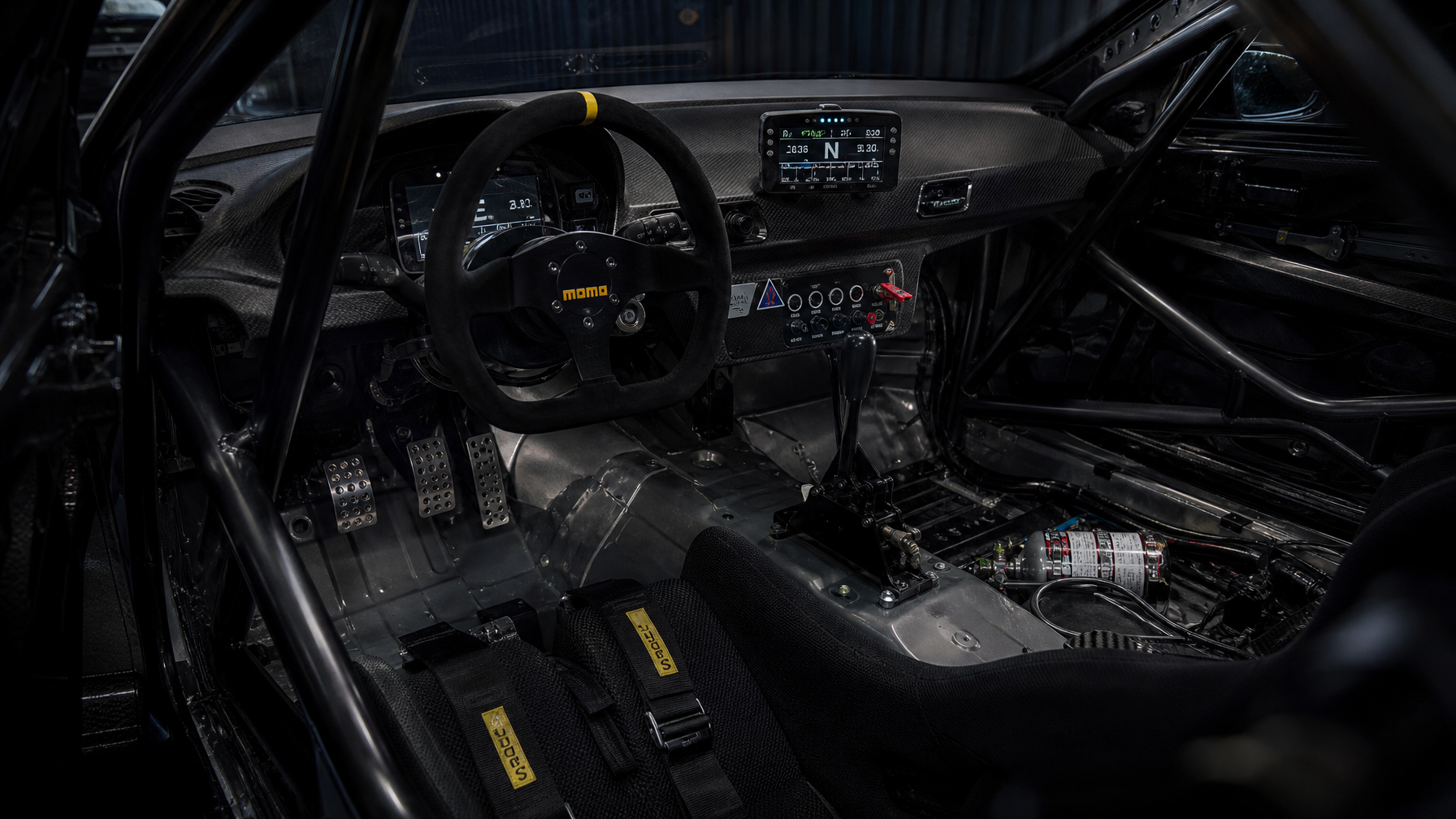
The car is built for the track rather than prepared for it. Suspension, brakes, engine, safety system, and tires are all specified for the track environment from the ground up. This is the level where a full roll cage is the correct answer, where a competition seat and harness replace the factory safety system, where the engine build and forced induction are calibrated on the dyno, and where every component is selected for performance and durability under sustained race conditions.
The Conversation to HaveWhat class are you building for? What's the power target? What are the stock internal limits at that power level? At this level, the prep conversation is a build conversation. Bring us the rulebook and the goals.
What Goes in the
Trailer and the Bag.
The car is prepped. Here's what comes with you to the track.
Eight Mistakes
We See Most Often.
Every single one of these is preventable. Every single one has been avoided by a driver who read something like this beforehand.
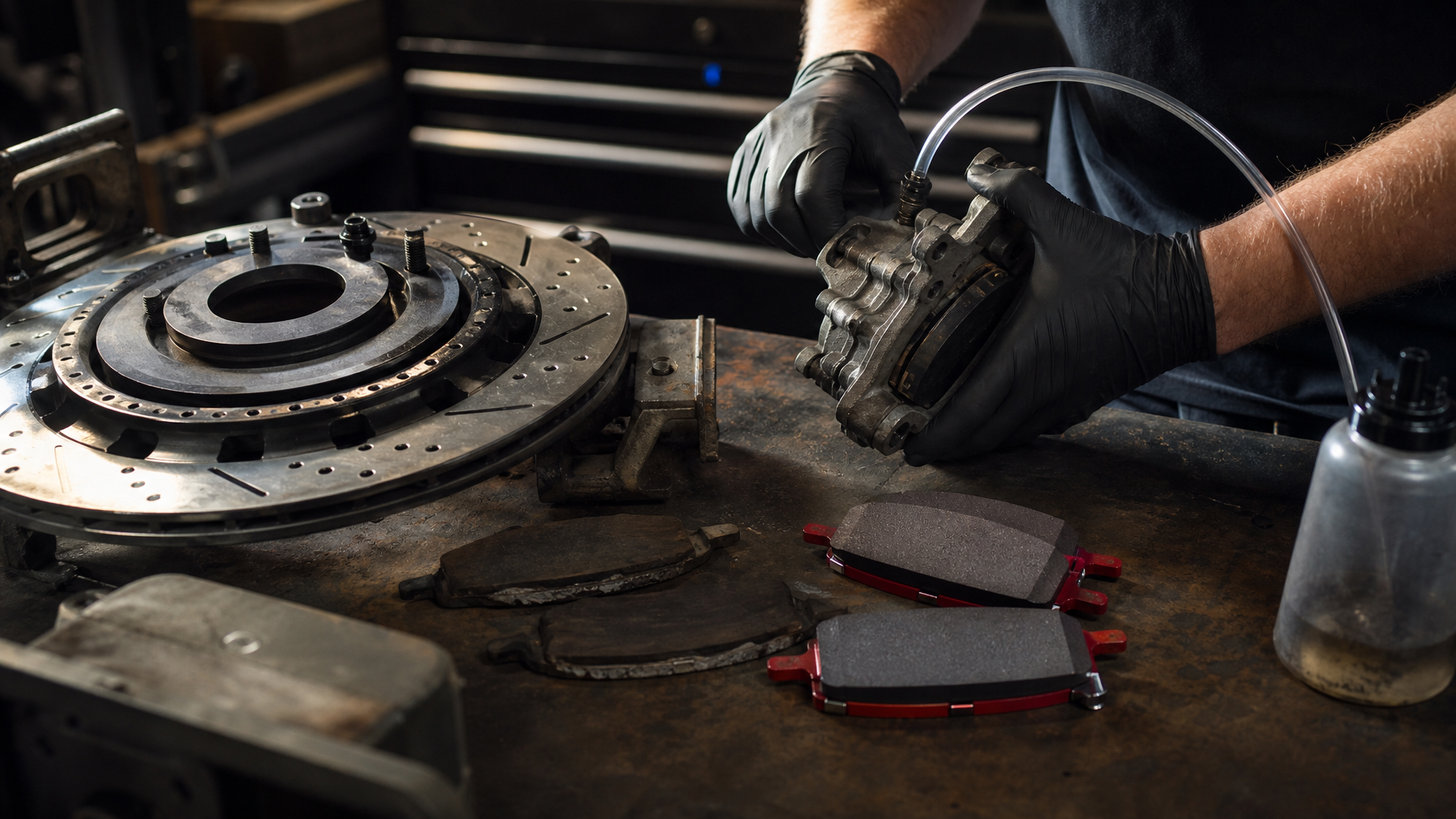
The most common, the most predictable, and the most consequential. Drivers who show up to a first track day on factory brake fluid that has been in the car for two or three years is a consistent pattern. The brake fluid change takes 30 minutes and costs $20–$40 in materials. The consequence of a brake fade event is measured in much worse terms. Change the fluid. Every time. Before every event.
The track teaches you the limit by letting you find it — but finding it before the track is learned and the car's behavior is understood produces accidents that shouldn't happen. The correct approach to a new track is conservative entry speeds, leaving room to feel the car, with confidence built gradually as reference points become familiar. The fastest drivers at a track day are almost never the ones who are fastest in the first session.
Novice group instructors know the track, know the driving line, and can feel what you're doing in real time. An instructor who tells you to brake earlier at a corner is not being conservative — they're telling you that you're braking in the wrong place for a reason you haven't figured out yet. Listen, apply, then evaluate the result. The instructor relationship is the single most valuable part of a first track day.
Wheels loose enough to feel are wheels that have already been too loose for too long. Check torque after the first session with a torque wrench — not a hand-check or a kick. New wheels and recently installed wheels in particular need a torque verification after initial heat cycling. This is why most organizations require it between sessions.
All-season tires on a track day are a liability — they overheat quickly, chunk on sustained lateral loads, and provide feedback that's actively misleading about the car's actual grip limits. Old performance tires with good tread but cracked or hardened rubber aren't much better. If the car is on all-seasons or tires over six years old, address this before the event, not after the first session teaches you what it feels like to drive on inadequate rubber.
Coolant temperature that climbs and stays elevated through a session is a sign the cooling system is working at its limit. Driving in is the correct response — not hoping it stabilizes. An engine that overheats on track may have warped a head gasket or cooked the coolant to the point where it can no longer protect the engine. The cost of ending a session early is a fraction of the cost of an overheated engine.
Starting sessions at street tire pressure means running well below optimal hot pressure as the tires build heat. Check hot pressures after the first session (immediately after coming in, before the car cools) and adjust cold pressures to achieve the correct hot reading going forward. Running the wrong pressure through an entire day means never getting the correct tire contact patch and grip levels the tire is capable of providing.
A track day produces an enormous amount of information in a short time. Reference points, braking distances, car behavior at specific corners, instructor feedback — it all blurs together without notes. Write it down between sessions. Video of your laps watched in the paddock is even better. The drivers who improve the fastest treat the track day as structured practice, not just a day of driving fast.
When Prep Isn't Enough Anymore —
and It's Time to Actually Build the Car.
Most drivers reach a point somewhere in their second or third year of regular track day attendance where the car stops being the limiting factor and starts being the limitation. The driving has improved faster than the car's capability — which is exactly how it's supposed to go — and now the car's handling balance, brake capability, or engine output is the ceiling on what the driver can learn.
This is the moment the prep conversation becomes a build conversation. A stock suspension on a 10-year-old car is not going to produce the handling feedback a driver at that level needs to continue developing. A stock engine running regular HPDE events is not going to keep up in the advanced run group. And a car with no roll bar running at time trial speeds is a safety situation that needs to be addressed before something happens rather than after.
The build conversation covers suspension, safety, engine, brakes, and tune. We do all of this in one shop. A car that gets its engine built, forced induction installed, suspension set up, and safety equipment fabricated here leaves as a system — not a collection of modifications from different shops that have never considered each other.
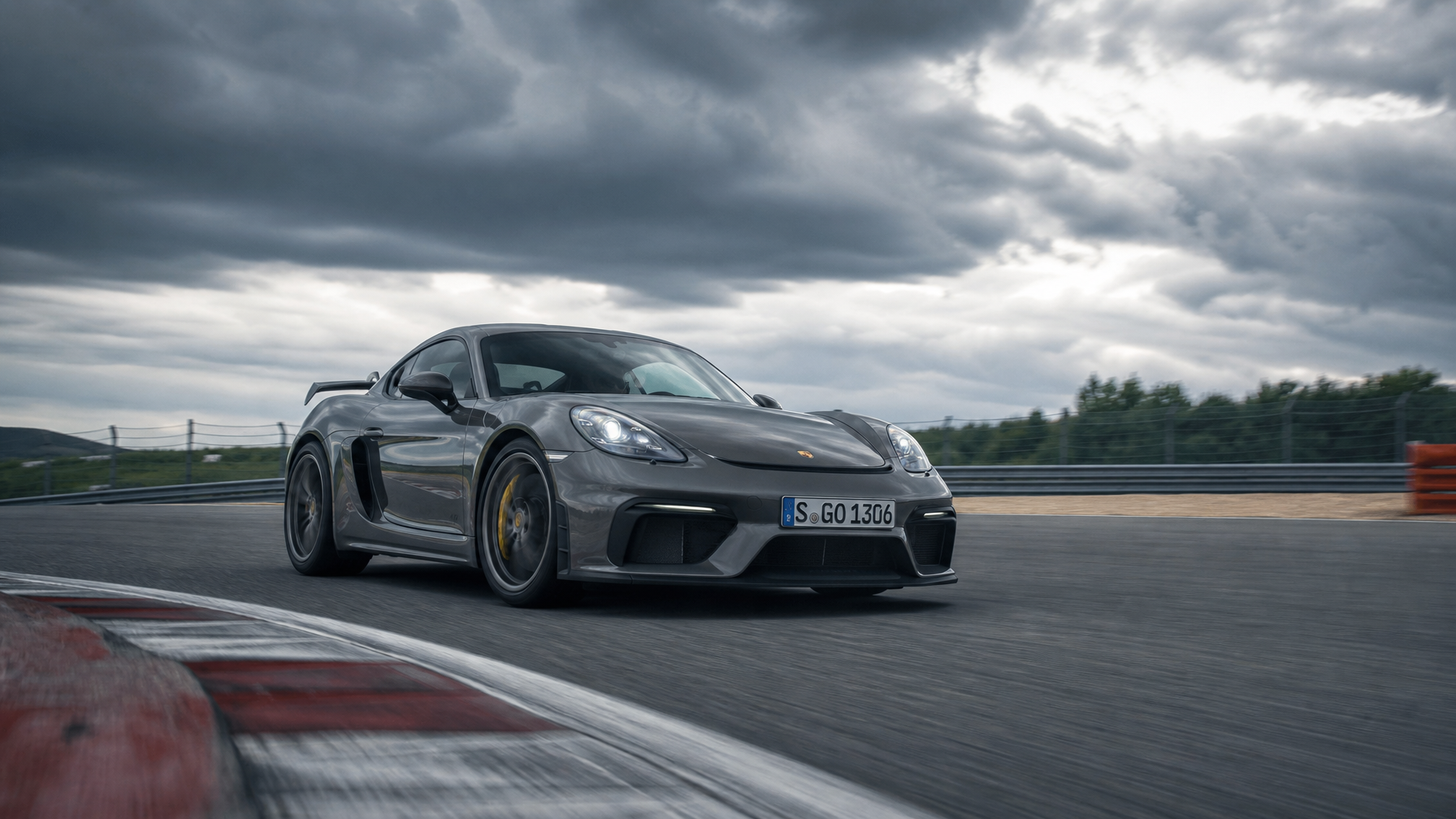
We've Seen Every Car
That Showed Up Unprepared.
We'd Rather See Yours Before the Event.
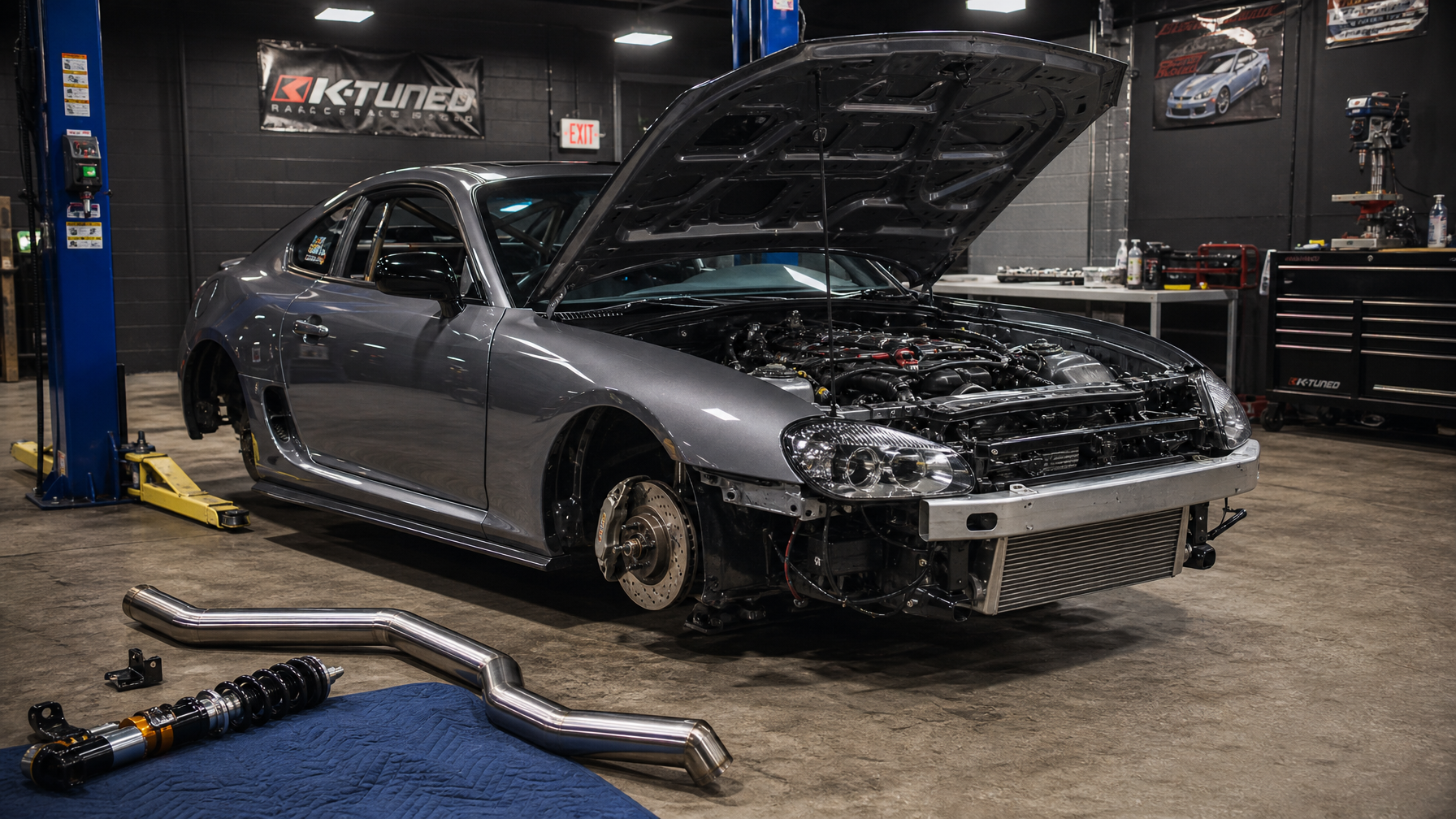
Bring the car in before the event. We go through the preparation checklist as a professional inspection — and if something is marginal, we tell you before you find out on track.
We've built track cars, tuned track cars, set up suspension on track cars, and fabricated safety systems for track cars. We understand the difference between what a street car needs and what a track car needs — and we tell you which side of that line your build is on based on the speeds you're running and the use case you've described.
Fresh high-temp brake fluid flush (Motul RBF600 or ATE Type 200), pads spec'd for the car's weight and the driver's pace, and a brake system inspection that goes beyond tech-day requirements. The car goes to the track with a brake system prepared for track temperatures, not street maintenance intervals.
Not factory specs applied to a modified car. Alignment targets set for the car's actual use case — the coilover setup, the tire compound, and the driving style. If corner balance is warranted, we do it in the same session. The car leaves with geometry that makes it faster and more communicative.
Bring the car in before the event. We go through the preparation checklist as a professional mechanical inspection: brake system, fluid conditions, tire condition and pressure calibration, wheel bearing play, suspension component condition, chassis fastener torque. If something is marginal, you know before the gate opens.
When the car is ready to become a track car rather than a prepared street car, every component of that build happens here — engine, forced induction, suspension, safety, and tune. One shop, one build, one car designed as a complete system rather than a collection of modifications from different shops that have never considered each other.
We're in Katy. MSR Houston, Eagles Canyon, COTA, and Motorsport Ranch Cresson are in our backyard. The brake demands of a heavy-braking circuit like MSR Houston's road course are different from a flow track. We prep the car for the specific event — not a generic track day template.
Track Day FAQ
The questions we hear most before events. Short, direct answers.
Event Coming Up?
Bring the Car In.
We'll go through the full prep checklist as a professional inspection and tell you exactly what the car needs before the gate opens.
Tell Us About
Your Track Day Build
Whether it's a first-event prep inspection or a full track car build, the conversation starts the same way. Tell us what you're driving and what you're trying to do.
We review every submission and respond within one business day. If your event is coming up soon, mention the date and we'll prioritize accordingly.

IRON RIDGE MOTORSPORTS


