Home / Disciplines / Rally & Stage Rally

Rally &
Stage Rally
Builds

Full-prep stage rally and TSD rally builds for ARA, NASA Rally Sport, and regional series. Gravel suspension, co-driver navigation, and safety systems built to current rulebook — not to last year's spec.

ARA Compliant Builds
NASA Rally Sport
TSD & Gravel Prep
Houston, TX
ARA
Current Spec
AWD
Platform Specialty
FIA
Cage Standard
TX
Home Region
What Rally Actually Requires

Stage Rally Is a Complete Car Problem.

A stage rally car is not a fast street car with a roll cage. It is a purpose-built machine with a safety system designed to current ARA or NASA Rally Sport spec, gravel-tuned suspension that handles loose surface without eating itself, a tire strategy that accounts for the stage profile, and a navigation package that works under sustained pace-note pressure.

Most shops can build a fast car. Very few understand what it takes to build a car that will still be running on Stage 6 after four service parks and a tire change in the dark. We build the whole system — not just the engine and roll bar.

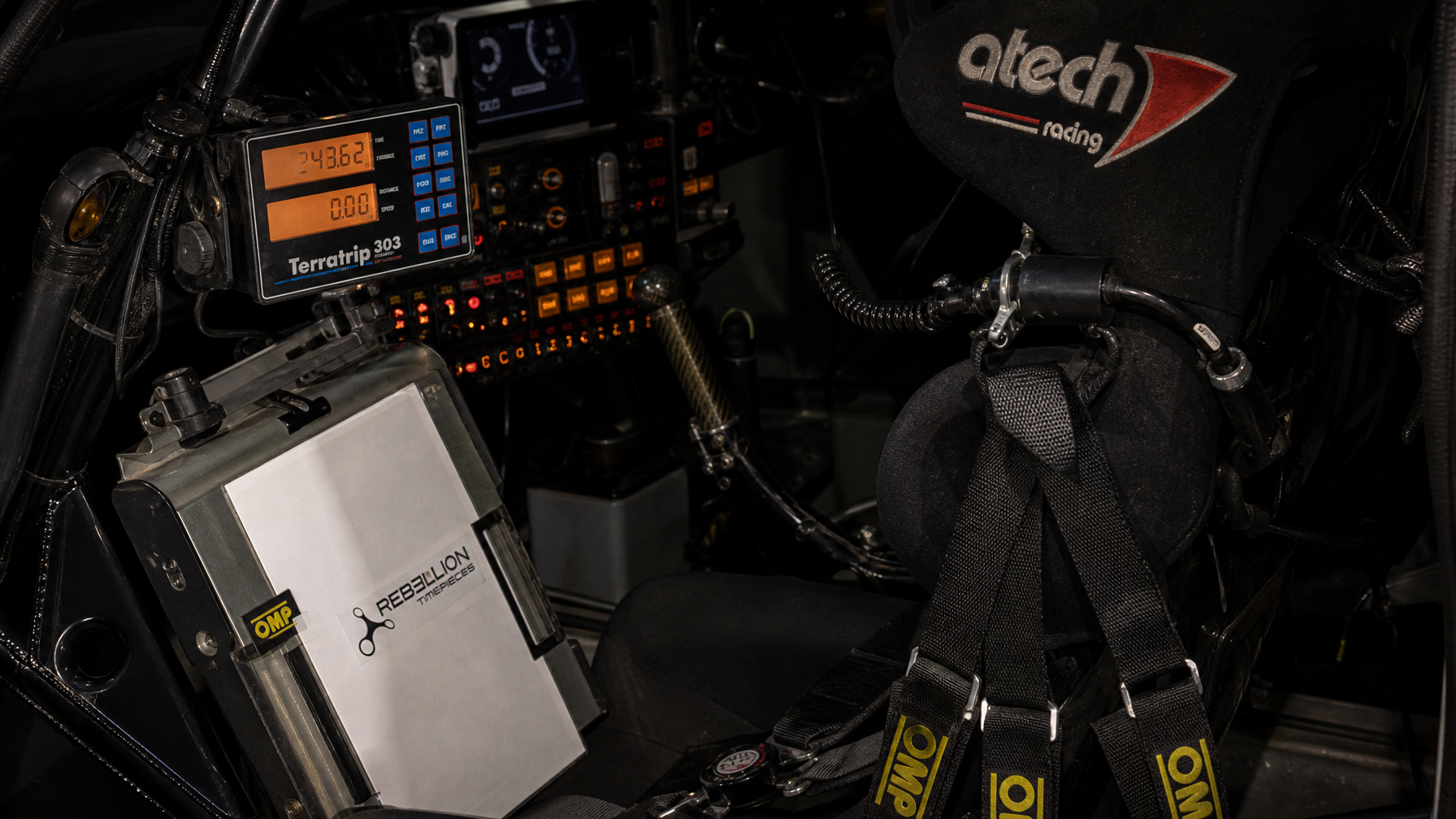
TSD builds have their own requirements: accurate odometry, Terratrip or Icaro navigation setup, pace clock integration, and a suspension that handles rough county roads without fatiguing the crew over a four-hour run. We spec both disciplines correctly from the start.

Primary Series
ARA, NASA Rally Sport
Regional Events
Lone Star Rally, Texas Forest
TSD Series
SCCA TSD, Regional Events
Primary Surface
Gravel, Caliche, Dirt
Cage Standard
ARA / FIA-Equivalent
Platform Specialty
Subaru, Mitsubishi, Ford
Navigation
Terratrip, Icaro, Halda
Safety Anchor
FIA-Rated Harness & Seat
Discipline Coverage

Three Formats.
One Build Shop.

Stage rally, TSD, and gravel prep are related but technically distinct disciplines. We build correctly for each — not a single template applied across all three.
Stage rally build — Iron Ridge Motorsports Houston
ARA / NASA Rally Sport
Stage Rally
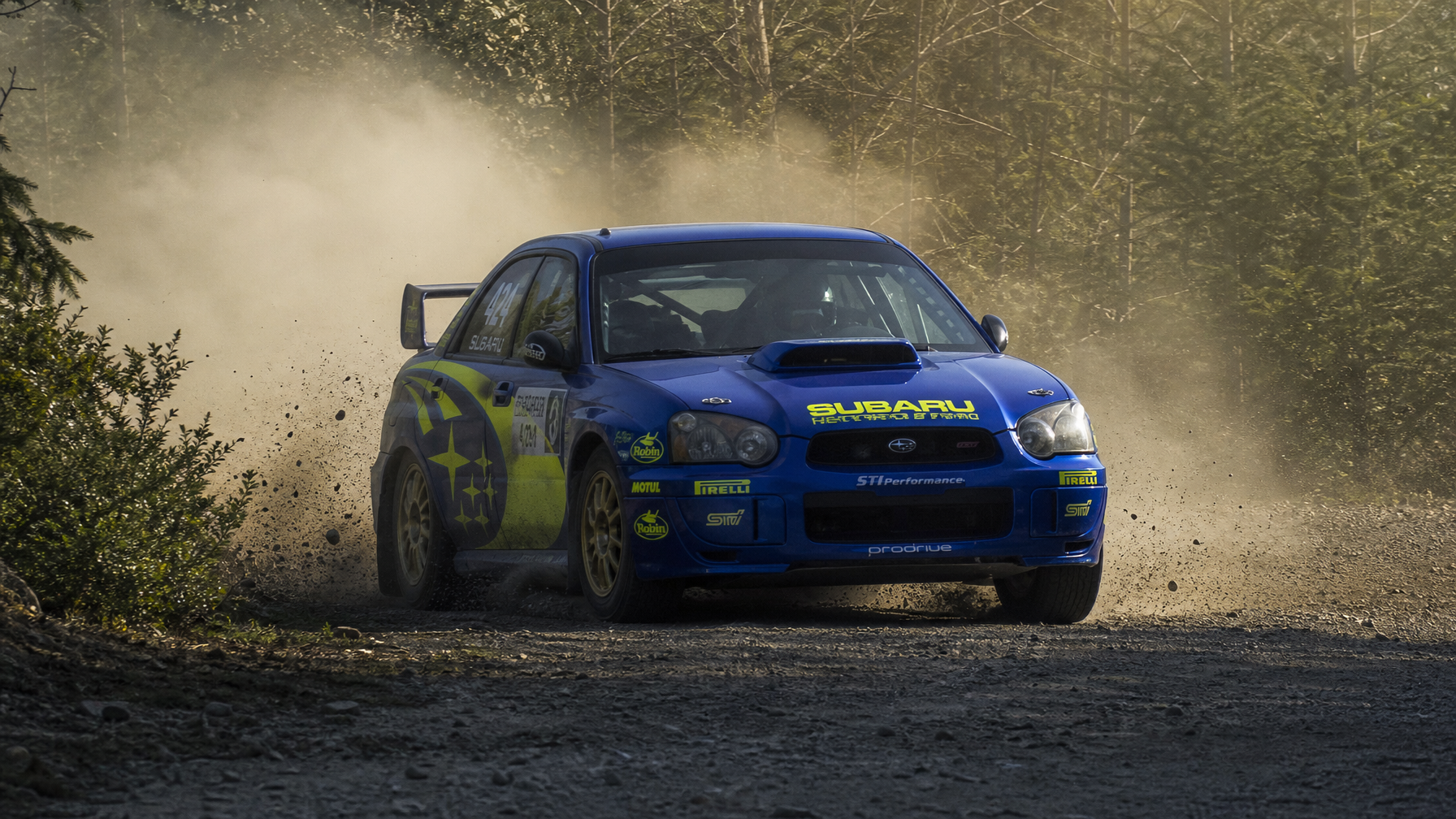
Full competitive stage rally prep. Cars are run against the clock on closed public roads — gravel, dirt, caliche — often in multiple stages per day over a full rally weekend. ARA and NASA Rally Sport have specific safety mandates including roll cage geometry, harness spec, window nets, fire suppression, and helmet ratings. A car that passes tech one year may not pass the following year if the rulebook updates. We build to the current-year document and flag any legacy safety items on cars brought in for refresh.
ARA Compliant NASA RS Roll Cage Gravel Suspension Fire Suppression
TSD rally navigation setup — Iron Ridge Motorsports Houston
SCCA TSD / Regional
TSD Rally
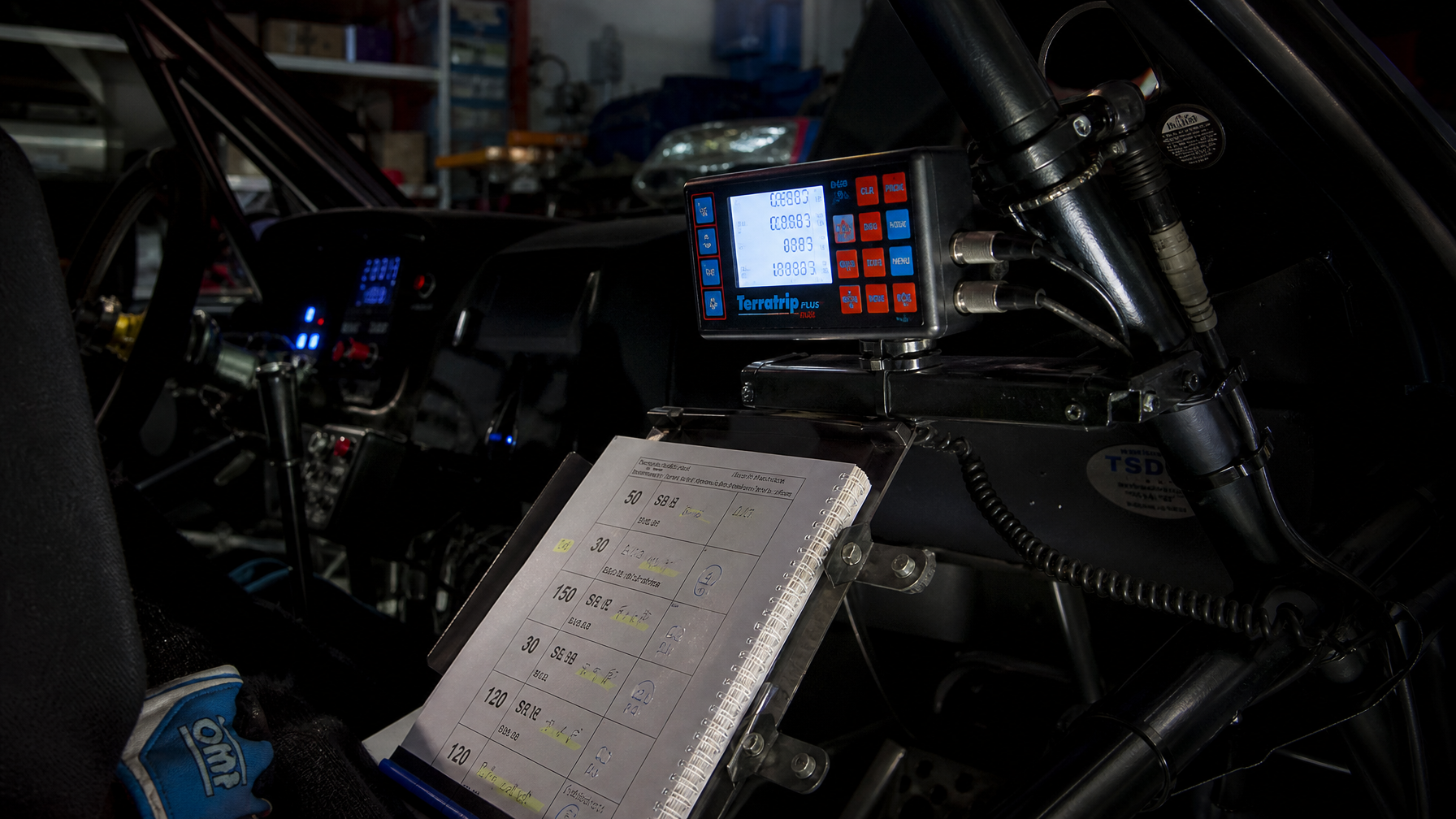
Time-Speed-Distance rally is a precision discipline — not a speed competition but a navigation accuracy event. The crew follows a route book while maintaining exact target speeds over varying terrain. The primary equipment is odometry and navigation: Terratrip 202, Icaro 4WD, or Halda units with external sensors calibrated to the specific vehicle's final drive ratio and tire circumference. We install and calibrate these systems to event-level accuracy, set up the co-driver's station ergonomics for sustained use, and suspend the car for rough county road compliance without beating the crew over a 3–4 hour run.
Terratrip Setup Odometry Cal Co-Driver Ergonomics Road Compliance
Rally gravel prep service — Iron Ridge Motorsports Houston
Pre-Event Service
Gravel Prep
Pre-event preparation for crews who have their own car but need a thorough gravel-specific inspection and setup before a rally weekend. We go through the full suspension: check rod ends, verify subframe bushings, inspect the underbody for impacts from the previous event, pressure test brake lines, verify the fire suppression activation, and set ride heights and damping for the expected stage profile. We can also re-gear differentials for specific stage speed profiles. Most crews who run gravel events bring their car in for this service 2–3 weeks before the event date.
Pre-Event Inspection Suspension Set Safety Verify Diff Re-Gear
Build Components

What Goes Into a
Stage Rally Build

A complete stage rally build touches nine distinct systems. We handle all of them in-house — not as a package manager sending work to three different subcontractors, but as the shop that builds the whole car under one roof.

Safety System
Roll Cage Fabrication
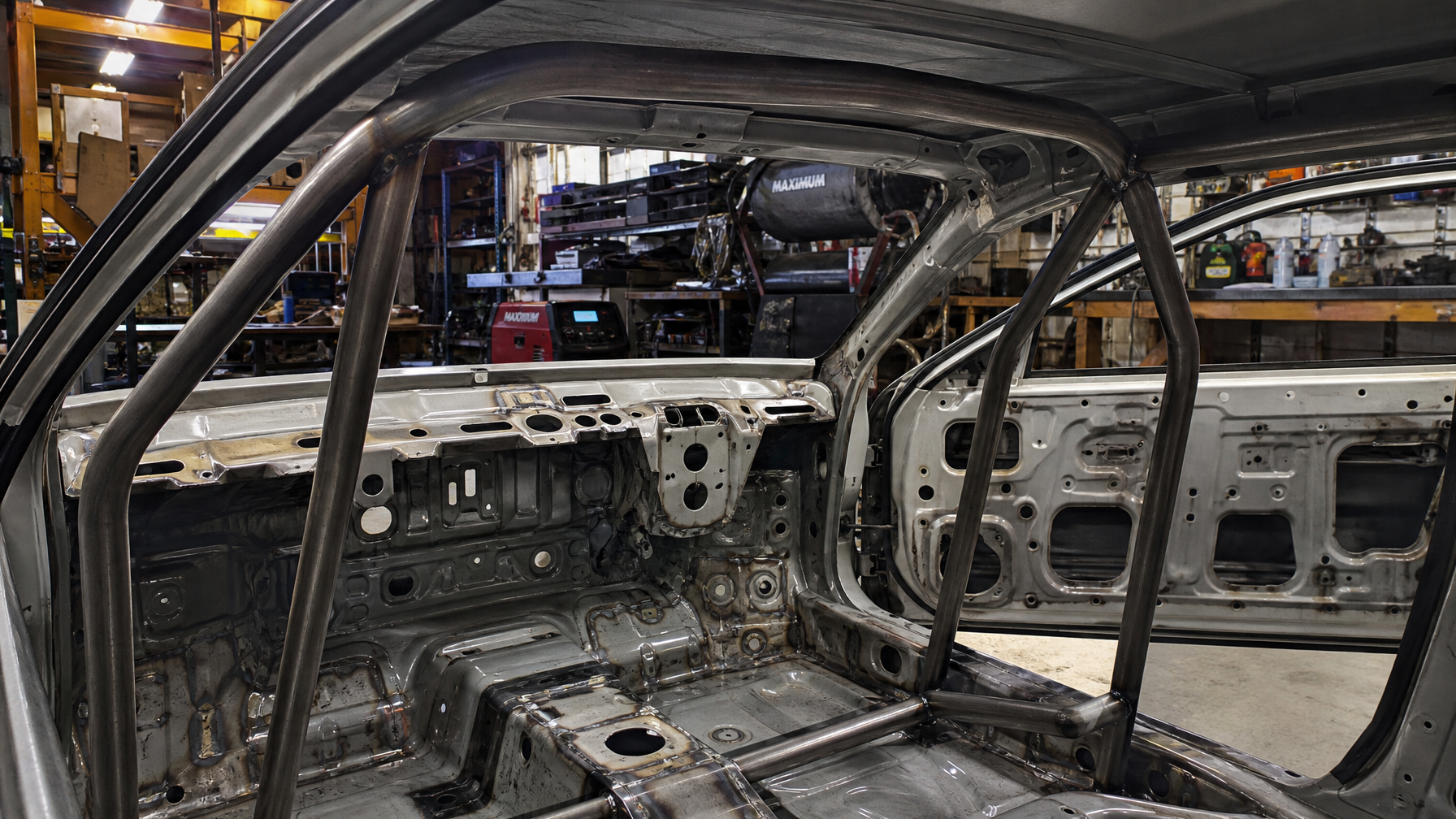
ARA or NASA RS compliant roll cage built to current-year spec. Material: DOM or chromoly per class requirements. Main hoop geometry, door bars, roof bars, and harness bar positioned for driver fit with helmet clearance verified in-seat. Window net mounting points integrated into cage. Cage padding applied to all bars in the helmet strike zone. Builds submitted to a certified ARA scrutineer prior to first event entry when requested.
Suspension
Gravel Suspension Tuning
Coilover selection, spring rate, and damper valving for loose surface. Gravel suspension runs significantly more travel and softer rates than tarmac — understeer on entry through a loose hairpin kills more stage time than outright power. We spec for the car's actual weight distribution, the expected stage profile (tight technical vs open fast), and the driver's style. Preferred brands: Öhlins TTX Rally, Reiger, and Fox 2.0 for club-level builds.
Engine & Drivetrain
Gravel Power Package
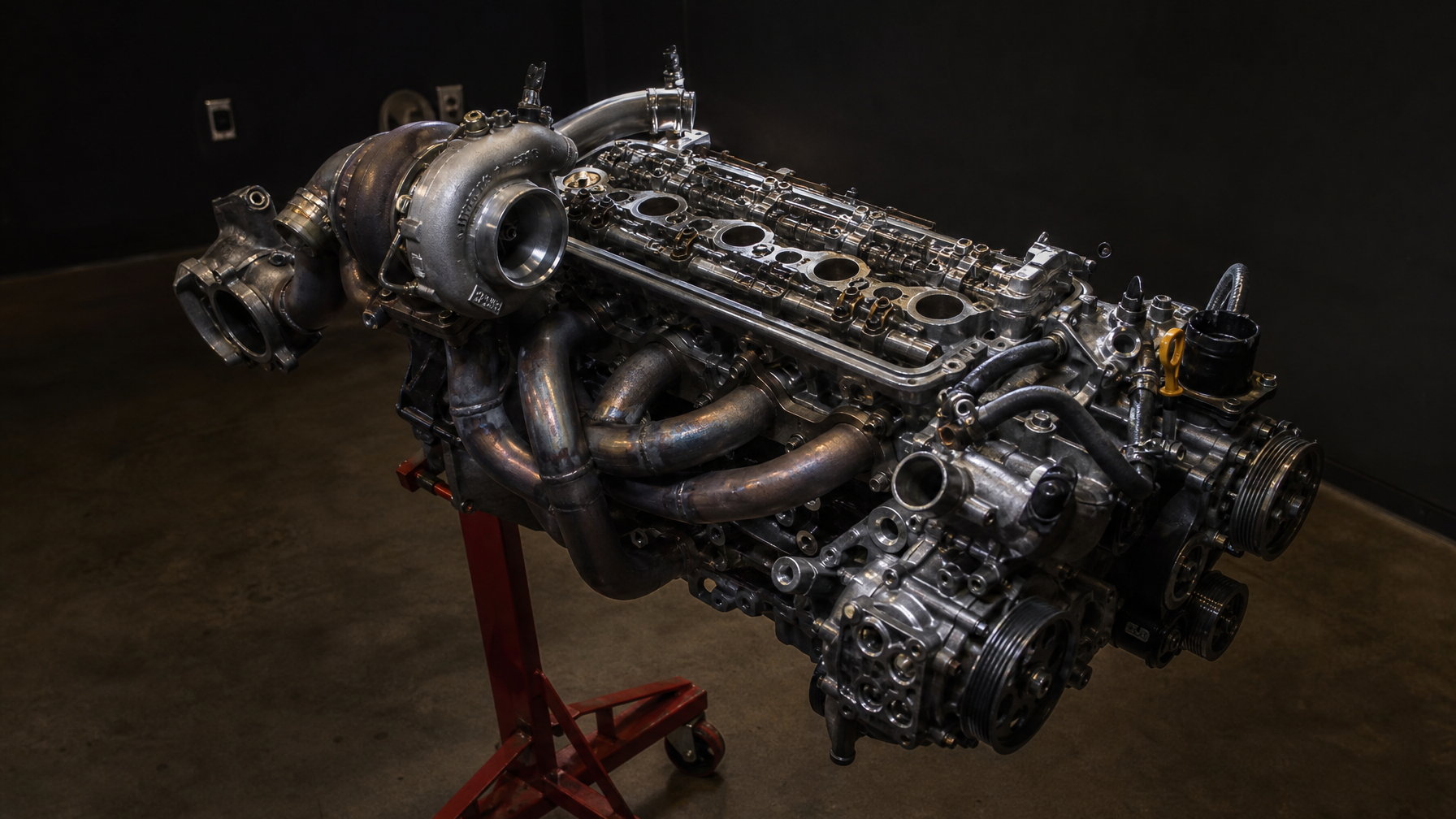
Rally engines run in a specific operating band — sustained mid-range torque delivery on varying surfaces, not peak horsepower. EJ20/EJ25 builds for Subaru platforms typically target 275–340 whp with a turbo matched for the class displacement limit. Differentials are spec'd for loose surface: locking center, front, and rear. We build and dyno in-house. Transmission prep includes short-shift modification and gear ratio evaluation for the specific event's stage speed profiles.
Navigation
Co-Driver Navigation System
Terratrip 202 Plus or Icaro 4WD installation with external wheel sensor calibrated to final drive ratio and tire circumference. Co-driver mounting bracket welded to cage structure — not bolted to dash. Pace clock integration. Intercom system (Stilo, OMP, or equivalent) with helmet connectors and amplifier. Reading light positioned for pace note visibility without reflections in the windshield. We set up the whole co-driver station as a working system, then hand it off to the crew for familiarization before the event.
Fire & Safety
Fire Suppression System
Plumbed fire suppression (Lifeline, AFFF, or equivalent) with nozzle placement for engine bay, footbox, and cockpit coverage. Manual activation pull is driver-reachable without removing the harness. ARA mandates a specific minimum agent discharge rate and nozzle placement standard — we build to that document, not to generic "fire system in car." External activation point on the B-pillar is required for corner workers; we integrate this into the cage structure.
Undercar Protection
Underbody Armor
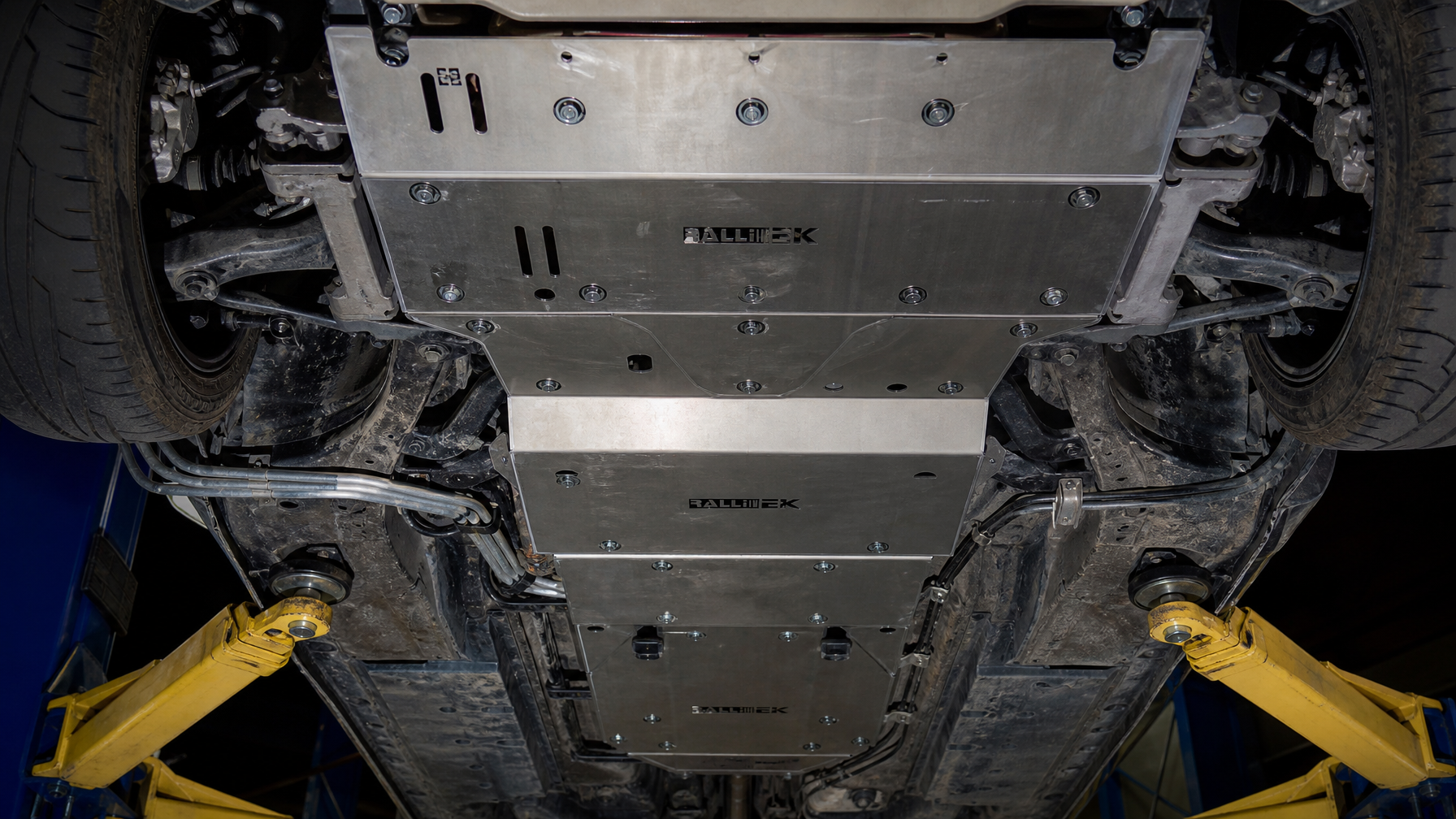
Gravel stages destroy unprotected undercar components. Full skid plate system: engine/trans plate (3/16" UHMW or 3mm steel), fuel tank protection, and brake line guards. Plate mounting must clear suspension travel without contact. We scan the undercar after a return run on the first event to identify any contact points and modify plates accordingly. Rock guards for front suspension arms on tight technical stages. Wheel well flare clearance checked for full droop before delivery.
Brakes
Rally Brake System
Gravel braking is different from tarmac: the car requires aggressive initial bite on a loose surface that doesn't allow threshold braking in the traditional sense. We set up bias bar with the correct front/rear balance for the car's weight distribution and the driver's braking style. Hydraulic handbrake installation for tight hairpins. Fluid specification for heat management on sustained downhill stages. Caliper rebuild and rotor inspection before each event for cars on the gravel prep program.
Electrical
Rally Electrical System
Master cutoff switch (battery and ignition isolation) per ARA spec, accessible from outside the car. Wiring harness protected and secured away from exhaust and suspension movement zones. Secondary battery or supercapacitor for electronics when main battery is isolated. Data logging integration: AiM or MoTeC with GPS for stage time verification and suspension data review between service parks. Lighting upgrades: Baja Designs Squadron Pro or Rigid SR-Series for night stages.
Seats & Restraints
FIA Seat & Harness Package
ARA and NASA RS require FIA 8855-1999 or 8862-2009 rated seats with current date codes. Sparco, Recaro, or OMP race seats with FIA-rated six-point harness (Schroth, Sabelt, or equivalent). Seat mount geometry verified with driver in position for correct shoulder strap angles — straps must be within ±10° of horizontal at the shoulder. Both seats (driver and co-driver) to the same spec. Expired safety equipment is not carried over — we verify date codes at every gravel prep service.
Platform Coverage

The Platforms
We Build Most.

Rally is more platform-specific than most motorsport disciplines. The AWD architecture, factory turbo systems, and existing parts ecosystem make certain platforms significantly more cost-effective to build and run. These are the cars we know best.

01
Subaru WRX / STI
EJ20 · EJ25 · FA20
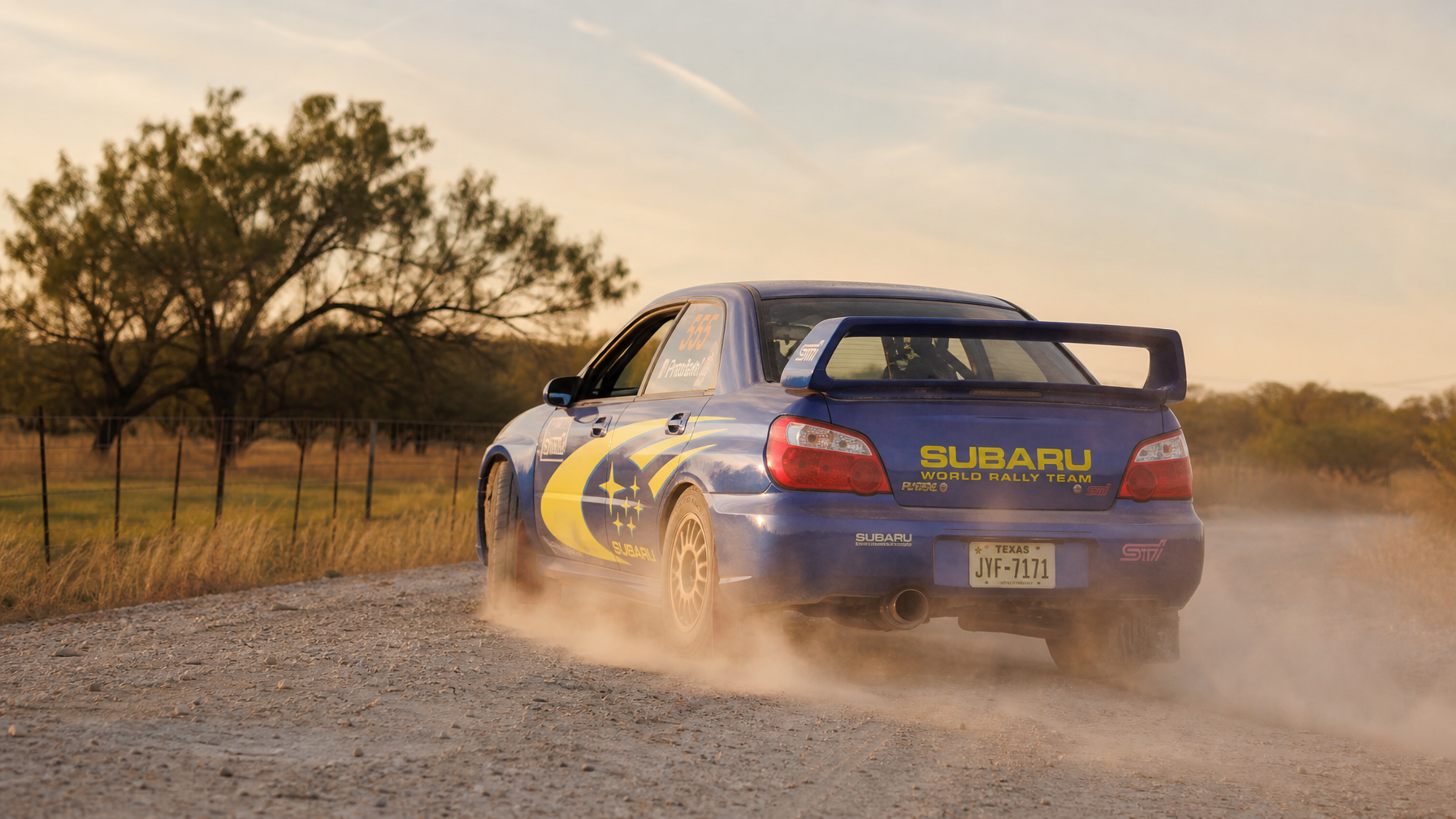
The most common rally platform in North America for good reason: robust EJ-series AWD drivetrain, strong parts availability, a deep aftermarket for every build component, and a rulebook class structure that keeps competitive entry cost reasonable. We build EJ20 and EJ25 platforms for club through regional-level competition. STI differentials carry over to build with minimal modification for sealed gravel events. The FA20DIT (2015+ WRX) is a viable alternative — different build path, similar end result.
02
Mitsubishi Evo IV–IX
4G63 · 4B11
The 4G63 is a rally engine in a way very few street-derived powerplants are. Its architecture responds correctly to the type of torque curve a gravel stage demands — wide, flat, and available from low in the rev range. Evo IV through IX remain popular at the club and regional level because the cars are affordable to acquire and the 4G63 platform has thirty years of documented rally-specific development behind it. We spec the ACD/AYC system correctly for gravel — factory settings are not optimal for loose surface.
03
Ford Fiesta ST / Focus RS
EcoBoost · Duratec
The Fiesta ST is one of the most effective purpose-built rally donor cars available at the club level — light, well-balanced, and with a turbocharged four-cylinder that responds well to the displacement-based class structures in ARA. The Focus RS (Mk3) brings full AWD and a 2.3L EcoBoost that can be built to significant output within the factory block. Both platforms are increasingly common at Texas regional events. We build both and have parts sourcing dialed for both.
04
VW Golf GTI / R
EA888 · MQB Platform
The MQB-platform Golf (Mk7, Mk8) is growing in regional rally because of its combination of light weight, tunable EA888 engine, and strong Haldex-based AWD architecture in Golf R spec. The GTI's front-drive architecture makes it relevant in class structures that restrict AWD — not every regional event and class benefits from AWD. We build both for their respective class targets, and we understand where each platform's technical constraints are before the build starts.
05
Mazda MX-5 / RX-7
2.0 Skyactiv · 13B Rotary
A growing presence in TSD rally and Rallycross because of their light weight and handling balance. The MX-5 (ND generation in particular) is increasingly competitive in H-Modified and Production classes at regional TSD events. The RX-7 brings the rotary's power-to-weight ratio and chassis balance — correctly built, it is a legitimate gravel car at the club level. Rotary prep and reliability are specific knowledge; we have it.
06
Other Platforms
By Consultation
We regularly work with Honda Civic EF/EG (H-mod, A-stock classes), Toyota Corolla AE86, and purpose-built tube-chassis builds for Rallycross. If you have a platform in mind that isn't listed, bring us the car and the class rulebook. The question is always whether the platform is the right fit for the class and series you want to compete in — not whether we can work on it. Intake form lets you tell us the car, the class, and the timeline before we talk.
Sanctioning Bodies

We Build to the
Rulebook You Race Under.

Rally safety rules change year to year. We build to the current-year specification for the series the car will actually compete in — not to a generic "rally cage" interpretation that may not pass tech at the event gate.

American Rally Association
ARA — Stage Rally
The primary national governing body for stage rally in the United States. ARA Safety Regulations cover roll cage geometry, door bar placement, harness spec, fire suppression requirements, helmet ratings, HANS / head restraint, master cutoff switch accessibility, and co-driver restraint systems. The ARA rulebook updates annually — we pull the current version before every cage build. Texas regional events including Lone Star Rally and other LSSC-sanctioned events operate under ARA safety regulations. We are familiar with current ARA scrutineers and build with that inspection process in mind.
NASA Rally Sport
NRS — Stage & Gravel Events
NASA Rally Sport operates under a separate but closely aligned safety standard. NRS class structures provide accessible entry points for competitors new to stage rally — the 2WD class, AWD class, and Open class allow a range of build levels. NRS events in Texas run on a similar calendar to ARA regional events, and many competitors run both series. We build cars that comply with both where the architectures overlap, and clearly identify where they diverge so the crew understands which events they can enter without modification.
SCCA / Regional
TSD Rally — SCCA & Club Events
SCCA TSD Rally is run under a substantially different regulatory structure from stage rally — safety requirements are closer to standard road car plus harness and helmet, not full roll cage. The technical requirements shift from safety fabrication to navigation system accuracy and crew ergonomics. We spec TSD-specific Terratrip or Icaro setups for SCCA and regional club events, and we calibrate the odometry system to the specific tire and differential combination before the first run. Most TSD competitors need setup and calibration service, not full cage work.
USAC / SCCA Rallycross
Rallycross
Rallycross is a closed-course discipline run on mixed surface (gravel, dirt, grass) that does not require full stage rally safety spec — roll bar rather than full cage is typically sufficient at the club level. The discipline is an excellent entry point into loose-surface competition with lower build cost and no co-driver requirement. SCCA RallyCross is the most common club-level entry point. We prep Rallycross cars with gravel-specific suspension, underbody protection, and the required safety equipment for the class the car will run.
Why Iron Ridge

We Don't Build Rally Cars
for Instagram.
We Build Them for Stage 6.

The difference between a shop that has built one rally car and one that has built many is what they know to do before the first event — before the crew finds out what breaks on gravel. We build based on what actually happens at the end of a rough stage, not what looks good in a build thread.

01
Rulebook-First, Every Time
We build to the specific current-year rulebook for the series the car enters. Not to a general rally standard. Not to last year's ARA document. The rulebook for the car's first event is on the bench before the cage design is finalized. A cage that fails tech the morning of SS1 does not go anywhere — it goes back to the shop. We are not willing to put our name on a car that isn't ready to race.
02
Complete Car Knowledge
Engine, cage, suspension, brakes, electrical, navigation, and safety equipment under one roof. When the cage builder is also the suspension tuner and the engine builder, the decisions reinforce each other instead of fighting each other. Harness geometry is set with the driver in the correct seat position. Suspension travel is verified with the skid plates in place. Navigation mounting is integrated into the cage structure, not bolted onto the dash as an afterthought.
03
Gravel-Specific, Not Tarmac-Plus
Gravel suspension is not tarmac suspension with softer springs. The tuning logic is different: more travel, different damper valving philosophy, different anti-roll bar approach, different tire pressure strategy. A car tuned for tarmac and run on gravel will not be fast. A car built for gravel from the start will. We do not offer a generic "rally prep" service — we spec specifically for the surface and stage profile the car will see.
04
Service Park Ready
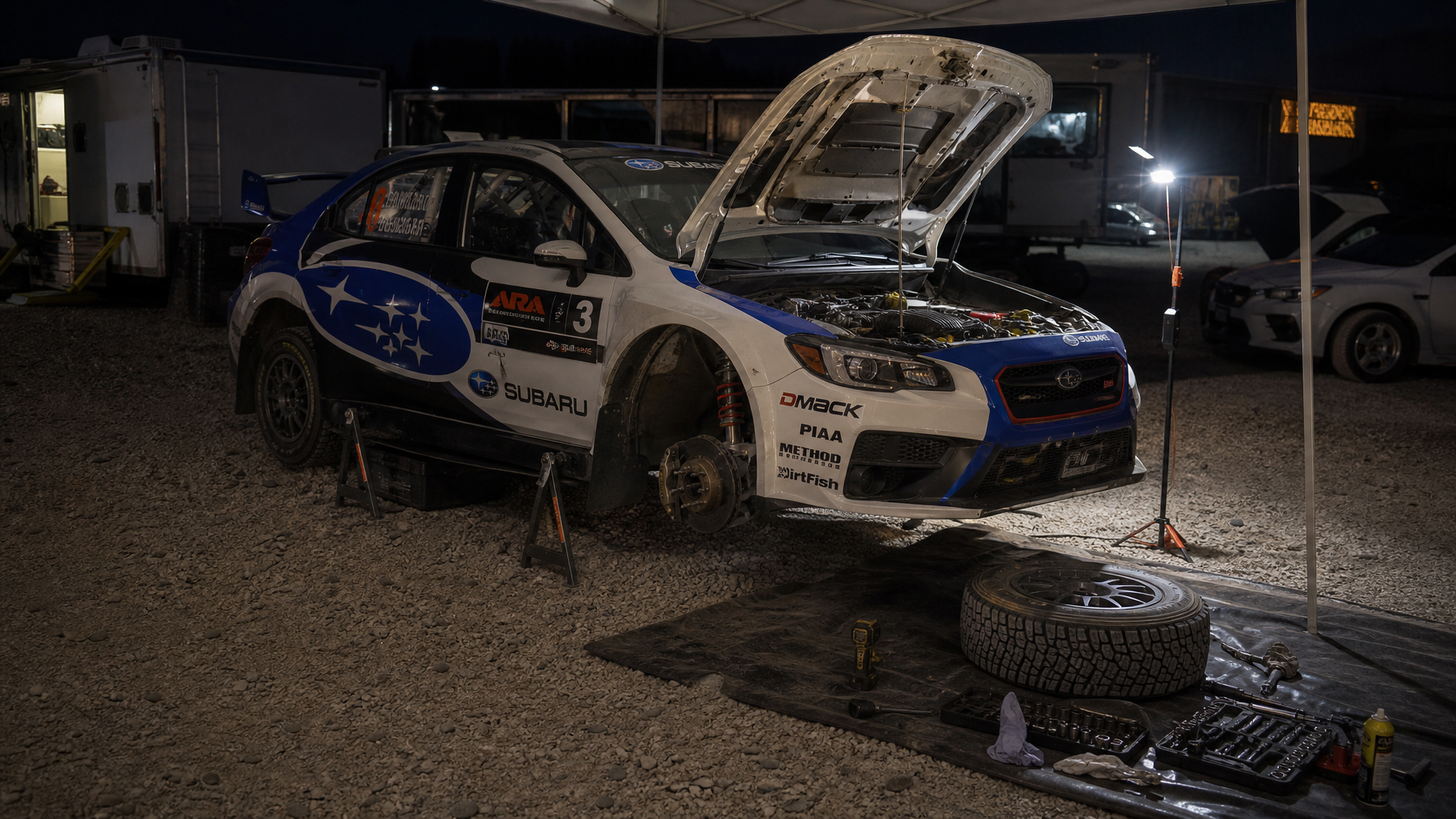
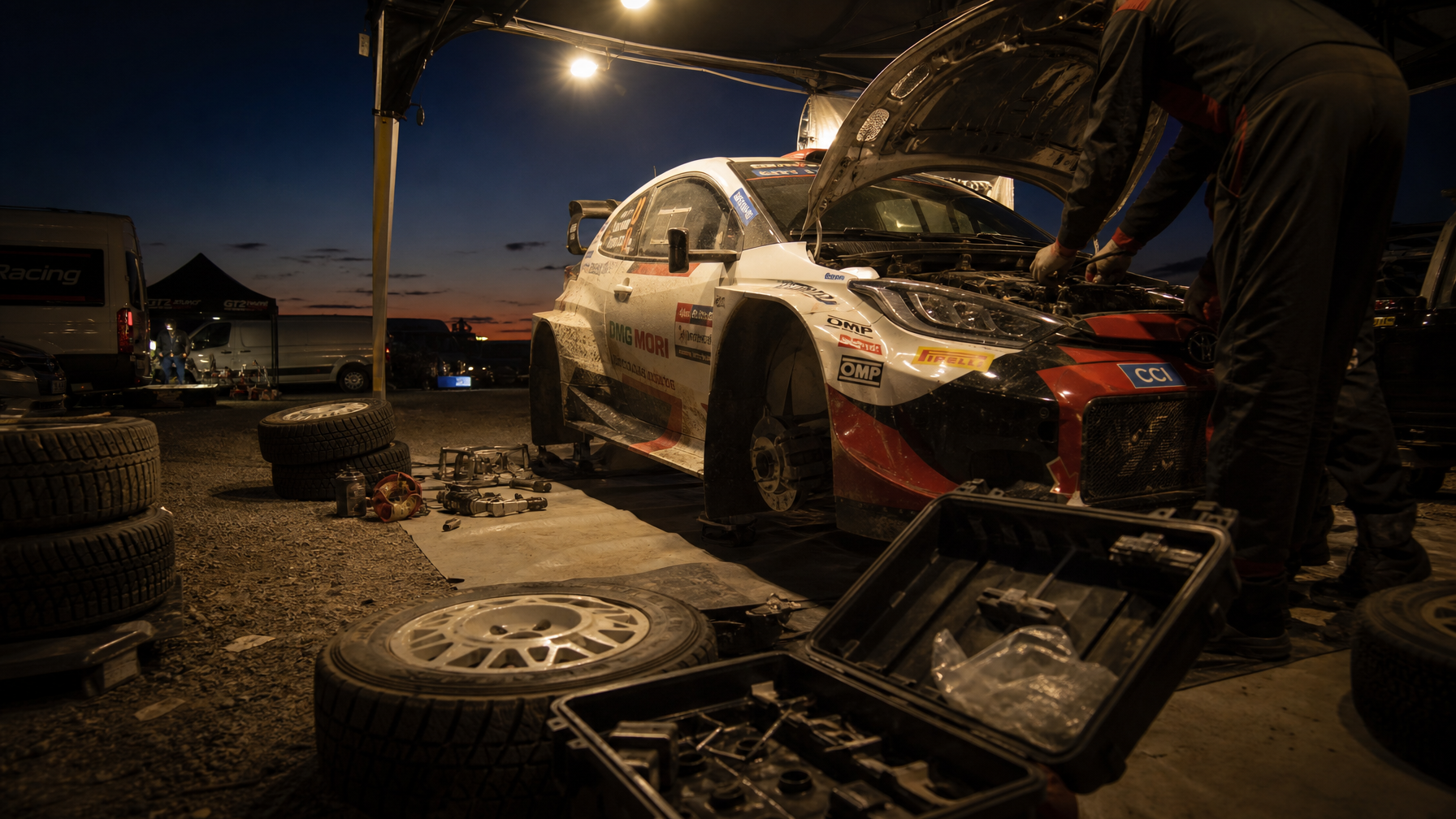
A rally car has to be maintained in service parks between stages under time pressure. Access to wear items — brake pads, rotor bolts, suspension rod ends, turbo inlet couplers — has to be engineered into the build. We design access points deliberately. We specify hardware that a service crew in a cold parking lot at 11pm can swap in under ten minutes. The build is not finished when the car rolls out — it is finished when the first service park demonstrates it can be worked on.
Build Process

From Consultation
to Stage Start.

A stage rally build is a multi-month project. Here is how we run it from intake to delivery.
Rally build intake and class selection — Iron Ridge Motorsports Houston
01
Build Intake & Class Selection
We review the car, the series the crew wants to compete in, the class structure, and the timeline. Class selection drives almost every build decision downstream — displacement limits, AWD allowance, power limits, cage material spec, and safety requirements are all class-specific. If the car is already acquired, we do a platform condition assessment before committing to a build plan. We do not take on builds where the donor car's condition makes the timeline or budget unrealistic.
Platform Assessment Series & Class Timeline Review Budget Range
Interior strip and cage fabrication — Iron Ridge Motorsports Houston
02
Interior Strip & Cage Fabrication
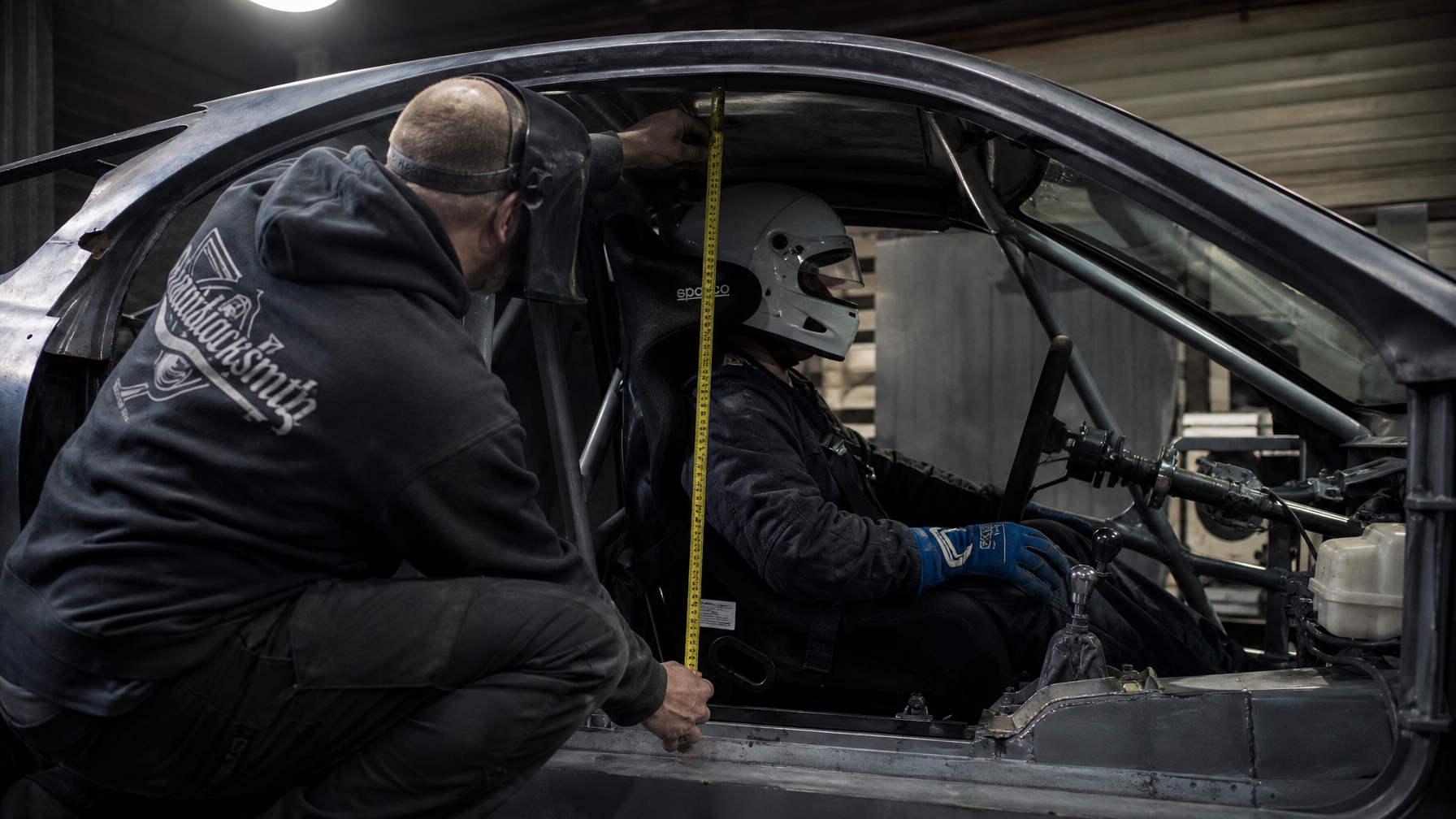
Interior is fully stripped. Cage is designed with the driver in position — we fit the driver to the car before the main hoop is welded, not after. Main hoop, front strut brace, door bars, roof bar, and harness bar are positioned for the driver's actual dimensions. All welds are inspected. Cage is photographed for the build documentation package, which goes with the car and is available to scrutineers. Cage padding is applied to all bars within the helmet strike zone after painting.
Driver-Fit Geometry ARA / NRS Spec Documentation Package Weld Inspection
Rally engine and drivetrain build — Iron Ridge Motorsports Houston
03
Engine & Drivetrain Build
Engine and transmission work runs in parallel with cage work where possible. EJ/4G63/FA block is built to the class power target. Differential spec confirmed for the class allowances. Engine is dyno'd before installation — we do not install untested engines in rally cars. Transmission fluid spec confirmed for the operating temperature range expected in multi-stage events. Drive axles inspected or replaced — gravel events are hard on axles in a way road course and drag events are not.
Dyno Verified Diff Setup Axle Inspection Trans Prep
Rally suspension brakes and underbody armor — Iron Ridge Motorsports Houston
04
Suspension, Brakes & Underbody
Suspension is installed and set to the baseline gravel setup. Ride heights verified with driver and co-driver in the car. Damper valving confirmed for the build. Brake bias bar adjusted to the car's weight distribution and the driver's preferences. Hydraulic handbrake installed and plumbed. Full skid plate system fitted and clearance-checked through full suspension travel. All rod ends replaced on new builds — factory rod ends are not rally equipment.
Gravel Spring Rates Skid Plates Fitted Bias Bar Set Handbrake Plumbed
Rally safety equipment navigation and electronics — Iron Ridge Motorsports Houston
05
Safety Equipment, Navigation & Electronics
Fire suppression installed and manifolded for engine, footbox, and cockpit coverage. External activation fitted to cage B-pillar. Master cutoff switch installed and confirmed accessible from outside. Seats mounted with driver in position — harness strap angles verified. Navigation system (Terratrip or Icaro) installed, wired, and calibrated to the car's final drive ratio and tire spec. Intercom system installed and tested. Data logging (AiM Solo 2 DL or equivalent) connected and verified logging before delivery.
Fire Suppression Navigation Cal Harness Geometry Data Logging
Rally shakedown and delivery — Iron Ridge Motorsports Houston
06
Shakedown & Delivery
Car is driven on-road and ideally on a gravel surface before delivery. Suspension is verified under load. Navigation system accuracy is tested against a measured baseline. Any items that surface during shakedown are addressed before the car leaves the shop. A complete build documentation package is delivered with the car: cage build photos, dyno sheet, fire suppression spec, safety equipment date codes, and a pre-event checklist for the crew's use. First gravel prep service is included at 1,000 miles or before first event, whichever comes first.
Gravel Shakedown Nav System Test Documentation Pkg First Service Incl.
Questions

Rally
FAQ

Common questions we get from drivers and co-drivers considering their first stage rally build.
What is the minimum build required to enter an ARA stage rally event? +
ARA requires a full roll cage (not a roll bar), a six-point FIA-rated harness for both driver and co-driver, FIA-rated seats with current date codes, fire suppression system, helmet to current spec, HANS or FHR device, master electrical cutoff accessible from outside the car, window nets, and a fire extinguisher accessible to both occupants. These are the minimums — class rules may require additional equipment. We recommend bringing the current ARA GRC (General Regulations and Class specifications) to the intake meeting so we build to your specific class, not just the baseline safety minimums.
How much does a complete stage rally build cost? +
A complete build from donor car to ready-to-race varies widely by class and platform. A club-level Subaru WRX built for Production class competition typically runs $18,000–$32,000 in build costs above the donor car purchase. A more aggressive open-class build with full cage, purpose-built engine, Öhlins rally suspension, fire suppression, and data logging can reach $55,000–$80,000+. The biggest driver of cost variation is engine spec and suspension brand. TSD builds run considerably less — $4,000–$10,000 in navigation, safety, and suspension upgrades to a street-capable car is a realistic TSD budget. We scope every build individually.
Can I use my Subaru STI as a donor car? +
Yes — the STI is the most common rally donor car in North America. The GD (2004–2007) and GR/GV (2008–2014) generations are the most popular at the club and regional level. The GD's narrower body makes it easier to fit in Production class fender rules; the GR has better factory suspension geometry as a starting point. The car's condition matters significantly for rally — we inspect the chassis for rust at seam welds, check the subframe bushings, and verify the drivetrain condition before committing to a build timeline. A STI that spent its first 80,000 miles in a northern climate with road salt is a different project than a Texas car.
Do I need a co-driver for stage rally? +
Yes — ARA and NASA Rally Sport require a co-driver for stage events. Stage rally is run on closed roads using pace notes read by the co-driver; without a co-driver, there is no mechanism for the driver to know what is coming next on an unfamiliar road. The co-driver is also a safety redundancy: in the event of an incident, having a second person in the car with their own restraint system and fire suppression access substantially improves outcomes. Rallycross is typically run as a solo discipline — if no co-driver is available, Rallycross is the correct entry point.
How long does a full rally build take? +
A complete stage rally build from donor car to delivered runs 4–8 months depending on the scope of engine work and parts lead times. We do not rush rally builds — getting the cage geometry right requires time with the driver, and the drivetrain build requires dyno verification before installation. If you have a specific event target date, tell us at intake. We will be direct about whether the timeline is realistic. Gravel prep service for an existing car runs 1–3 weeks before the event depending on the scope of work needed.
What Texas rally events can I compete in after a build? +
Texas has a growing regional rally calendar. Lone Star Rally (LSSC-sanctioned, ARA regional) is the primary stage rally event in the state and runs on caliche stages in Central and South Texas. NASA Rally Sport runs events in the South Central region. SCCA TSD events run through the Texas Region calendar and include several multi-day events in the Texas Hill Country. Rallycross events are run through SCCA Texas Region in the Houston and Dallas areas. We track the regional calendar and will give you the most current event schedule at intake.
Rally service park — Iron Ridge Motorsports Houston
Rally Build Intake

Tell Us About
Your Build.

We review every rally build intake before responding. We will ask the right questions about class selection, platform condition, and timeline before we commit to a scope. No auto-reply. No generic estimate. A real conversation about what your build actually requires.

ARA and NRS current-spec builds
Full build or gravel prep service
TSD navigation installation and calibration
Houston, TX · serving Texas region competitors

Rally Build Intake

Tell us about the build — we'll follow up within 24 hours

We review every intake before responding. No spam, no auto-reply sales sequence.