
Forced
Induction.
More Power.
Turbocharger installation, supercharger kits, intercooler upgrades, and boost management — engineered for your platform and tuned on our dyno before the car leaves the shop.
Your Engine Is Starving for Air.
Forced Induction Fixes That.
A naturally aspirated engine is limited by one thing it can't change on its own: atmospheric pressure. At sea level, your intake fills with air at roughly 14.7 psi — and that's your ceiling. Every combustion event is constrained by that fixed air mass. Forced induction breaks that ceiling by mechanically compressing the intake charge before it enters the cylinder. More air density means more oxygen per combustion event, which means you can inject more fuel — and the result is significantly more power from the same displacement.
There are three ways to do it. A turbocharger uses exhaust gas energy — heat and pressure that would otherwise escape through the tailpipe — to spin a turbine that drives a compressor wheel. A supercharger is belt-driven directly off the crankshaft, delivering instant boost response with zero lag at the cost of some parasitic power draw. An intercooler isn't the power-adder itself — it's the thermal management system that makes either one work reliably by cooling the compressed charge to increase density and reduce detonation risk.
At Iron Ridge, forced induction is an engineered system: the right compressor for the platform, the right intercooler for the boost level, the right fuel delivery to match, and a dyno tune that finds the actual knock-limited timing before we hand the keys back. A turbo kit installed without a tune is an engine failure waiting to happen. We don't do that.
Four Systems.
One Goal: Sustainable Power.
Forced induction covers a family of services that compound on each other. A turbocharger kit is only as reliable as its intercooler. A supercharger install is only as powerful as its tune. We scope the full system, not individual parts.
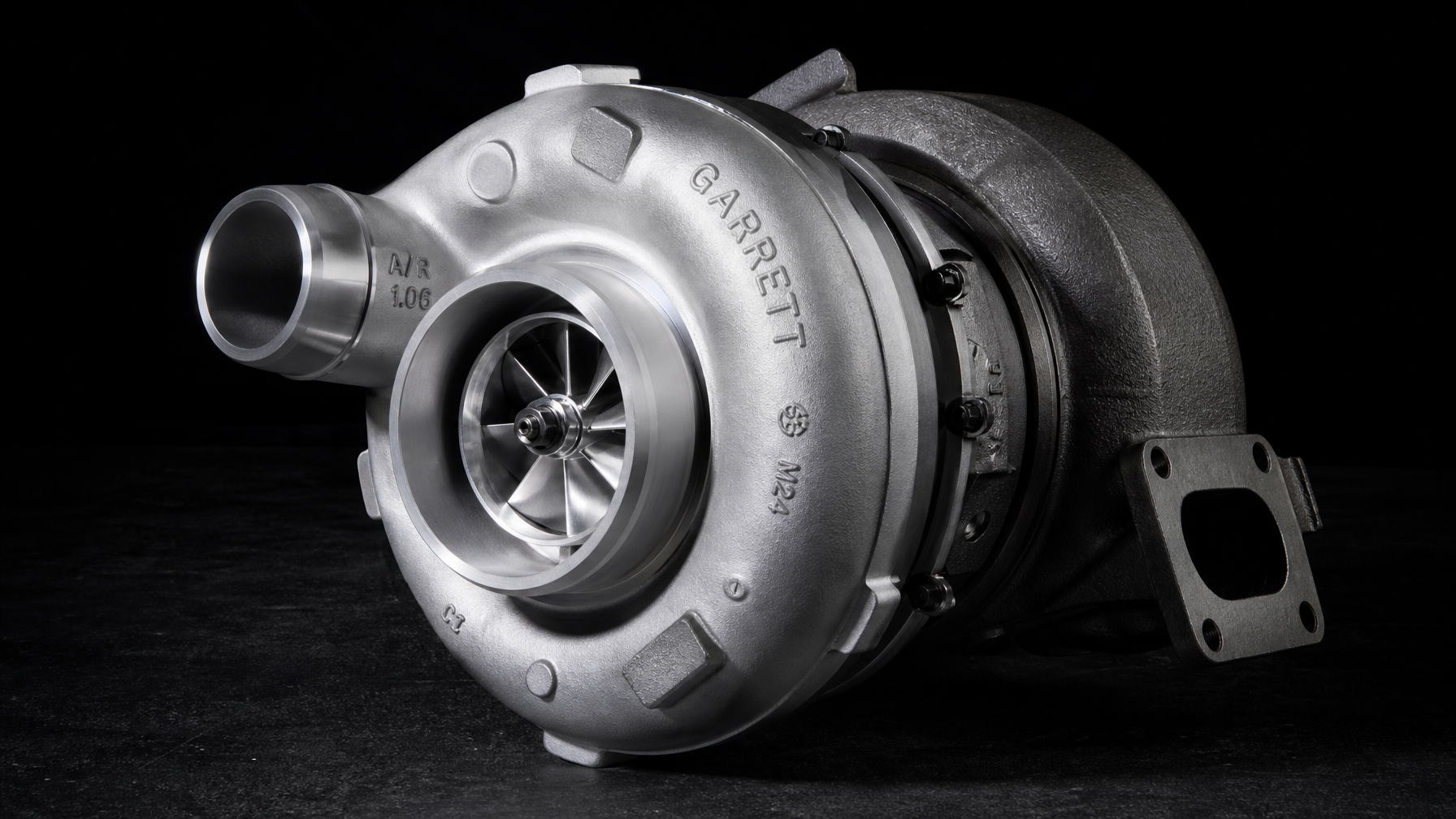
A turbocharger converts exhaust gas energy into boost — energy that would otherwise be wasted out the tailpipe. The tradeoff is spool time: boost builds as exhaust flow increases, which means power delivery has a curve rather than an on-switch. For most street and track builds, that tradeoff is exactly right: big power potential, reasonable cost, and a power band that can be shaped by turbo sizing and wastegate tuning.
We source and install turbo kits from Garrett, BorgWarner, Precision Turbo, and Turbonetics. For builds starting from scratch, we size the turbo to the target — matching the compressor map's efficiency island to your RPM range and boost target. Getting it wrong means either lag you can't use or surge that destroys the turbo.
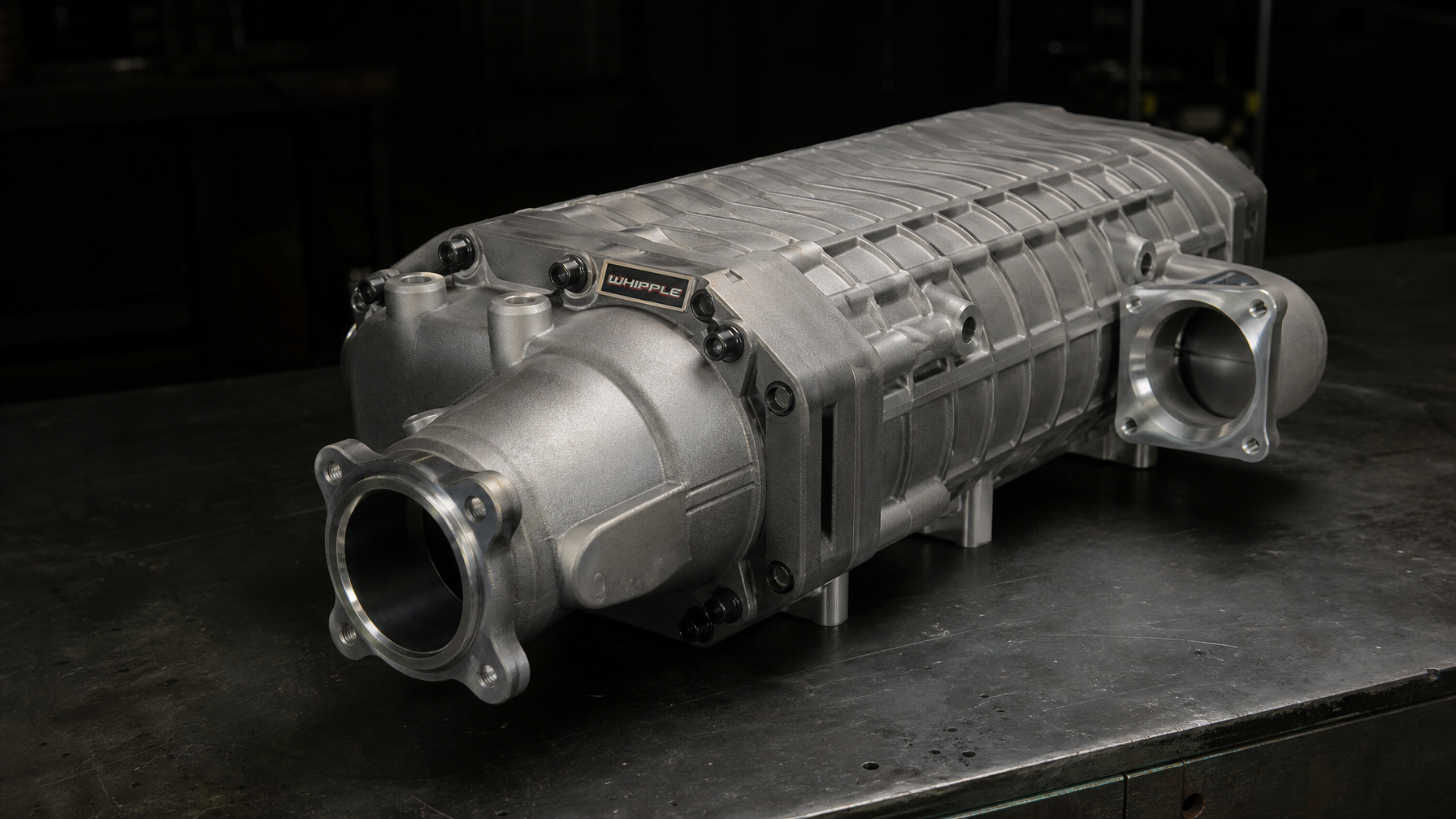
A supercharger's defining characteristic is immediate boost response — it's belt-driven off the crank, so the moment you're on the throttle, boost is there. For street-driven muscle cars, LS builds, F150 owners, and anyone who wants power below 4,000 RPM, the supercharger is often the better choice.
We install centrifugal superchargers (Vortech, ProCharger) that build boost progressively with RPM, and positive-displacement Roots and twin-screw units (Whipple, Magnuson, LSA swaps) that make maximum boost from idle — the signature instant-torque character of classic blown builds. Kit selection depends on your platform, your power goal, and your use case.
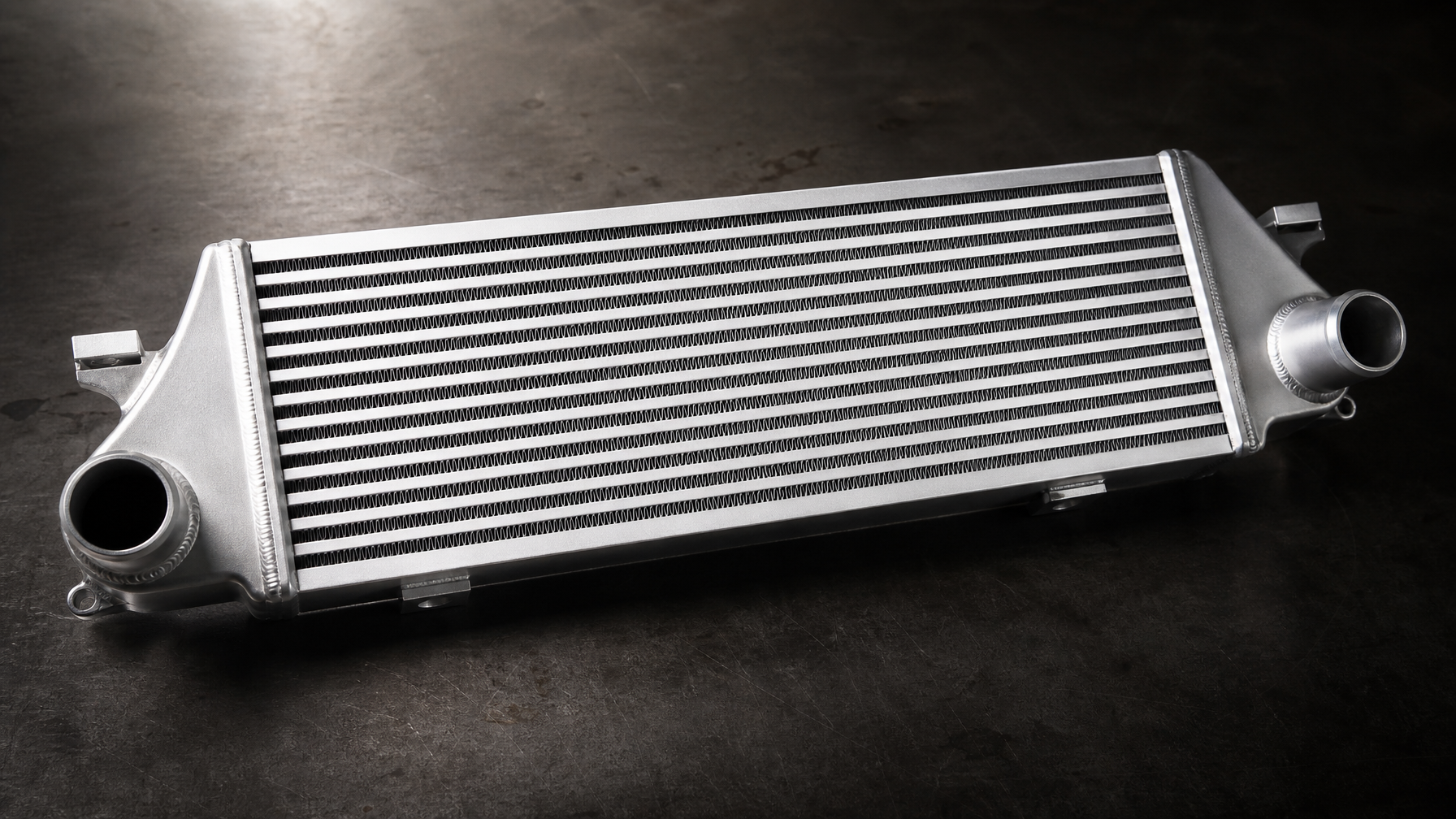
Compressing air heats it. A turbocharger or supercharger can raise intake air temperatures dramatically — and hot air is less dense, which costs power. More critically, heat dramatically increases detonation risk. Factory intercoolers are sized for stock boost levels. The moment boost goes up, the factory core becomes a restriction.
We upgrade to front-mount intercooler (FMIC) cores for maximum thermal efficiency, side-mount (SMIC) configurations where packaging requires it, and air-to-water systems where low-profile intake positioning is critical. Intercooler piping, couplers, and blow-off valves are part of every build — a high-flow core connected by restrictive piping is a waste of money.
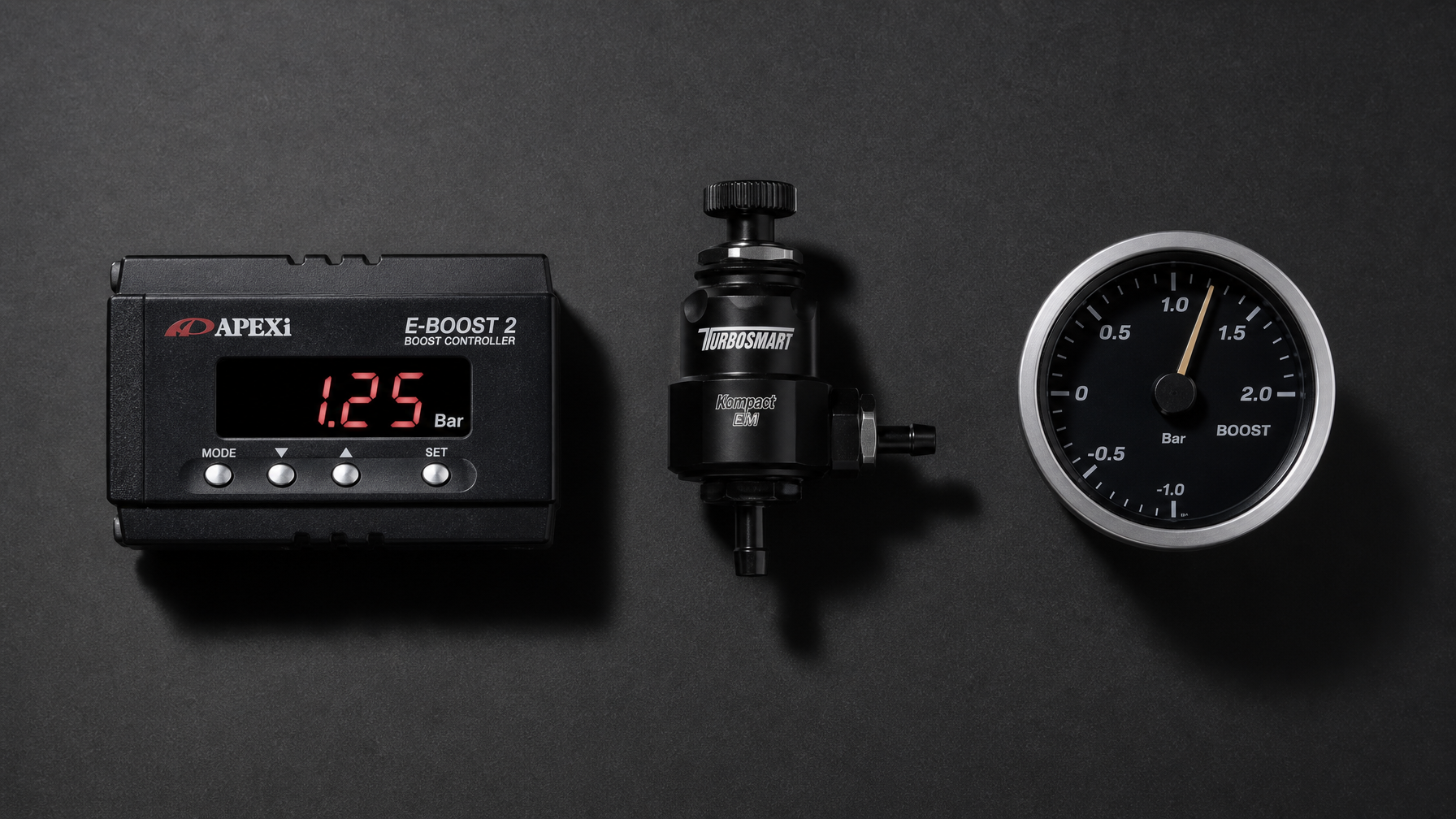
A boost controller determines how much pressure your turbocharger makes at any given moment. Without one, boost is set by the wastegate actuator spring — a fixed pressure point that may be nowhere near your actual target. With a boost controller, you can set boost by RPM, by gear, and by condition.
Manual boost controllers (MBC) are simple and reliable — a needle valve restricts the wastegate signal, allowing boost to climb above the spring rating. Electronic boost controllers (EBC) add closed-loop control, gear-based boost mapping, and multiple boost profiles. Proper wastegate sizing is part of this conversation — an undersized wastegate causes boost creep that exceeds tune parameters and risks the engine.
Turbo vs Supercharger:
The Honest Answer.
Neither is universally better. They make different power, in different ways, with different tradeoffs — and the right choice depends on your platform, use case, and power target.
A turbocharger harvests exhaust energy that would otherwise be wasted — thermodynamically, it's the more efficient forced induction system. For a given power target, a turbo system typically costs less and makes more peak power. Power delivery is progressive: boost builds with exhaust flow, beginning in the mid-RPM range and climbing from there. Modern twin scroll and variable geometry turbochargers tighten spool significantly — the "laggy turbo" stereotype doesn't apply to a properly sized performance turbo on a modern platform.
For big power targets — 600+ RWHP — turbos are almost universally the answer because the compressor can be sized to hit numbers that belt-driven superchargers struggle to reach economically.
A supercharger's defining advantage is linear, immediate boost response. Belt-driven off the crankshaft, boost is present the moment you're on the throttle. Positive-displacement superchargers — Roots, twin-screw, Whipple — make maximum torque at low RPM, often from idle, which is why blown engines feel so effortlessly powerful in daily driving.
For the Houston truck and muscle car market — F150 owners, Hellcat builds, LS-powered cars — the torque character of a supercharger often fits the use case better than a turbo would. Supercharger kits also tend to have simpler install requirements on purpose-built applications.
The most common answer we give: if you drive it every day and want torque you can feel in city traffic, supercharger. If you're building for peak power numbers, track use, or a platform with a strong turbo aftermarket, turbocharger. If you're not sure — that's what the consultation is for.
We Know What Breaks
on Your Platform. Before It Does.
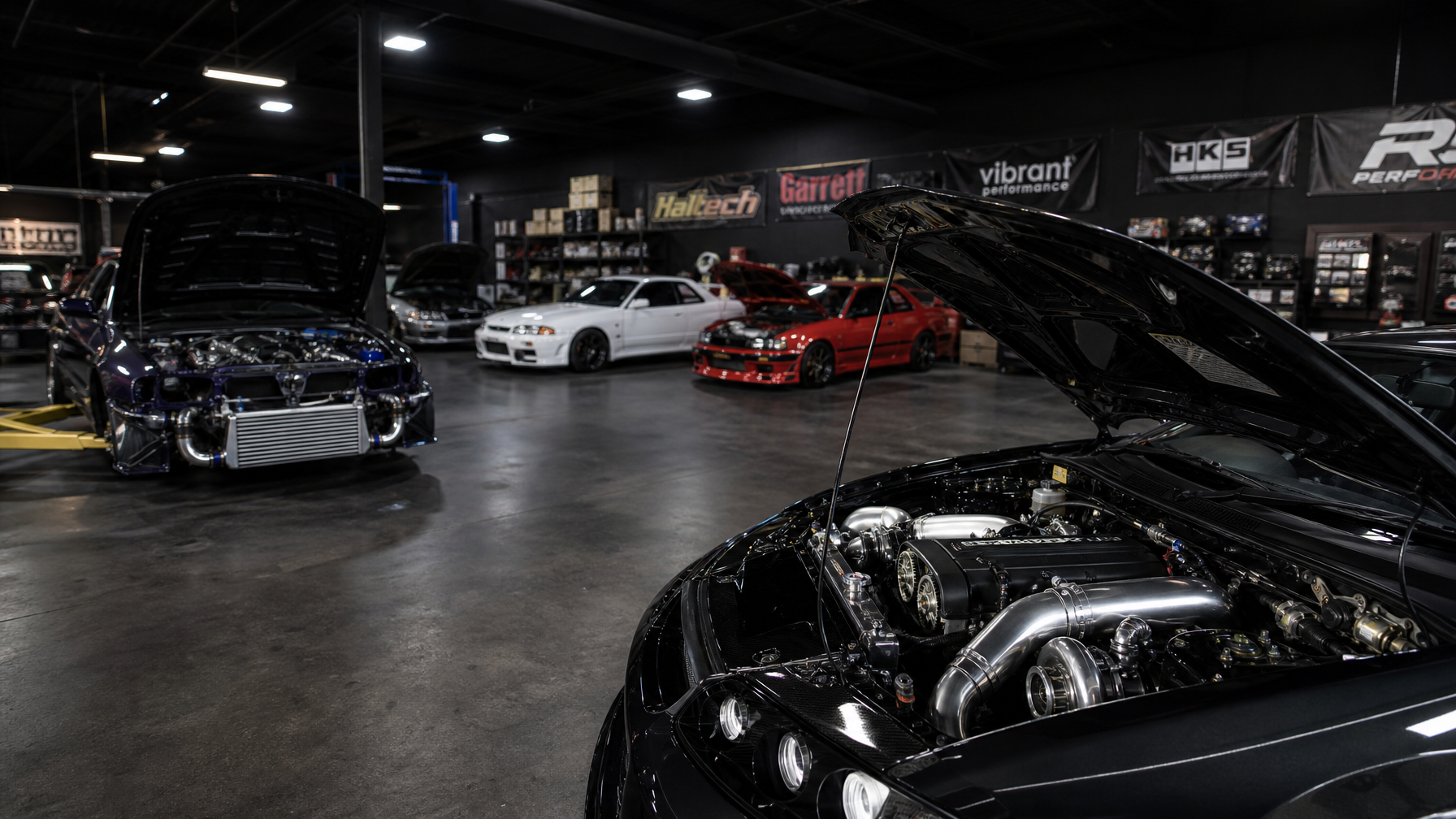
Every forced induction build starts from a platform-specific baseline — power ceiling, first failure point, and the supporting mods required before boost goes up. Here's where we start on the builds we do most.
The F150 Coyote 5.0 is one of the most popular supercharger platforms in the country. Whipple and Magnuson offer purpose-built positive-displacement kits that bolt directly to the intake manifold and make enormous torque from low RPM — exactly what an F150 owner wants. For high-power targets past 700 RWHP, the conversation shifts to forged internals, port injection support, and fuel system upgrades. The EcoBoost F150 (2.7L and 3.5L twin-turbo) has its own strong upgrade path: larger turbos, upgraded intercoolers, and a tune for 500+ RWHP on bolt-ons.
The Hellcat arrives with a 2.4L IHI twin-screw supercharger making 6–7 psi — and the engine is built to handle significantly more. The most common upgrade: a larger positive-displacement supercharger (Whipple 3.0L or larger) with a pulley swap to reach 14–18 psi, port injection conversion, and supporting fuel system work. The result is 900–1,100 RWHP on a car that can still be driven to the track. For full race builds, the 6.2L block accepts substantial cylinder pressure — the limit is usually fuel system and calibration before internals become the constraint.
The LS platform is arguably the most versatile forced induction candidate in the enthusiast world. Centrifugal superchargers from Vortech and ProCharger bolt on without disassembling the engine. Magnuson Heartbeat positive-displacement units fit within stock hood clearance on most applications. Turbo kits from a dozen manufacturers cover single, twin, and underhood configurations. The LSA (from ZL1 and CTS-V) brings a factory 1.9L supercharger popular as a swap into LS builds. For the LT4, the upgrade path starts with a pulley and tune — then intercooler efficiency, then fuel system.
The BMW N54 twin-turbo inline-six is one of the most responsive turbo upgrade platforms available. The factory turbos are undersized for serious power targets, but the engine responds dramatically to upgraded single or twin-turbo configurations, intercooler upgrades (the factory FMIC is a known restriction), and proper tuning. Upgraded charge pipe to address the notorious plastic failure point, high-flow downpipes, and a full flash tune are the foundation. Upgraded turbos push 500–600 RWHP on stock internals with proper fueling and tune.
Diesel forced induction is its own discipline. The 6.7 Cummins responds dramatically to turbocharger upgrades because diesel combustion is always fuel-limited — more air means more fuel can be commanded, and more fuel means more torque. Compound turbo systems (small primary feeding a large secondary) are the most efficient path to big diesel power: fast spool at low RPM, carrying capacity at high RPM. Upgraded single turbo configurations (S400 series equivalents) are simpler installs with significant power gains. Supporting mods — upgraded injectors, lift pump, intercooler — are part of every serious diesel build.
The VQ35 and VQ37 are proven turbo platforms with a well-developed aftermarket. Single turbo kits for the 350Z and 370Z typically route through the factory exhaust manifold area or use custom headers with a single scroll or twin scroll configuration. The VQ35HR (later 350Z) and VQ37VHR (370Z) have stronger bottom ends than the early DE revision — though all benefit from upgraded connecting rods before pushing past 450 RWHP under boost. The 350Z has become a popular time attack and drift platform, and forced induction is central to most competitive builds.
The System Behind
the Boost Number.
A boost number on a gauge is the output of a system. When one component is undersized, the whole system underperforms or fails. Here's what goes into a properly engineered forced induction build.
A properly sized turbo puts your target boost and airflow squarely in the center of the compressor map's efficiency island at your target RPM. Too small: the turbo chokes at the top of the rev range, spools fast but runs out of breath. Too large: spool is delayed, the power band arrives only at high RPM, and the turbo surges at low throttle. Single scroll housings are simpler; twin scroll separates exhaust pulses from paired cylinders to improve spool and reduce back pressure — generally the better choice on any serious build targeting 7,000+ RPM.
The wastegate is the pressure relief valve for the turbine side — it bleeds exhaust pressure past the turbine to control boost level. Internal wastegates are compact but limited in flow capacity. External wastegates (Tial, Turbosmart, Hypertune) handle higher boost levels and provide more precise control. An undersized wastegate can't flow enough exhaust to prevent boost creep — where boost climbs past target and keeps climbing under sustained load. Boost creep at 1,000 RPM above the tune's target is a detonation event. External 44mm or 60mm wastegates are the correct answer for any serious track build targeting sustained boost above 20 psi.
Front-mount intercooler (FMIC) cores provide the highest thermal efficiency — ambient air flows through the core at maximum velocity and the core can be sized without engine bay constraints. Side-mount (SMIC) configurations shorten the piping path but limit core size and ceiling. Air-to-water intercoolers mount directly on the intake manifold — minimal piping volume for low lag, highly effective at short-duration power events, but require a separate reservoir and pump. For track builds with sustained boost, FMIC with a large, quality core is almost always the correct answer. Target intake charge temperatures within 20°F of ambient for optimal detonation resistance.
When you lift off the throttle under boost, the turbo is still spinning and the throttle plate closes — creating a pressure spike in the intake tract that can damage the compressor wheel and cause compressor surge. A blow-off valve (BOV) vents that pressure to atmosphere, protecting the turbo and allowing faster respool. A recirculation or diverter valve routes that pressure back into the intake — required on MAF-based fuel injection systems, where venting to atmosphere causes a temporary rich condition. On speed density tune systems (no MAF), atmospheric vent is fine. This is a tune-dependent decision — confirm with your tuner before selecting.
Boost dramatically increases fuel demand. A turbocharged engine at 600 RWHP is consuming injector duty cycles that stock injectors cannot supply — they run out of capacity, the engine leans out, and detonation follows. Fuel system upgrades for forced induction builds typically include larger fuel injectors, upgraded fuel pump (Walbro, DeatschWerks, or Aeromotive), and on high-boost E85 builds, a flex-fuel sensor and dual-pump setup. Port injection supplements to direct injection systems — common on modern Coyote and EcoBoost builds — are increasingly standard on serious power builds where direct injection alone can't supply required fuel mass.
A forced induction system without a dyno tune is hardware running on guesswork. The factory ECU calibration is written for naturally aspirated operation — its fuel maps, timing tables, and boost limits are not designed to manage boost. Running on a factory tune causes two problems: timing isn't optimized for the new cylinder pressure, leaving power on the table; and when knock occurs, the stock knock retard strategy may not respond aggressively enough, allowing detonation to accumulate damage quietly over time. Every forced induction install we do includes a dyno session: KLSA mapped on the actual fuel, AFR verified under load, boost target confirmed by gauge.
Boost Without a Tune
Is How Engines Die.
This section exists because we've seen the aftermath. Someone buys a turbo kit, gets it installed by a shop without a dyno, drives it on the factory tune, and detonation events accumulate over thousands of miles until something catastrophic fails.
The factory ECU is not passive — it has knock sensors and timing retard strategies, calibrated for atmospheric operation with a specific compression ratio and fuel octane assumption. When you add boost, cylinder pressure rises beyond those assumptions. The knock sensors catch detonation events and pull timing, which prevents immediate failure — but they allow the engine to keep running in a condition that's accumulating damage at every combustion event. The engine doesn't explode; it quietly degrades until it fails in a way that looks random but was completely preventable.
The tune addresses this directly: the tuner raises boost gradually under load, watches knock counts, AFR, and KLSA in real time, advances timing to the knock limit for the fuel and compression combination, then backs off to a safe margin. When the car leaves, you know exactly what it's making. That's not an upsell. That's the job.
Consultation to Dyno.
Every Time.
Four stages. No skipped steps. No car leaves the shop without a verified dyno sheet and a known power number.
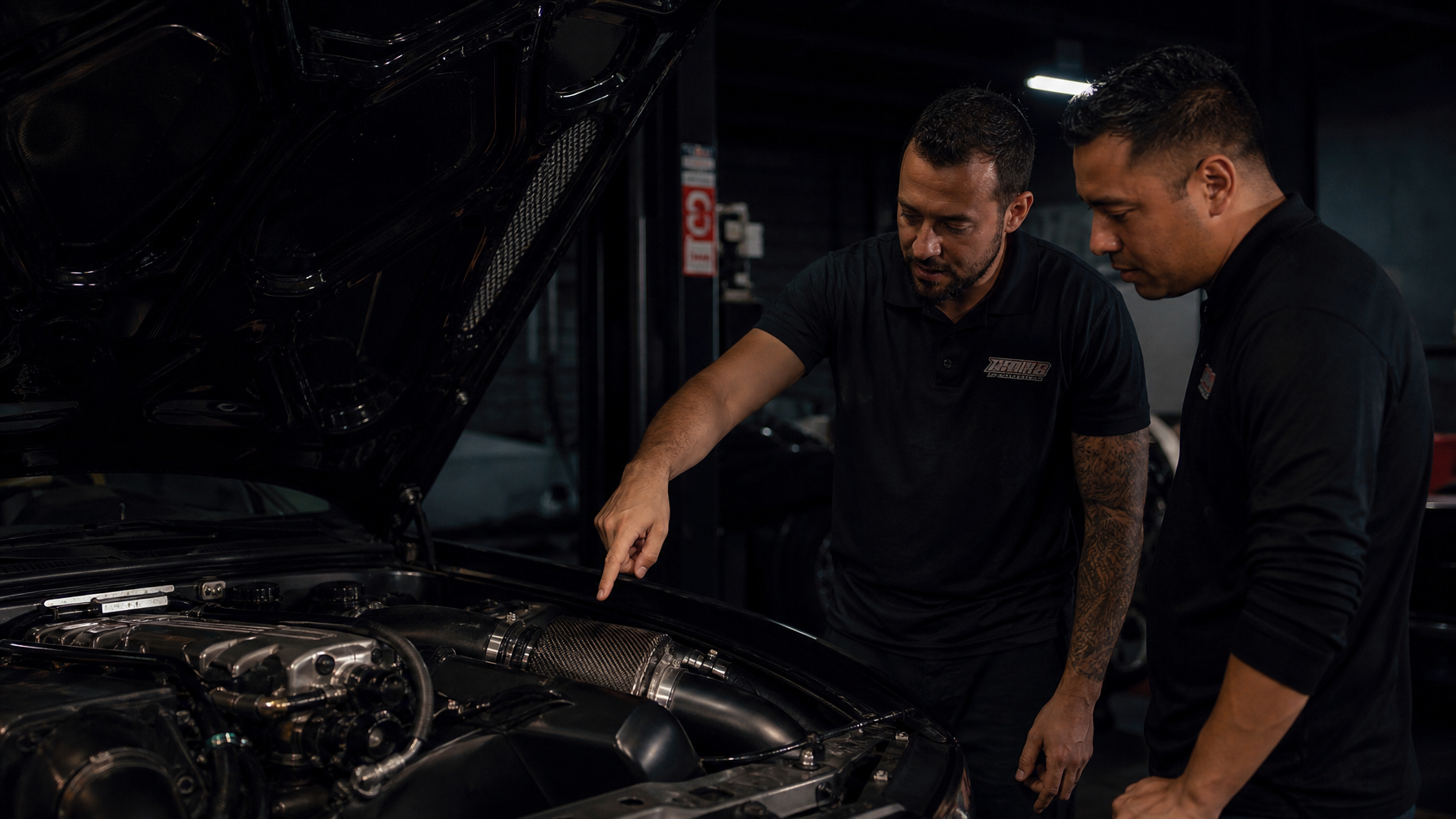
Before any parts are ordered, we establish the full system. Power target. Fuel. Platform's stock internal ceiling relative to the boost target — and whether the bottom end needs to be addressed first. Intercooler configuration that fits the car's packaging. Supporting mods the fuel system needs. These answers determine the component list. A turbo kit that's right for a 400 RWHP street car on 93 is the wrong kit for a 700 RWHP E85 road course build on the same platform. We scope the system before we quote the system.
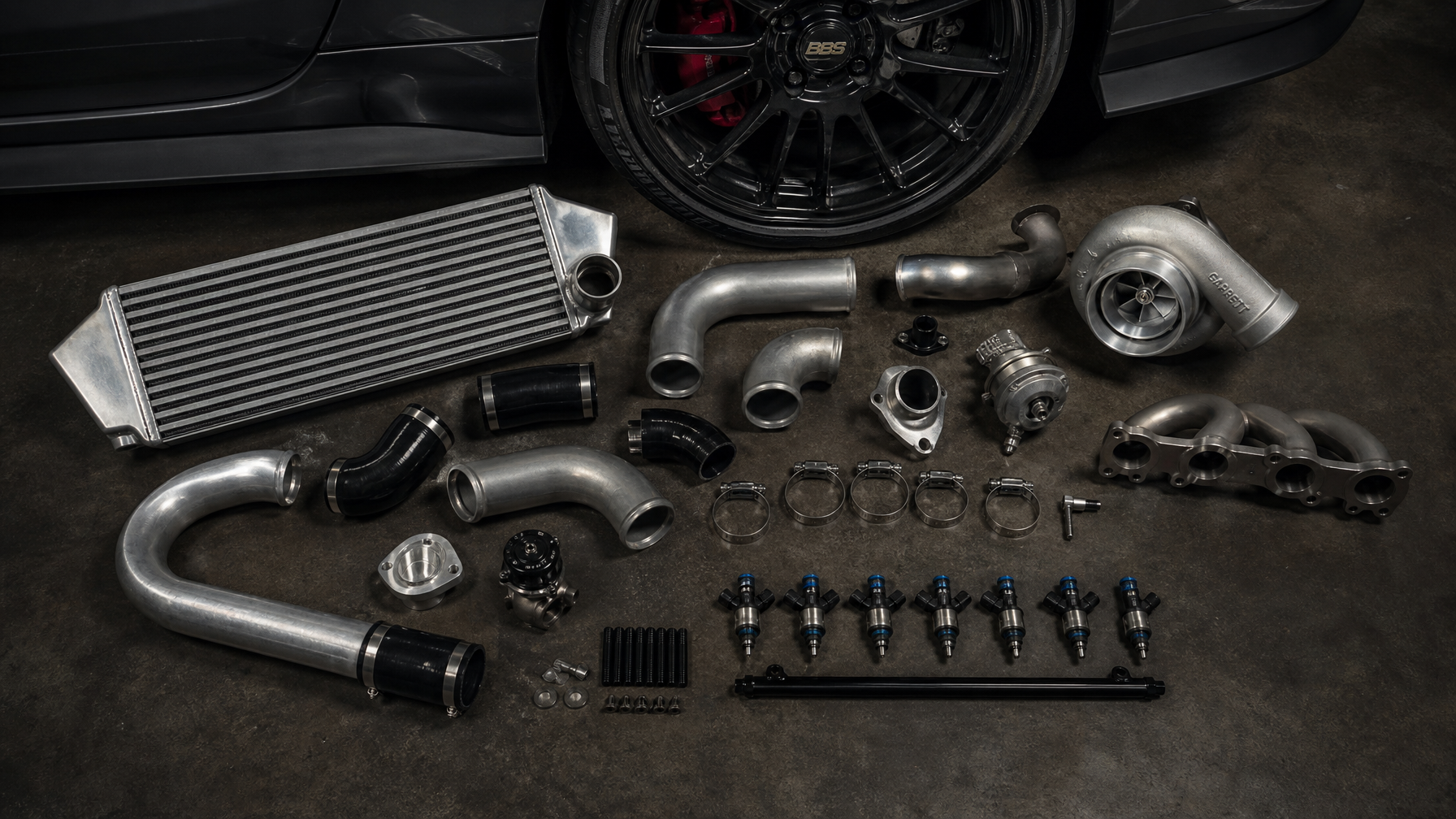
We source from manufacturers we trust for build quality and support: Garrett, BorgWarner, Precision Turbo, Turbonetics, Tial, Turbosmart, Mishimoto, Whipple, Vortech, Magnuson, ProCharger, Walbro, DeatschWerks, AEM. Platform-specific kits are evaluated against the build target — some manufacturer kits are excellent, others require modification to hit serious power. We tell you which is which before the parts arrive, not after they're installed and don't perform.
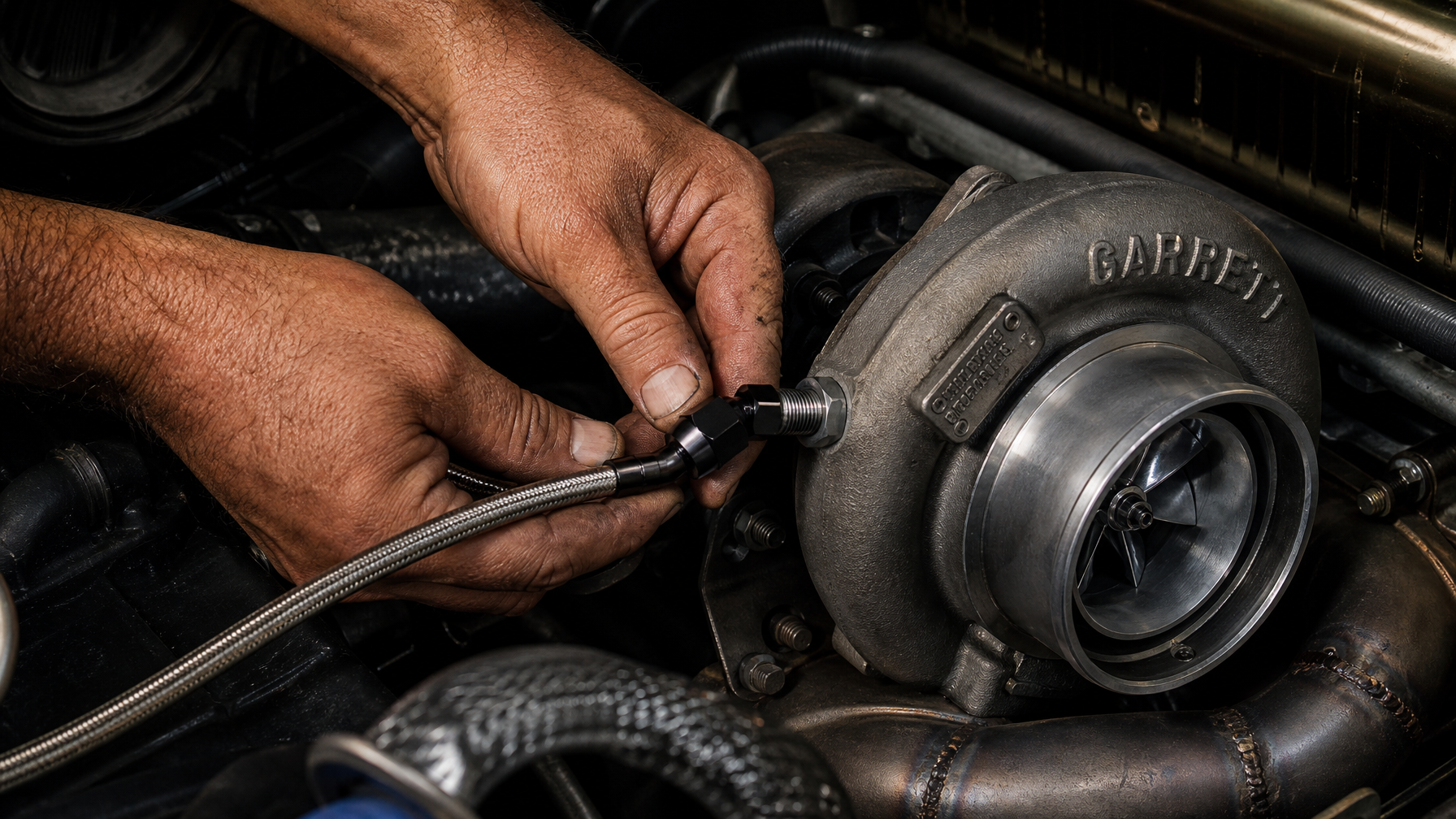
Oil feed and return lines sized for the turbo's flow requirements. Boost lines routed away from heat sources. Intercooler piping with silicone couplers and stainless clamps — no zip ties holding boost pressure. BOV or diverter valve positioned for clean boost transitions. Wastegate plumbed to the boost controller. Every connection pressure-checked before startup. Supporting mods — injectors, fuel pump, catch can — installed at the same time to avoid a second teardown three months later.
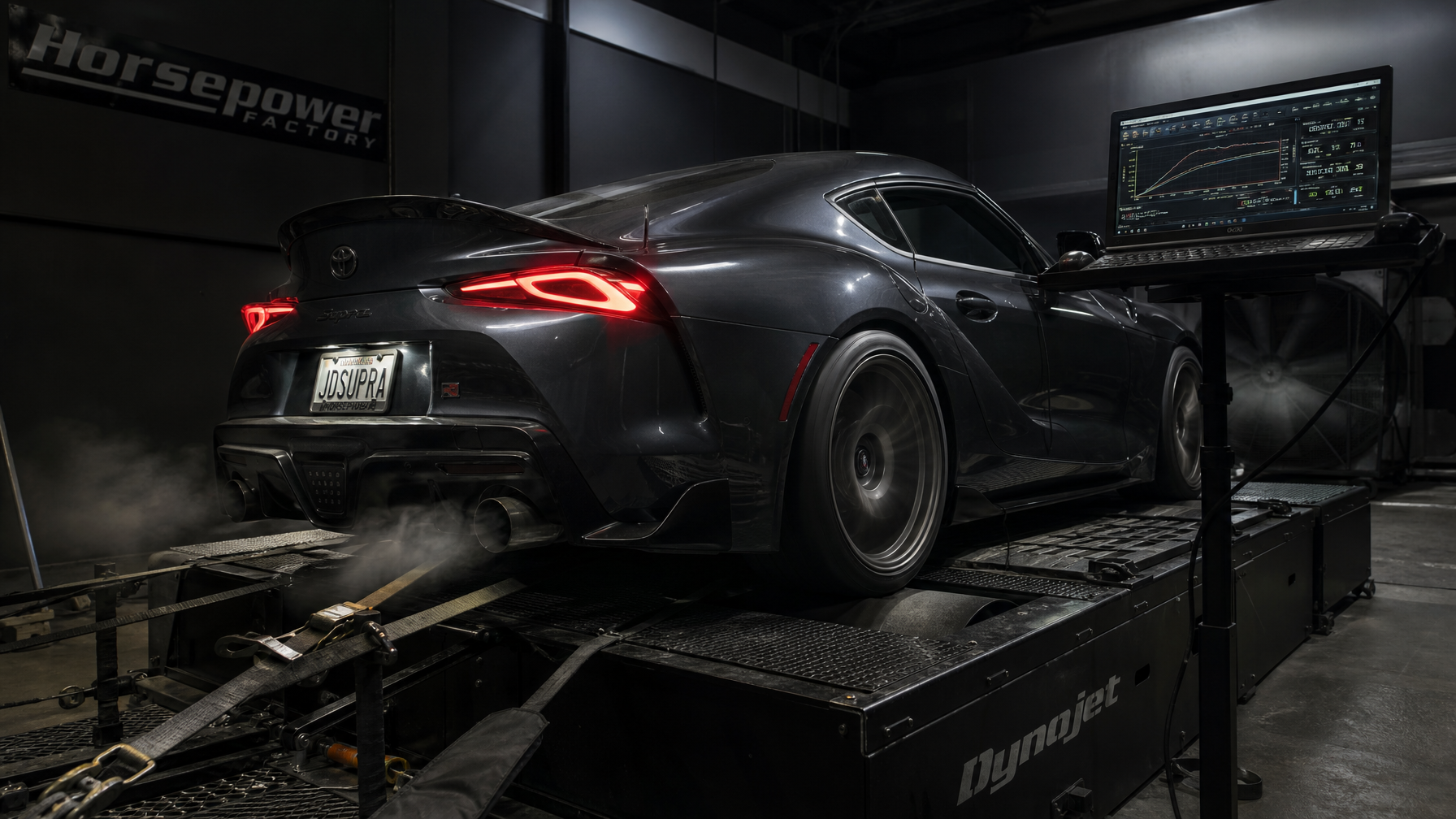
The car goes on the dyno before it leaves. Boost is raised gradually under load while the tuner watches knock counts, AFR, and KLSA in real time. Timing is advanced to the knock limit for the fuel and compression combination, then backed off to a safe margin. Boost target confirmed by gauge and cross-referenced with the hardware spec. You receive a dyno sheet with baseline and final pulls showing wheel horsepower, wheel torque, and boost pressure through the RPM range. The car leaves with a known quantity — not a hope and a prayer.
Houston's Forced Induction Shop
That Tunes What It Installs.
The single most important differentiator in a forced induction shop is whether they have a dyno and use it on every install. Most don't. Every car we boost leaves with a dyno sheet.
A forced induction kit installed without a dyno tune is hardware running on guesswork. We include the dyno session in every forced induction install — not as an add-on, not as optional. The tune is not a service we upsell after the install. It is the install. You leave with a dyno sheet showing what the car is actually making.
We scope the full system — turbo, intercooler, fuel, boost management, and supporting mods — before any parts are ordered. The kit that's right for your platform and power target is not always the kit the forum recommends. We tell you what the combination actually needs, not what we have in stock.
We know the N54's plastic charge pipe failure point. We know the Coyote's injector ceiling on E85 at 700 RWHP. We know where the Hellcat's IHI blower runs out of efficiency. This isn't generic forced induction theory — it's build experience on these specific platforms that prevents predictable failures before they happen to your engine.
We tell you what the stock internals on your platform will actually hold before we quote the boost build. If your power target requires engine work first, that conversation happens in the consultation — not as a mid-build line item surprise. We've seen what mid-build surprises do to client relationships. We don't do them.
Fuel pump, injectors, catch can, oil feed and drain lines, intercooler piping — all of it done at initial install to avoid a second teardown. One job, done completely. We scope what the system needs upfront so the car doesn't come back six months later because the fuel pump wasn't addressed the first time.
We give itemized quotes: turbo kit or supercharger, intercooler, supporting mods, install labor, and dyno time as separate line items. No mystery flat rates that expand mid-build. You know what you're paying for before any parts are ordered — and the quote doesn't change unless you change the scope.
Forced Induction FAQ
The questions we answer before every build. Real answers — no filler.
Ready to Add Boost
the Right Way?
Tell us your platform, power target, and fuel. We'll scope the system that makes sense for that combination — and tune it before it leaves.
Tell Us About Your
Forced Induction Project
The more detail you give us upfront, the more useful the first conversation will be. We review every submission and reach back within one business day.
We review every submission and respond within one business day. No spam, no pressure — just a real conversation about your build.

IRON RIDGE MOTORSPORTS


