
Every Build Starts
with a Conversation.
Every Build Ends
with Documentation.
Seven stages from consultation to delivery. Itemized quotes before a single part is ordered. Communication throughout the build. A car that leaves with documented proof of everything we did and what it produces.
Most Build Problems Happen
Before the First Part
Is Ordered.
The most common reason a performance build goes wrong isn't a bad part or a failed weld. It's a conversation that didn't happen at the beginning — about what the car actually needs versus what the customer asked for, about what the platform's internal limits are at the power target being discussed, about what the total cost of doing the job correctly is versus the cost of doing only what was originally requested.
A customer who asks for a turbo kit without discussing the fuel system upgrade the build requires will discover the fuel system problem mid-build, when the car is already apart. A customer who asks for a dyno tune on a car with failing injectors gets a tune that was correct for the injectors that were there on dyno day. These aren't vendor failures. They're scoping failures — situations that a defined process at the front of every build would have prevented.
Our process exists to have the hard conversations early, when they're inexpensive, rather than mid-build or post-delivery, when they're not. Every build at Iron Ridge goes through the same seven stages regardless of scope. The scale changes. The rigor doesn't.
Seven Stages.
Every Build.
Every Time.
From the first contact through the moment keys are handed back, every Iron Ridge build follows the same structured sequence. Click any stage to see the full detail.
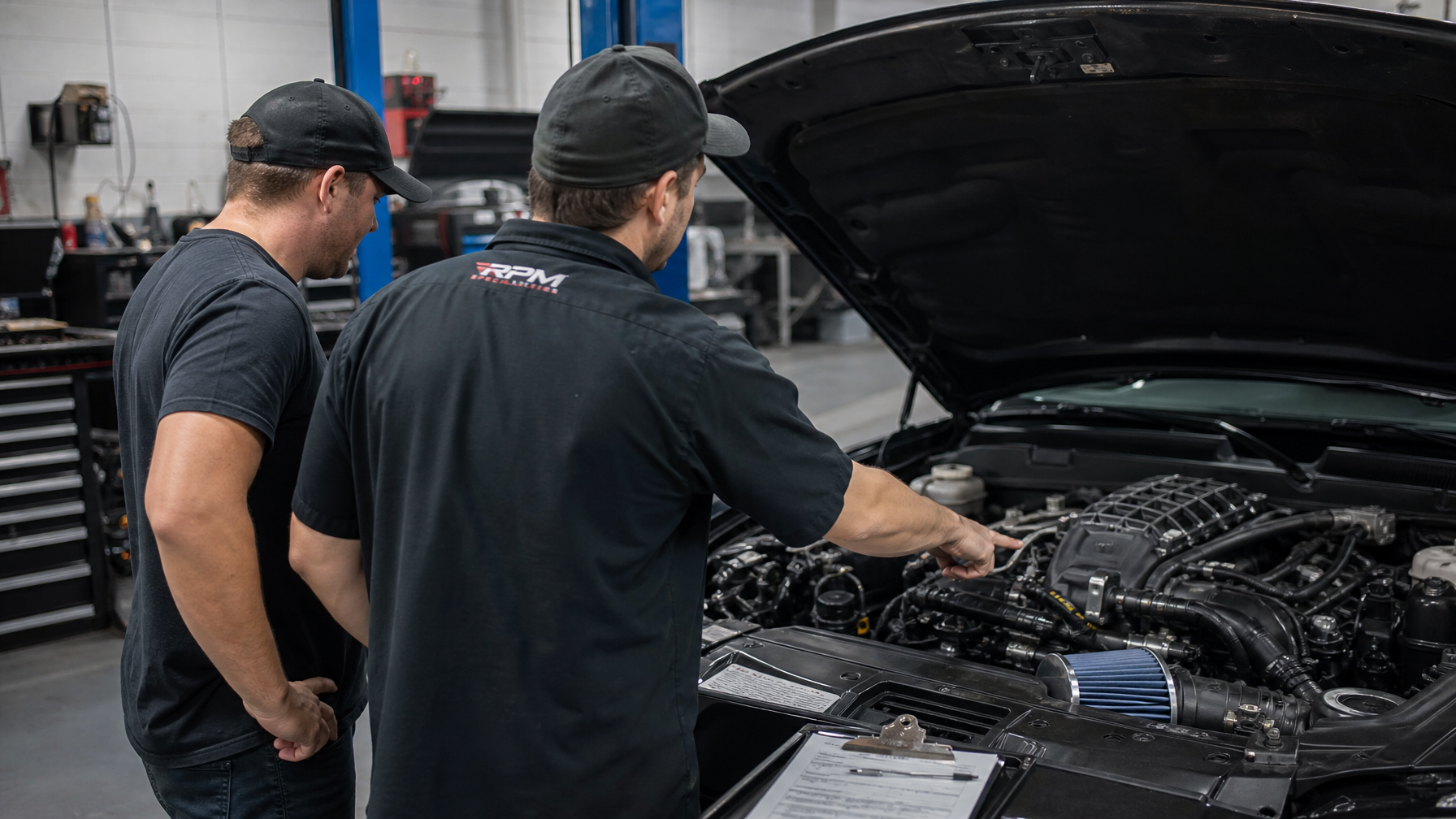
The first contact is a data collection exercise, not a sales conversation. When you submit a form, call, or walk in, we're trying to understand three things: what you're driving, what you want the car to do, and what you've already tried or installed. The more detail you give us at this stage, the more useful the first substantive conversation will be.
We respond to every form submission within one business day. If the project is complex — a full engine build, a safety fabrication project, a multi-system build — we'll schedule a dedicated consultation rather than trying to scope the project over email or in a brief phone call. There is no deposit required to have a consultation. There is no pressure to commit at the first meeting.
What we need from you at this stage: the car (year, make, model, platform), the goal (power target, use case, timeline), and the current state (what modifications are on the car, what's been done, what problems exist if applicable). If you don't have all of that figured out — that's fine. That's what the consultation is for.
The consultation is the most important stage in the entire build process. It's where the goal is translated into a specific scope — and where the gap between what the customer asked for and what the build actually needs gets identified and closed before money changes hands.
We walk through the goal in detail. Power target — not "I want it to be fast" but a specific wheel horsepower target on a specific fuel. Use case — not "street and occasional track" but which tracks, which events, how often, and what class. Timeframe — whether there's an event or season that the build needs to be ready for. These specifics change the component selection, the build sequence, and the quote.
We also walk through the platform. Every platform has a known power ceiling on stock internals, a known first failure point at higher power, and a known list of supporting modifications a serious build requires. We tell you which apply to your specific build target. If your power goal exceeds what the platform's stock internals will hold, that conversation happens here — not after the engine is apart.
What the consultation is not: a sales presentation. We don't try to add services to every conversation. If the car needs a tune and doesn't need new suspension, we say so. If the car needs suspension work first before the engine build makes sense, we tell you that too. The consultation's job is to produce an accurate scope, not a maximal one.
Every quote at Iron Ridge is itemized. Parts cost, labor cost, and any subcontracted work are listed as separate line items. There are no flat-rate "build packages" that bundle costs in a way that obscures what you're actually paying for. If the build requires a turbocharger, an intercooler, a fuel pump, new injectors, installation labor, and a dyno session, those are six line items with individual costs — not one number called "turbo build."
Itemized quotes serve two purposes. First, they allow you to make informed decisions about scope — if a line item is optional for the power target and you'd prefer to defer it, that conversation is possible because the item is visible. Second, they protect both parties when the scope is confirmed — there is no ambiguity about what was agreed to and what was priced.
Quotes are valid for 30 days. Parts prices are confirmed with suppliers before the quote is issued. If a part's price changes between quote issuance and order placement, we notify you before ordering. No work begins until the quote is approved and a deposit is placed. The deposit is typically 50% of the parts cost. It is non-refundable on custom or special-order parts once ordered.
We source from manufacturers and distributors we have established relationships with — Garrett, BorgWarner, KW Suspension, BC Racing, Bilstein, Eibach, Tein, Sparco, Simpson, Motul, AEM, DeatschWerks, Walbro, HP Tuners. We don't source from grey market suppliers or from vendors without track records in the performance industry, regardless of price differential.
Lead times vary significantly by product. Common coilovers on domestic platforms may ship in days. Custom-specification forged pistons may require 3–6 weeks. Camshafts ground to custom specifications can run 4–8 weeks. We communicate expected lead times at quote confirmation and update you when parts are received.
We don't schedule a build start date until all parts required for the build are confirmed in hand — starting a build with critical parts on backorder results in a car sitting partially disassembled, which serves no one. If a lead time changes after ordering — a manufacturer delay, a supply chain issue — we communicate immediately and give you the option to wait, substitute a comparable part, or adjust scope.
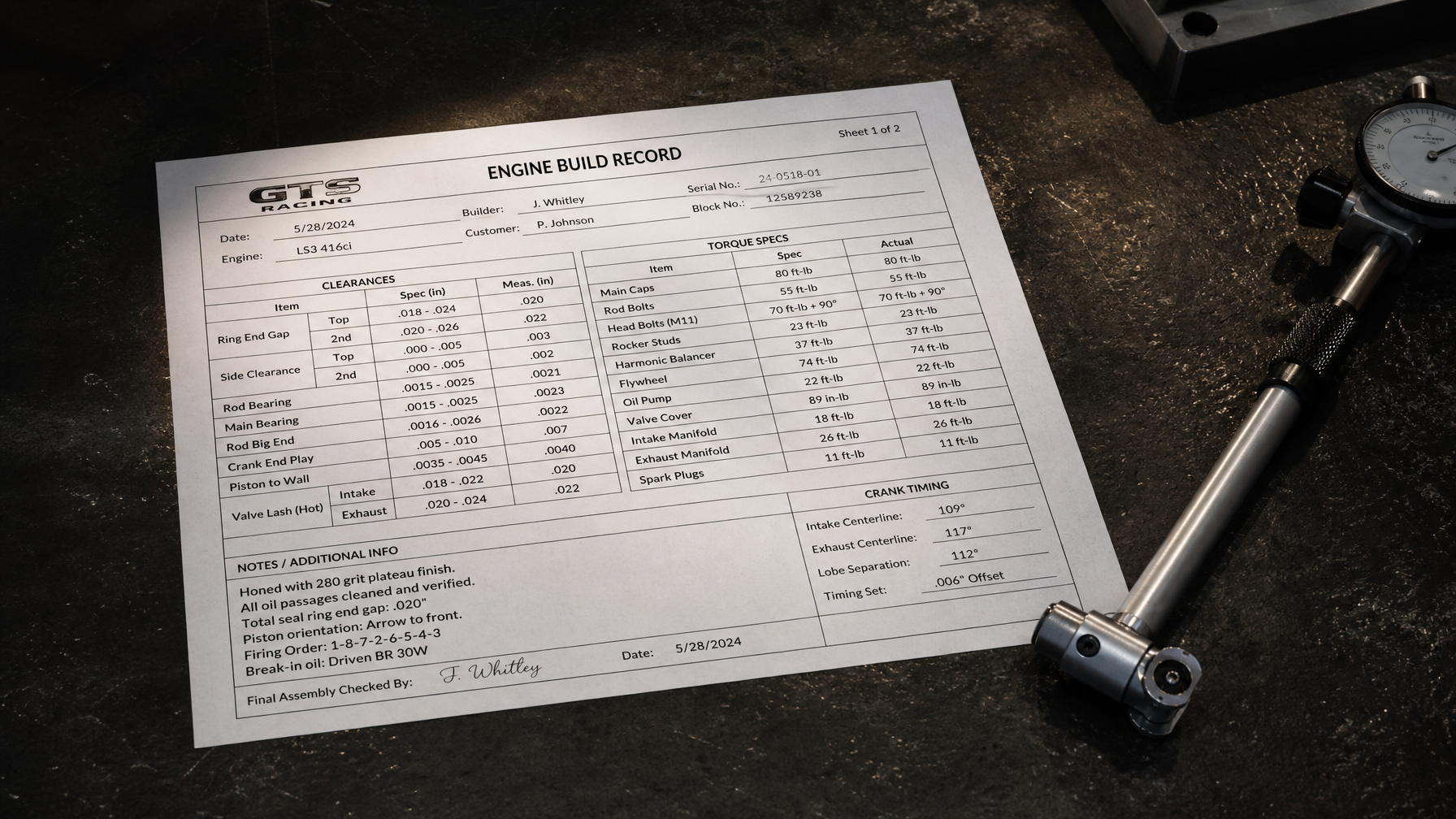
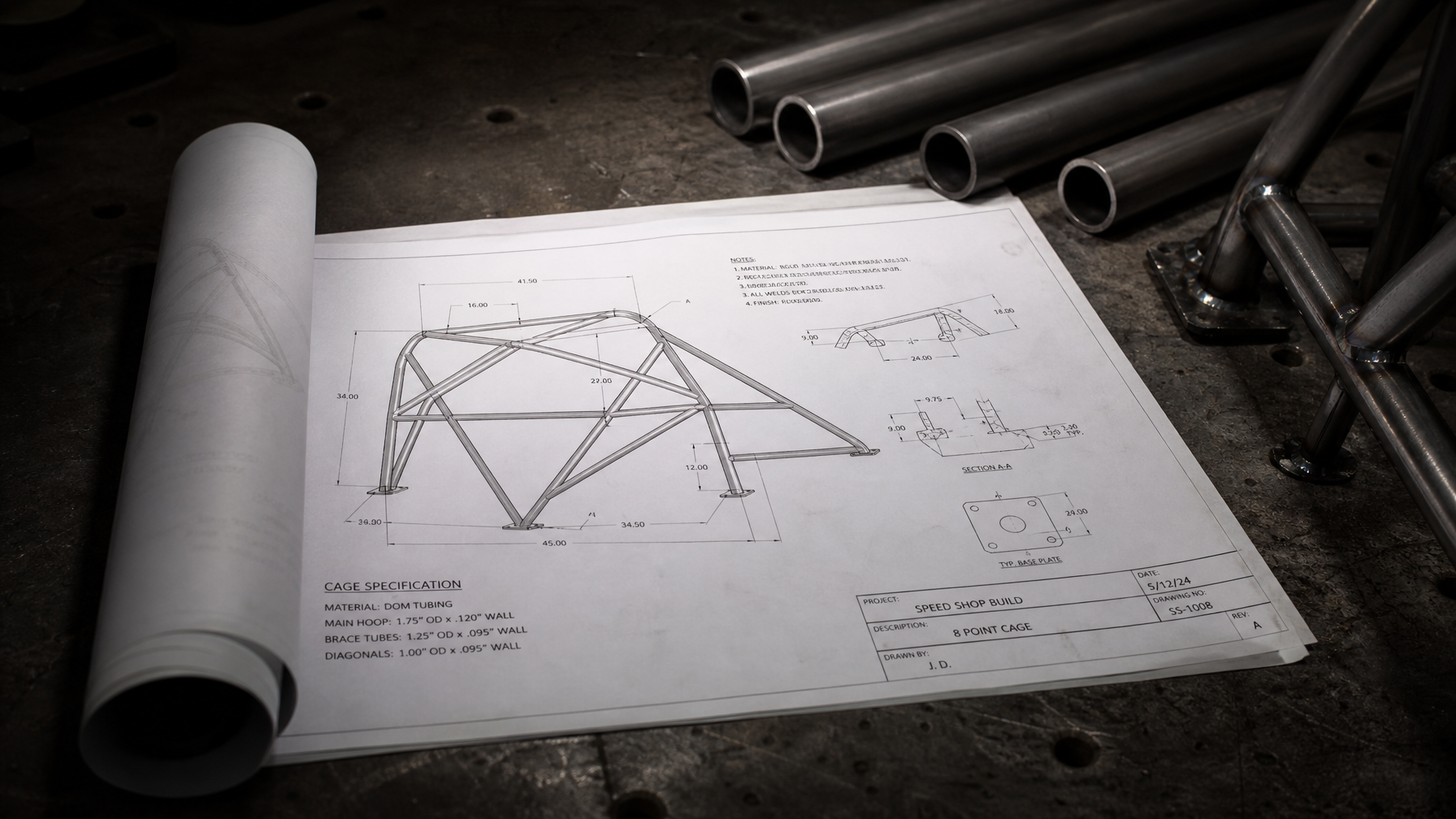
Build execution is where the work happens — and where the process disciplines established in the first four stages actually protect the quality of the outcome. Every critical measurement is documented during the build. For engine builds: main bearing clearances, rod bearing clearances, deck surface finish, piston ring gap, combustion chamber CCs, squish clearance, and any deviations from target that required correction. For forced induction installs: boost line routing, oil feed and return line sizing, intercooler pipe clearances, boost pressure at initial startup. For suspension: before-and-after alignment values, corner weights, ride height measurements. For safety fabrication: cage attachment plate dimensions, tube OD and wall thickness, weld inspection notes.
This documentation exists for three reasons: it creates accountability during the build (if a measurement is documented, it was taken, not assumed), it creates a reference for future work (if the car returns for additional work, the build record tells the next technician exactly what spec everything was built to), and it creates the foundation for the delivery documentation package.
Communication during the build: For builds with a timeline longer than one week, we provide status updates at meaningful milestones — parts received, teardown complete, measurements taken, assembly begins, assembly complete, ready for verification. You won't wonder where your car is.
Every build has a defined quality verification step that matches the type of work performed. This is not a universal dyno pull on every service — a brake fluid flush doesn't go to the dyno. But every build has a verification step that confirms the work produced the intended result before the car is returned.
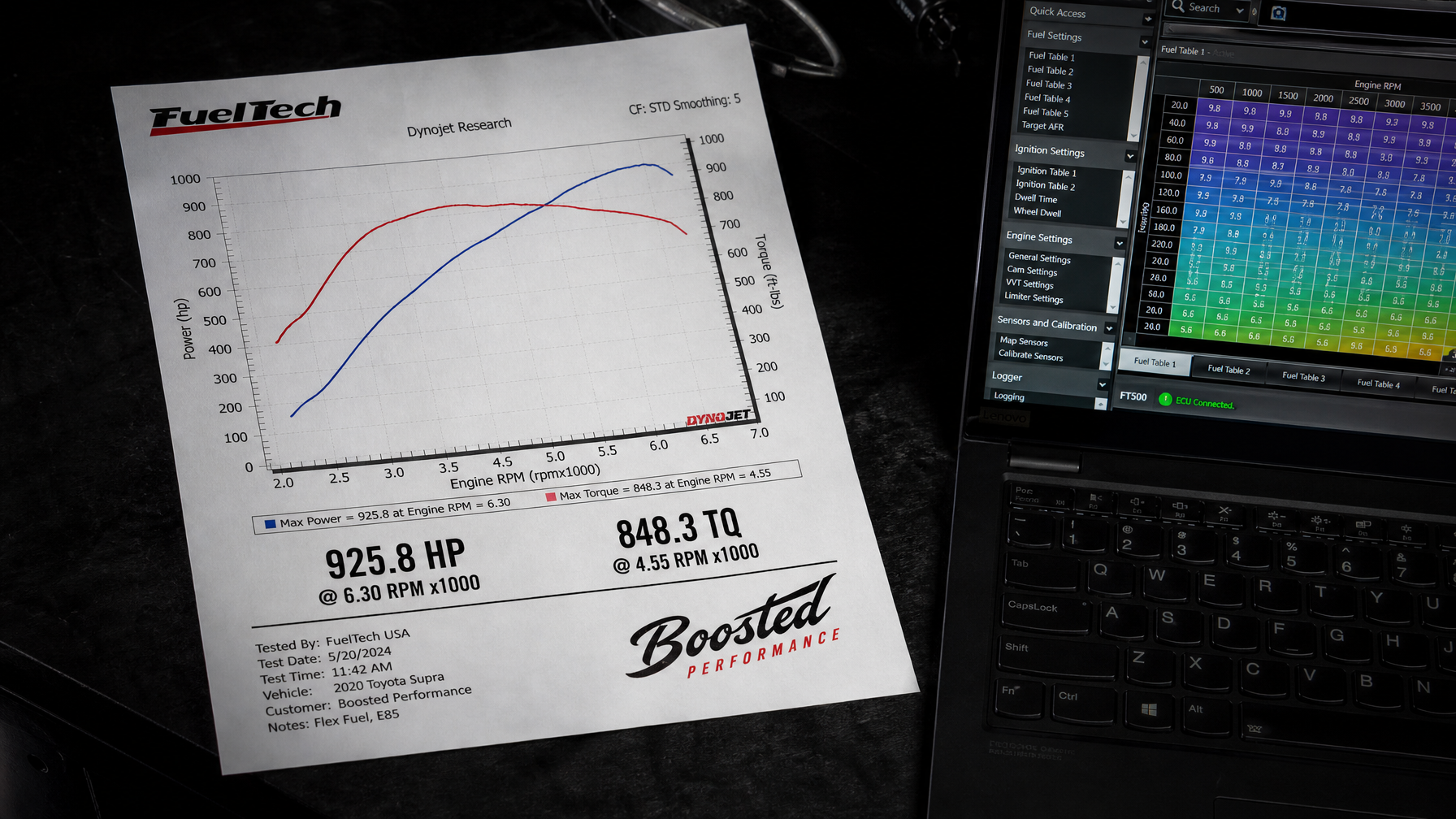
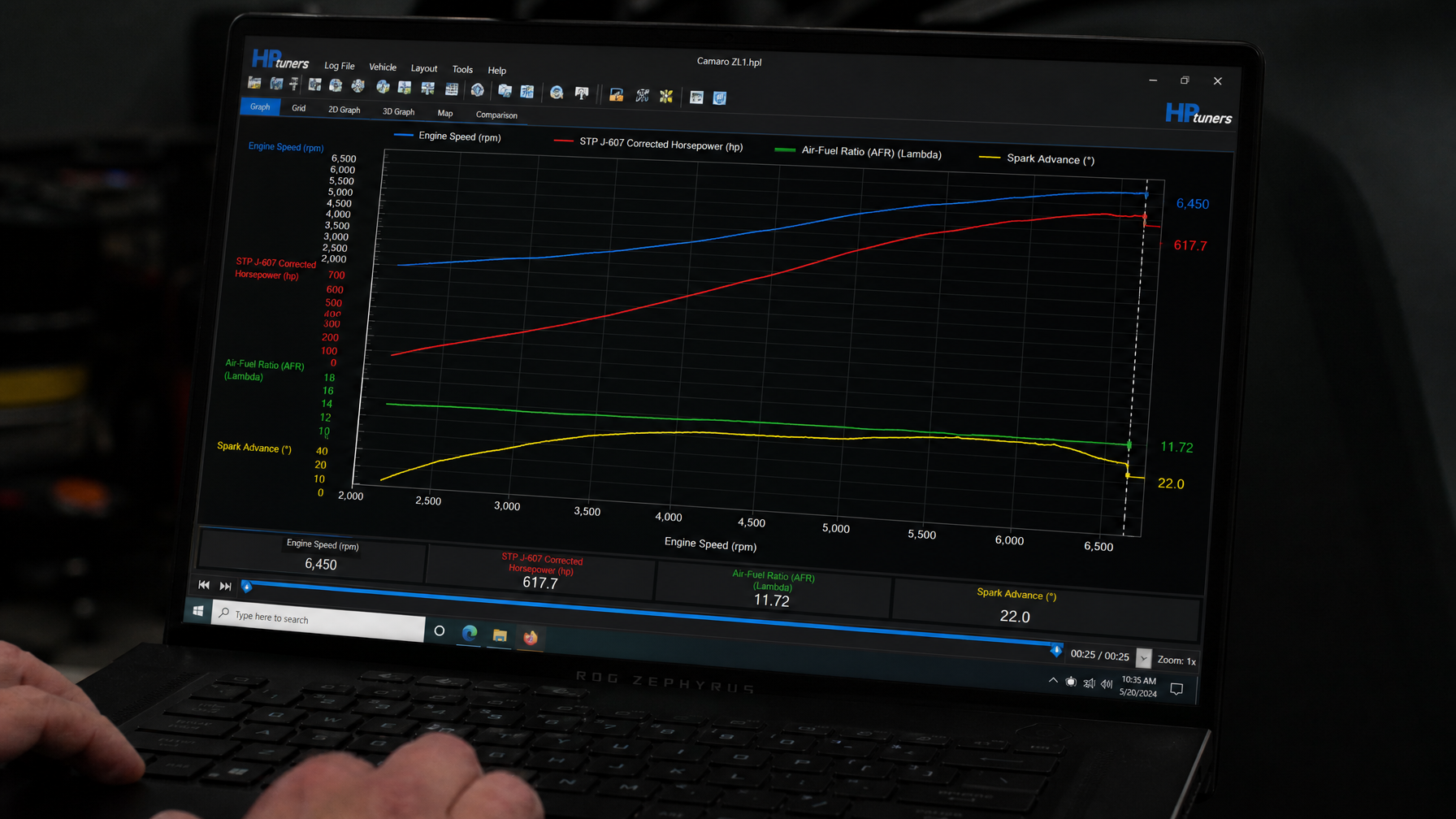
Engine builds: Every engine build is dyno verified. Power and torque at the wheel are measured against expected output. AFR is confirmed under load. Knock counts are monitored throughout. Boost target is verified against the specified hardware. The car does not leave the dyno session until the calibration is stable and consistent across repeated pulls.
Forced induction installs: Same dyno session, plus pressure-check of the entire boost system before the first startup — every connection confirmed to hold pressure before the engine sees boost for the first time.
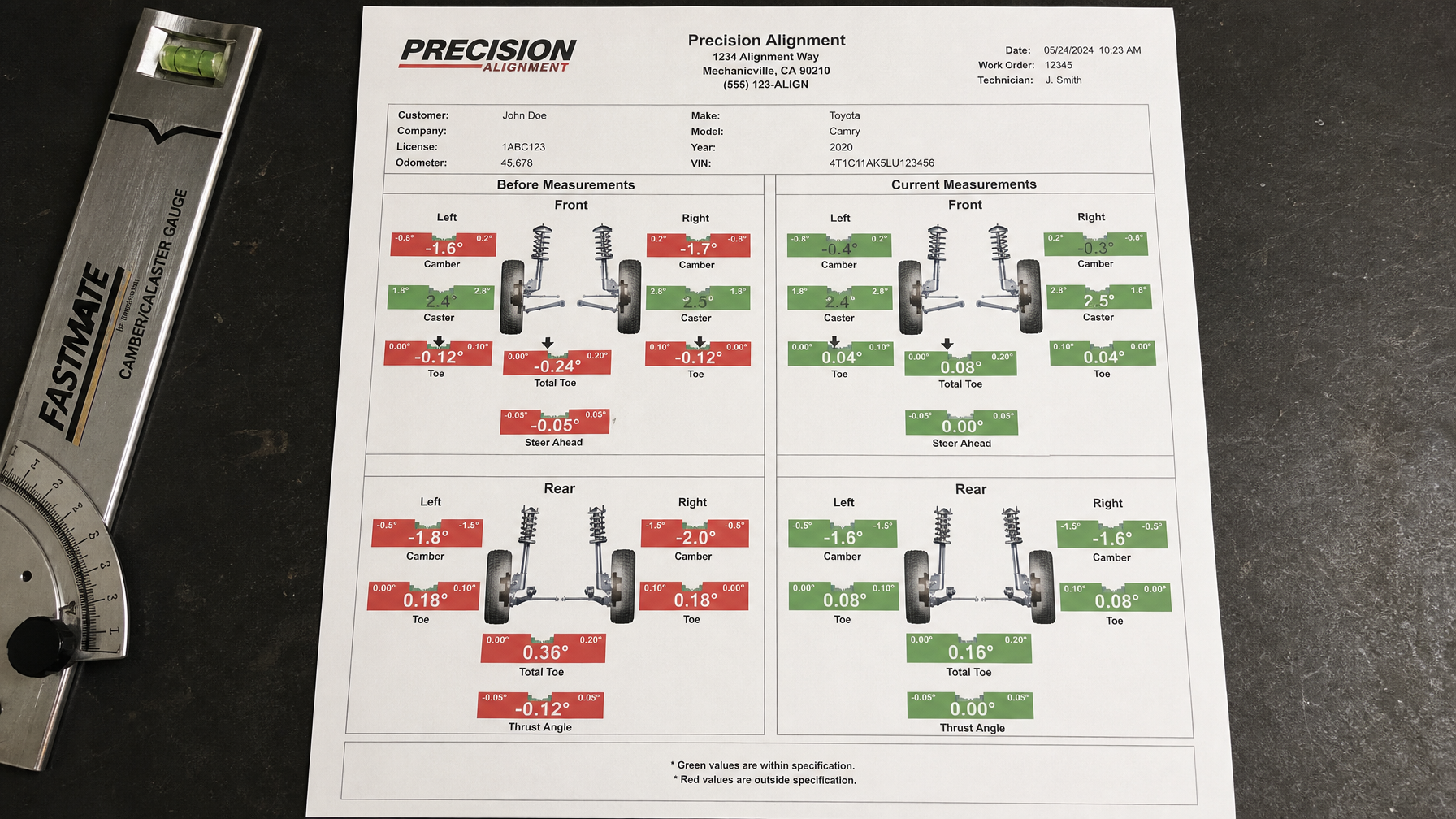
Suspension work: Every coilover install and every post-modification vehicle receives a performance alignment to confirmed targets. If the build includes corner balance, alignment is verified after corner balance adjustments are complete. The car leaves with an alignment printout documenting before and after values at every parameter.
Safety fabrication: The driver sits in the car in race gear for harness geometry verification before the build is signed off. The cage is visually inspected against the class rulebook requirements the build was targeted to.
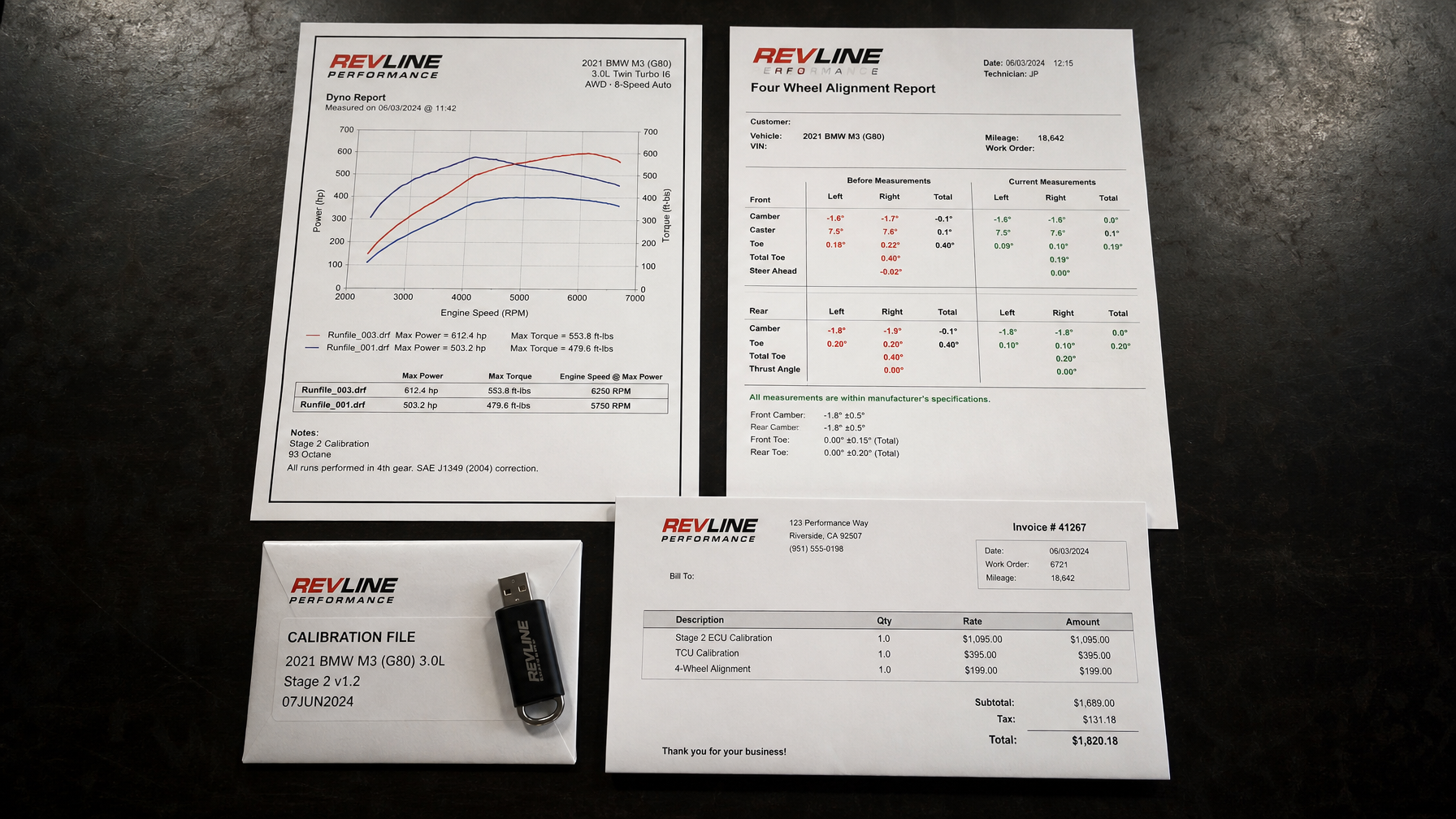
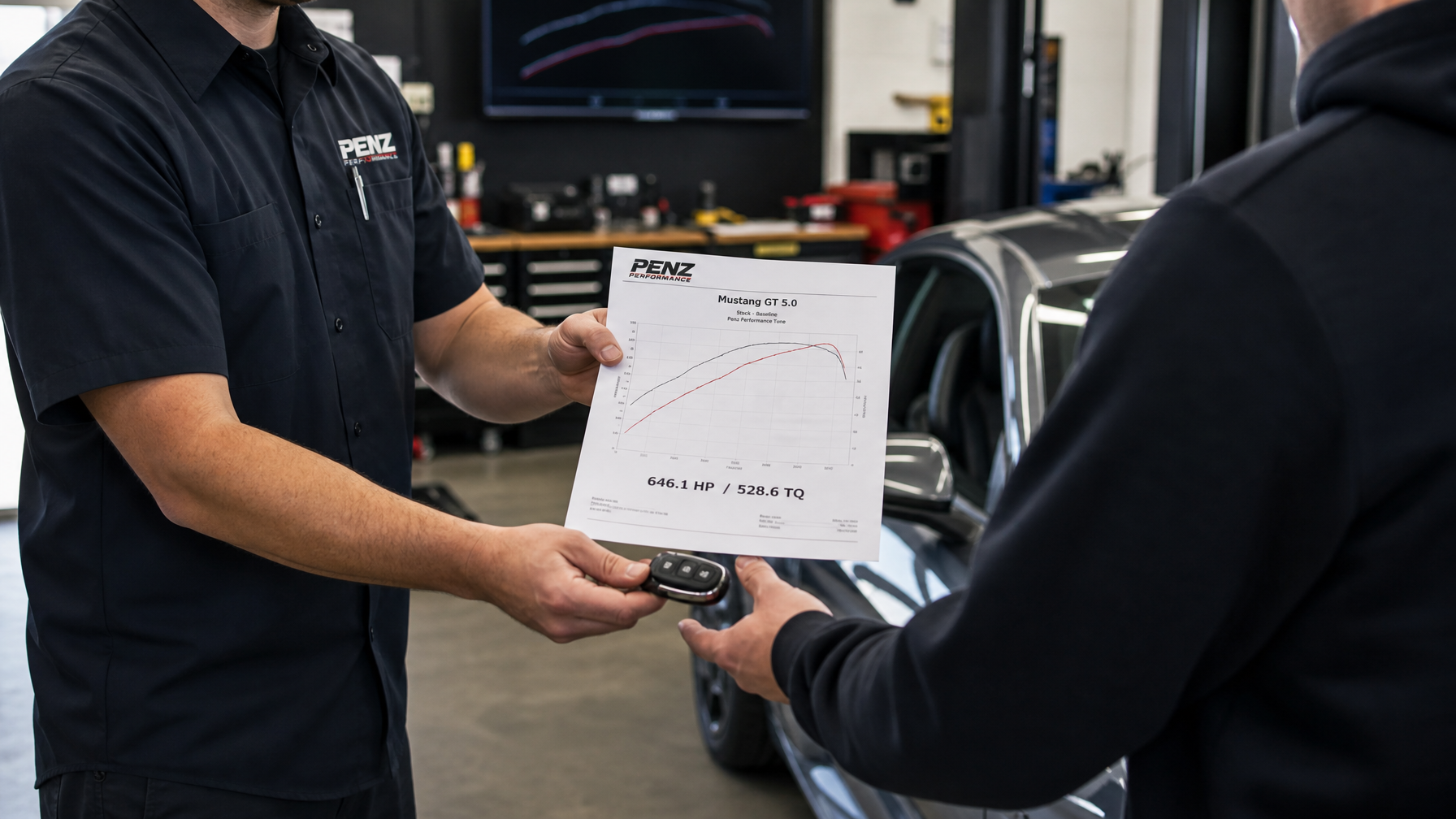
When the car is delivered, it comes with documentation specific to the work performed. Engine builds: build record with all critical measurements, dyno sheet showing wheel HP and TQ curves, calibration file, break-in recommendations. Forced induction installs: dyno sheet, boost target confirmation, calibration file, parts list with brand and specification of every installed component. Suspension builds: alignment printout with before and after values, corner weight sheet if applicable, ride height measurements, coilover specification. Safety fabrication: build specification sheet, tech inspection documentation package, harness and seat installation documentation.
Every build regardless of type also includes: itemized invoice with parts and labor as separate line items, photos from key build stages, warranty information for warrantied components, and recommendations for follow-up service intervals relevant to the build.
You leave knowing exactly what the car has, what it makes, and what it needs next. A build without documentation is a build that only makes sense while the builder is available to explain it. The documentation package is what makes the build yours — permanently.
Every Build Has
a Paper Trail.
Here's What Comes With the Car.
The documentation package isn't an afterthought. It's a fundamental part of the build's value — because a build without documentation is a build that only makes sense while the builder is available to explain it.
One Process.
Any Scope.
The seven-stage process scales to any scope. A brake service and a full engine build go through the same stages — the depth of each stage is what changes.
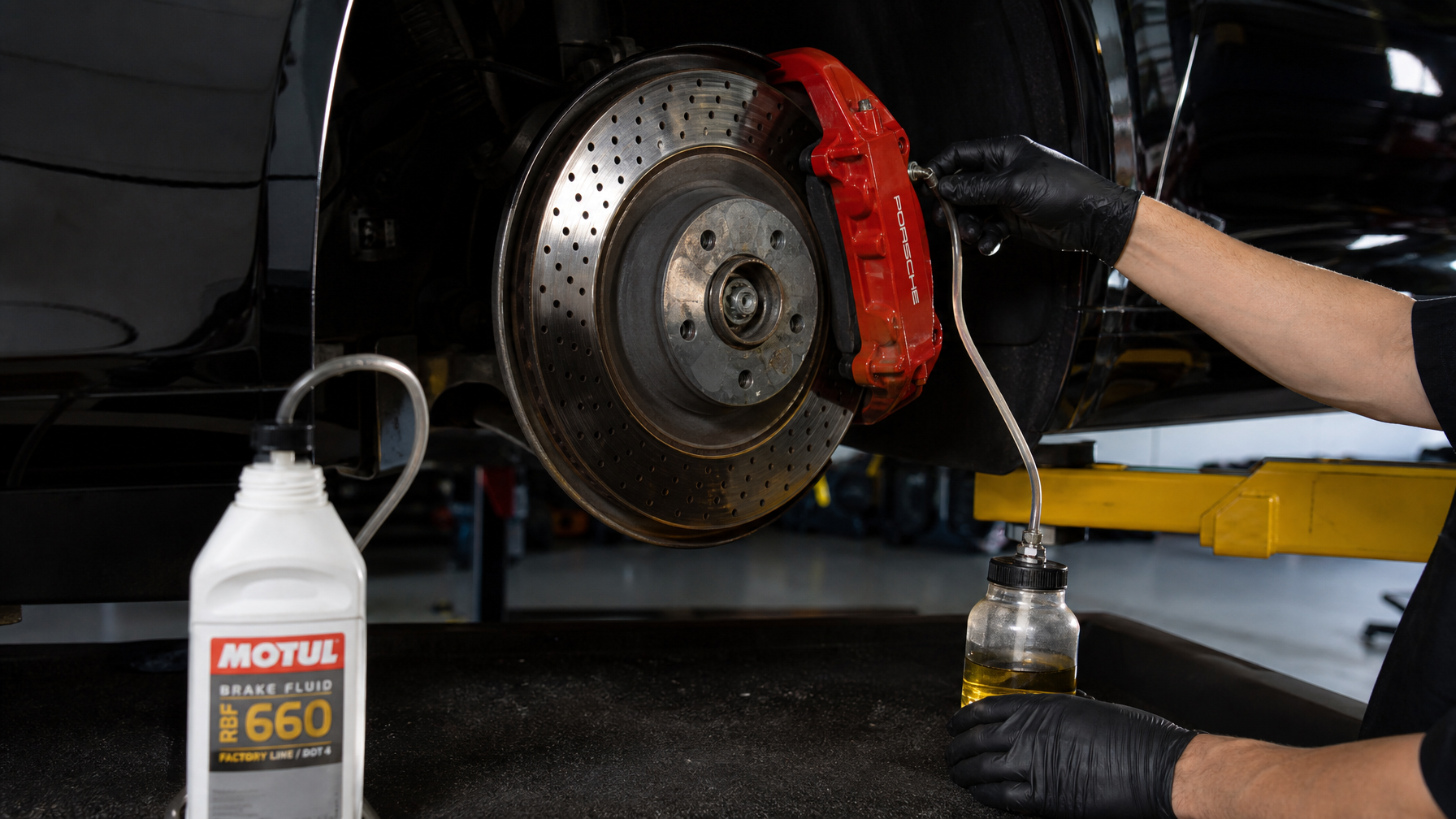
A pre-event brake service moves through intake (car, event, timeline), consultation (pads appropriate for the car's weight and driver's pace), itemized quote (parts and labor), execution (fluid flush, pad swap, system inspection), and verification (test drive confirms the system). Total process time from first contact to car return: typically 24–48 hours for a scheduled service.
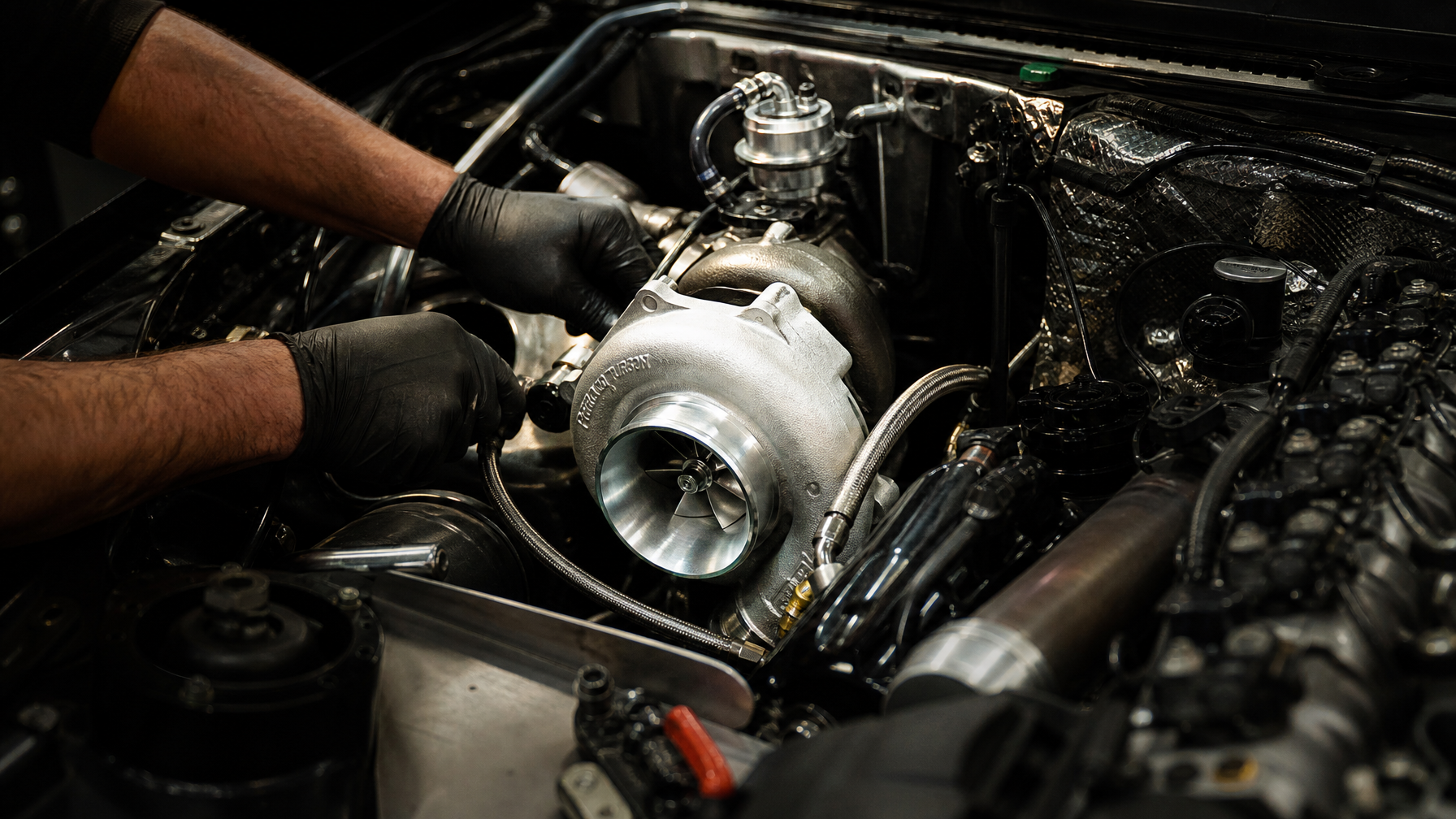
An FI install moves through intake, a consultation covering turbo sizing, intercooler configuration, fuel system requirements, and dyno tune scope, itemized quote, parts order with lead time communication, installation, dyno verification, and delivery with dyno sheet and calibration file. Every stage is present — the depth and timeline reflect the scope.
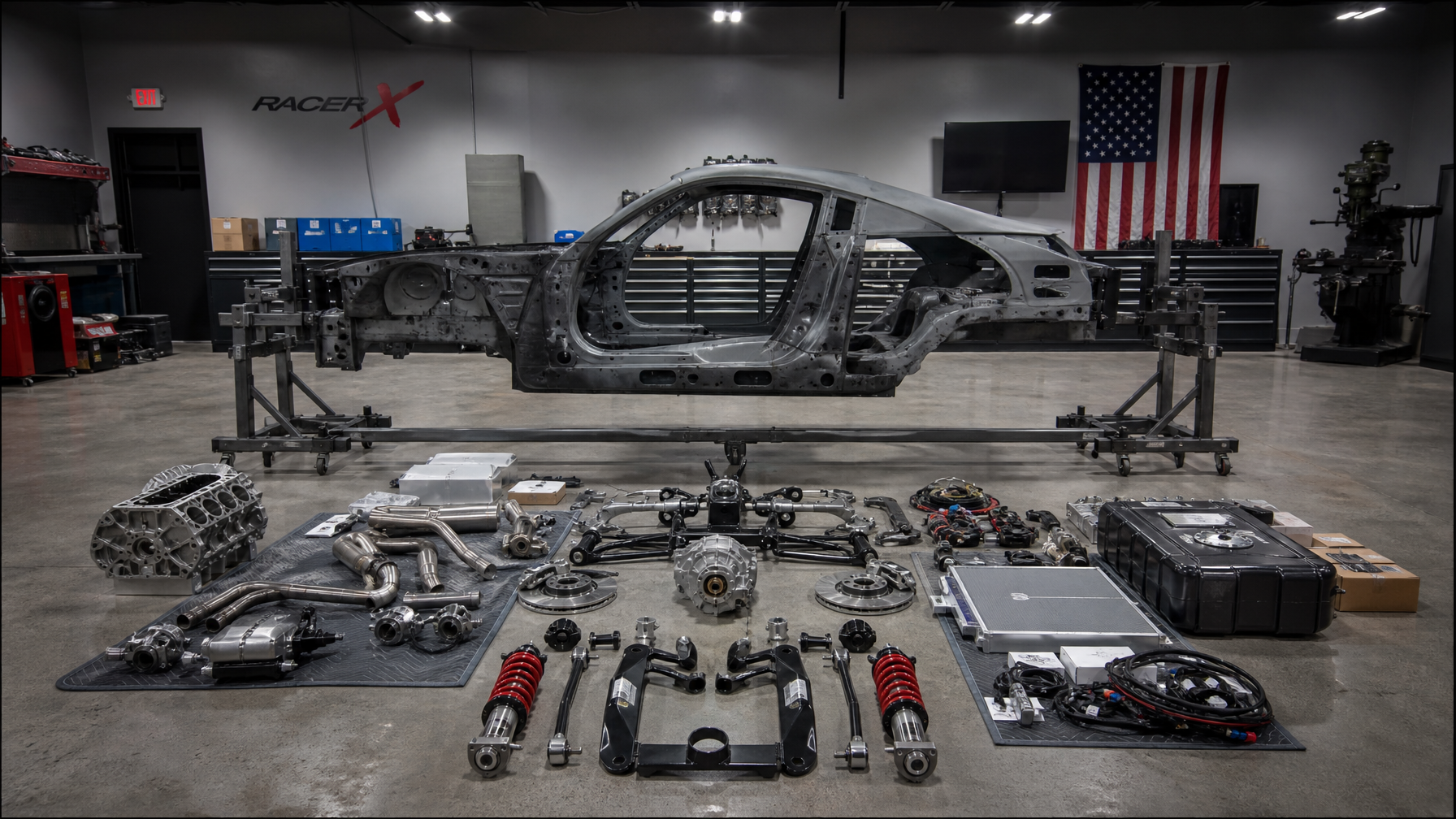
A full track car build — engine, forced induction, suspension, safety equipment, and tune — moves through a multi-session consultation, a detailed multi-page itemized quote covering all systems, coordinated parts orders across multiple suppliers, build execution spanning several weeks, and a final verification sequence that includes dyno, alignment, corner balance, and safety system sign-off.
When One Shop Does
Everything, the Systems
Talk to Each Other.
The most significant advantage of a single-shop full build is not efficiency — it's the fact that the systems interact, and a shop that only does one of them doesn't have the full picture when making decisions about their piece.
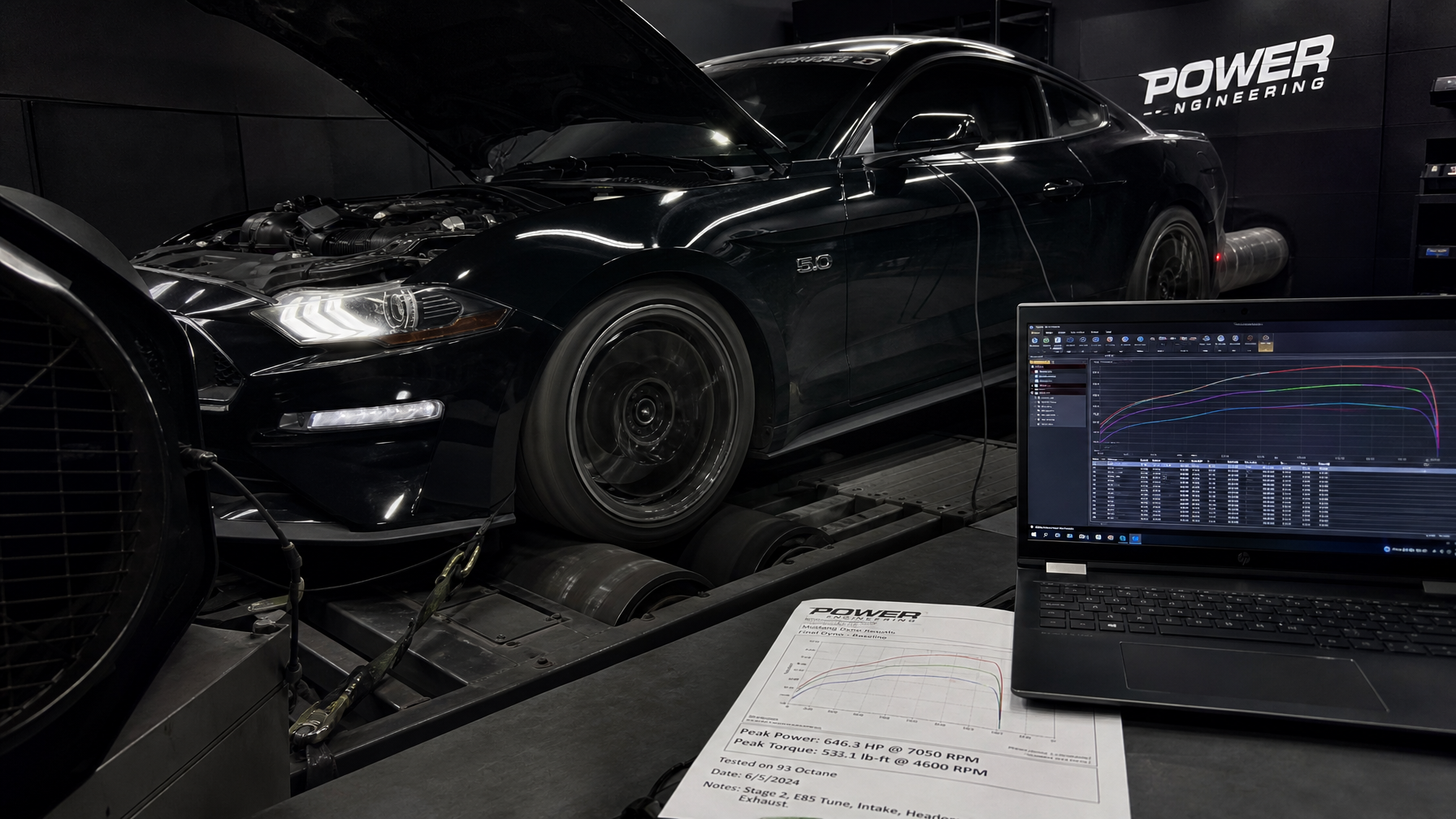
A tune is written for a specific engine in a specific state of tune with specific fuel delivery, specific compression, and specific boost target. A shop that only tunes doesn't know whether the engine build's bearing clearances are within spec, whether the forged piston choice accounts for the planned fuel, or whether the fuel pump capacity is sized correctly for the injector duty cycle at target power. They tune what comes to them. We tune what we built — with full knowledge of every component that went in.
Suspension setup is influenced by the car's power delivery. An engine that makes a sudden step of boost at a specific RPM has different spring rate and damper requirements at the rear of the car than an engine with a progressive, linear power band. A suspension shop that doesn't know the engine's power characteristics sets up the suspension for a generic performance car. We set up the suspension for the specific engine we built and tuned — and those decisions are informed by the same technical knowledge.
Safety fabrication is influenced by the car's power level and accident energy. A cage appropriate for a 250 RWHP autocross car is not specified the same way as a cage for a 600 RWHP time attack car. A shop that only builds cages doesn't know what the car makes. When a car has its engine built, forced induction installed, suspension set up, and safety equipment fabricated here, every decision in each discipline was made with knowledge of every other discipline — not assembled from independently optimized components that have never considered each other.
The Specific Things
We Commit to on
Every Build.
These are not aspirational statements. They are specific, verifiable commitments on every build regardless of scope.
If the build as originally requested won't achieve the stated goal — because the platform's internals won't hold the target power, because the fuel system is inadequate, because a critical supporting modification wasn't included — that conversation happens in the consultation, before any parts are ordered. We don't scope to the ask if the ask won't produce the goal.
Parts, labor, and subcontracted services are listed as separate line items in every quote. There are no flat-rate packages that obscure what you're paying for. There are no mid-build line items that weren't in the original scope without a documented scope change conversation first.
Expected parts lead times are communicated at quote confirmation. If a lead time changes after ordering, we communicate immediately. We don't schedule a build start date until all required parts are confirmed in stock.
Every critical measurement is documented during the build. Every build is delivered with documentation appropriate to the work performed — dyno sheet, alignment printout, build record, calibration file, or a combination of the above. The paper trail is part of the job.
Every build has a defined verification step before the car is returned. Engine builds are dyno verified. Suspension builds receive a post-install alignment check. Forced induction systems are pressure-checked before first boost. Safety systems are sign-off verified with the driver in the car. The car does not leave until the verification step is complete.
For builds with a timeline longer than one week, you receive status updates at meaningful milestones — parts received, teardown complete, measurements taken, assembly begins, assembly complete, ready for verification. You know where the car is in the build process. You don't wonder for two weeks whether the parts arrived.
Build Process FAQ
The questions we hear most about how we work. Direct answers.
Ready to Start
the Conversation?
Tell us what you're driving and what you want it to do. The process starts there.
Tell Us What
You're Building
The first step is a conversation. Tell us what you're driving, what you want it to do, and where it is now. We'll take it from there.
We review every submission and respond within one business day. No deposit required. No pressure. Just a real conversation about the build.

IRON RIDGE MOTORSPORTS


