
Dyno Tuning.
Real Numbers.
No Guessing.
Chassis dyno sessions, ECU tuning, custom tunes, E85 and flex fuel calibrations — every platform, every power adder, every build verified on the dyno in Houston before it leaves the shop.
A Dyno Isn't Just a Power Number.
It's a Diagnostic Tool.
Most people think of a dyno session as the moment you find out what your car makes at the wheels. That's part of it. But a chassis dynamometer is a load-bearing testing environment that does something a street drive or a data logger never can: it holds the engine at a fixed RPM under a fixed load and lets the tuner watch every parameter in real time — air-fuel ratio, knock counts, ignition timing advance, boost pressure, intake air temperature, fuel trims — while making changes and immediately seeing the result.
A street tune is educated guesswork. The tuner drives the car, watches the data log, makes changes, drives again. On the dyno, every pull is identical. The tuner advances timing until the knock sensor fires, then backs off to the safe margin. Fuel is dialed to the correct air-fuel ratio under load. Boost is confirmed by gauge. When the session ends, the tune isn't built on approximation — it's built on what the data showed, under measured load, repeated until it was consistent.
The result isn't just more power. It's a calibration the engine can run on reliably — under boost, on the track, in Houston summer heat, on the specific fuel you're running. That's the job.
Four Tuning Services.
One Dyno. Every Platform.
Dyno tuning isn't one service — it's a family of calibrations with different tools, different goals, and different outcomes depending on what the car is running.
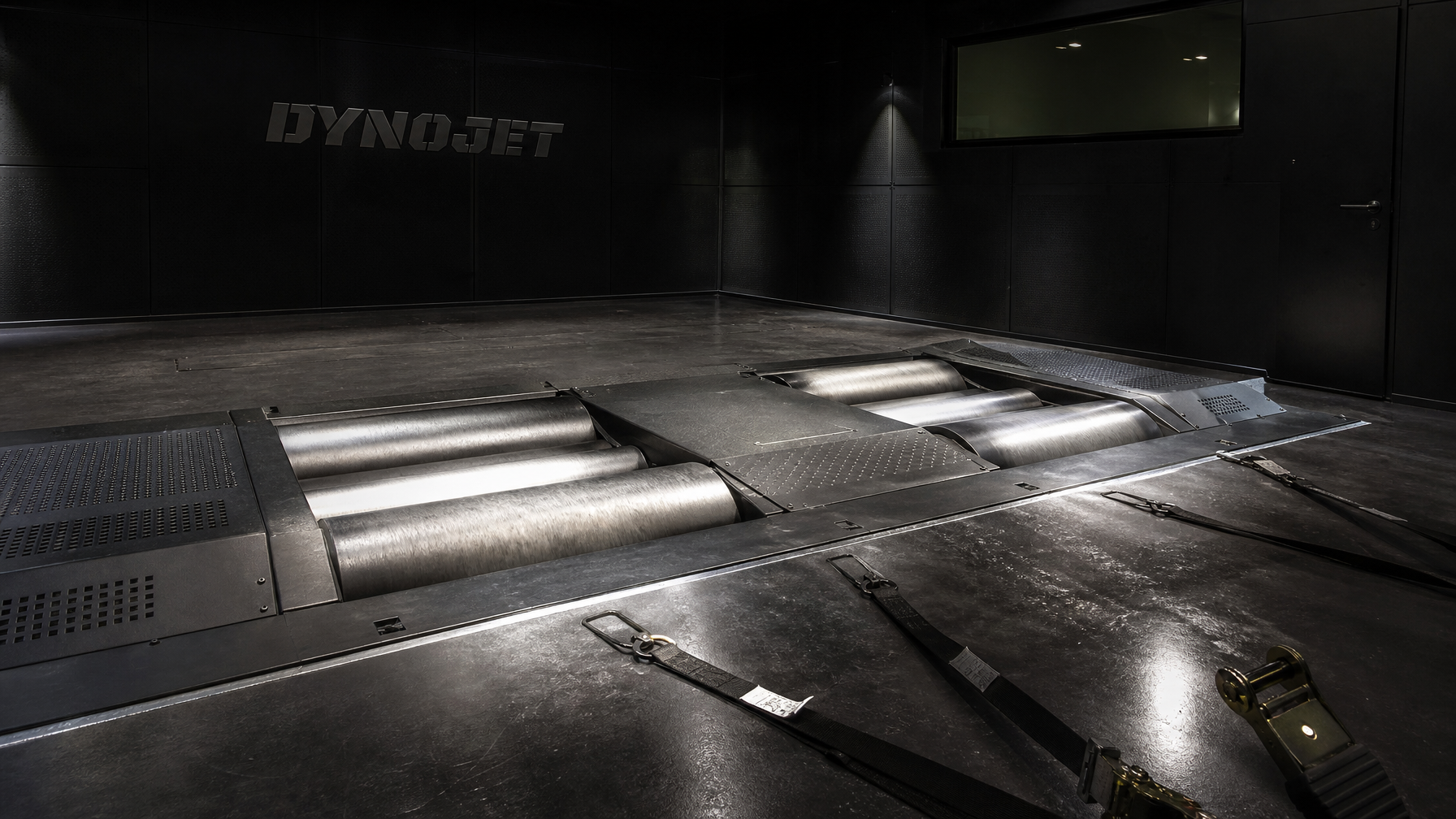
A chassis dyno session puts the driven wheels on rollers and measures actual wheel horsepower and torque through the RPM range — not manufacturer claims, not calculated estimates, not the crank number on the spec sheet. Wheel horsepower is what the car actually produces after accounting for drivetrain losses. It's the honest number.
Before any tune, we establish a baseline — the car's current state, on the current fuel, with the current calibration. After any modification or tune, we pull again. The difference between those numbers is documented on a dyno sheet you take home. Whether you're verifying a fresh engine build, checking the result of a bolt-on modification, or certifying power for a racing class — the dyno gives you a number that can't be argued with. AWD vehicles are fully supported.
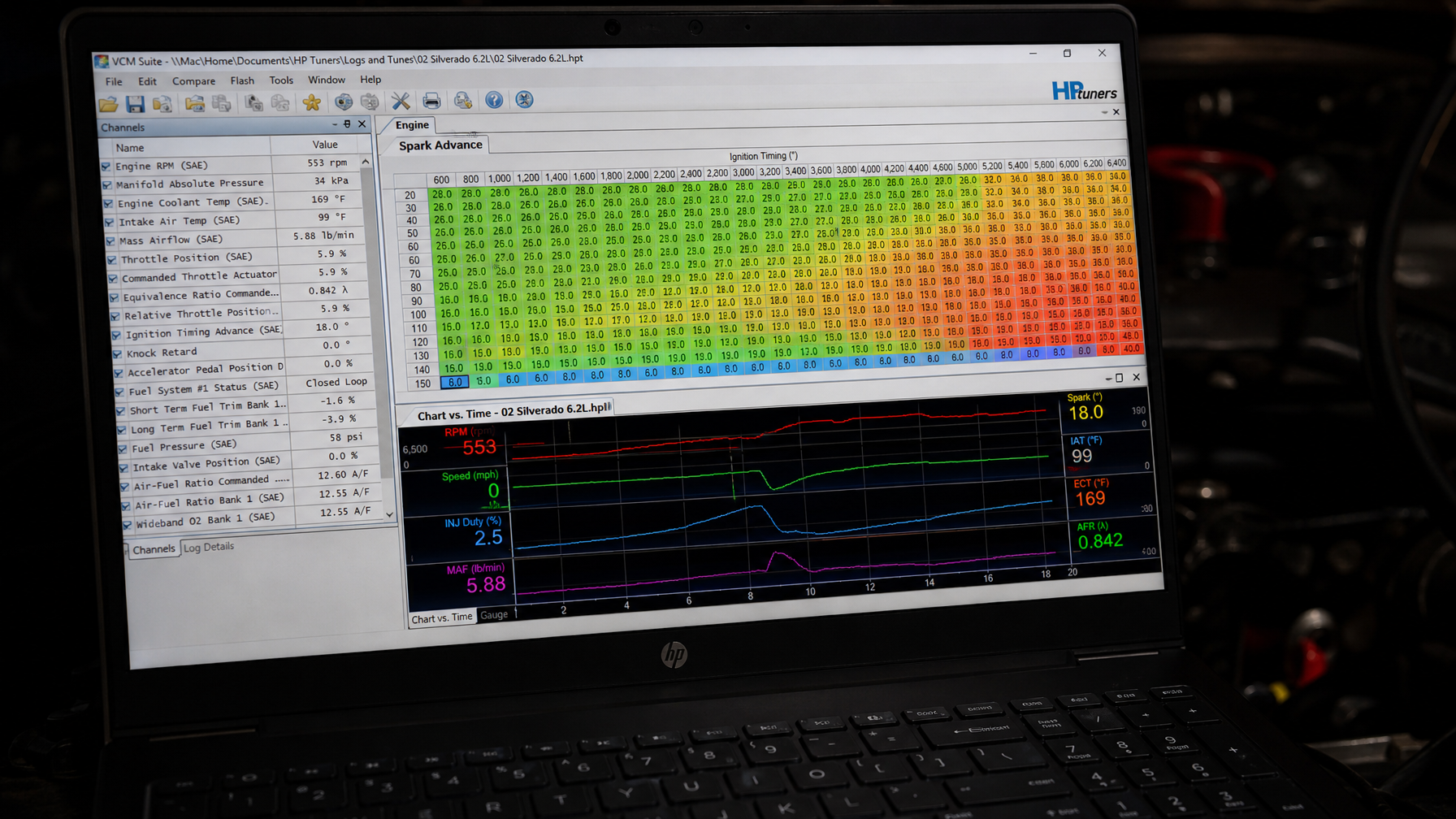
ECU tuning modifies the factory engine control unit's calibration tables — fuel maps, ignition timing, boost targets, rev limits, cam timing, variable valve timing — to match the actual hardware and optimize for the fuel being used. A factory calibration is written for a stock engine on worst-case pump fuel. It is not written for your combination.
We tune on HP Tuners, SCT, and COBB — the professional-grade tools that give full access to every calibration table, not an OBD-II device that adjusts three parameters with a phone app. Stage 1 tunes address bolt-on modifications. Stage 2 tunes address cam and head work. Full custom tunes address forced induction, E85, flex fuel, or any combination outside factory parameters.
A custom tune on a boosted engine is a different category of work from a bolt-on tune on a naturally aspirated car. The variables multiply: boost target, wastegate duty cycle, intercooler efficiency, injector scaling, fuel pump pressure, knock threshold on the actual fuel — and every variable interacts with every other. Getting the calibration wrong doesn't just leave power on the table; it damages the engine.
We map Knock Limited Spark Advance (KLSA) for the fuel and compression combination, dial air-fuel ratio under load at each boost target, and confirm boost by gauge at each RPM point. For E85 and flex fuel builds, we map the full range from pump gas to E98 — the ECU adjusts timing and fuel delivery in real time based on ethanol content detected by the flex fuel sensor.
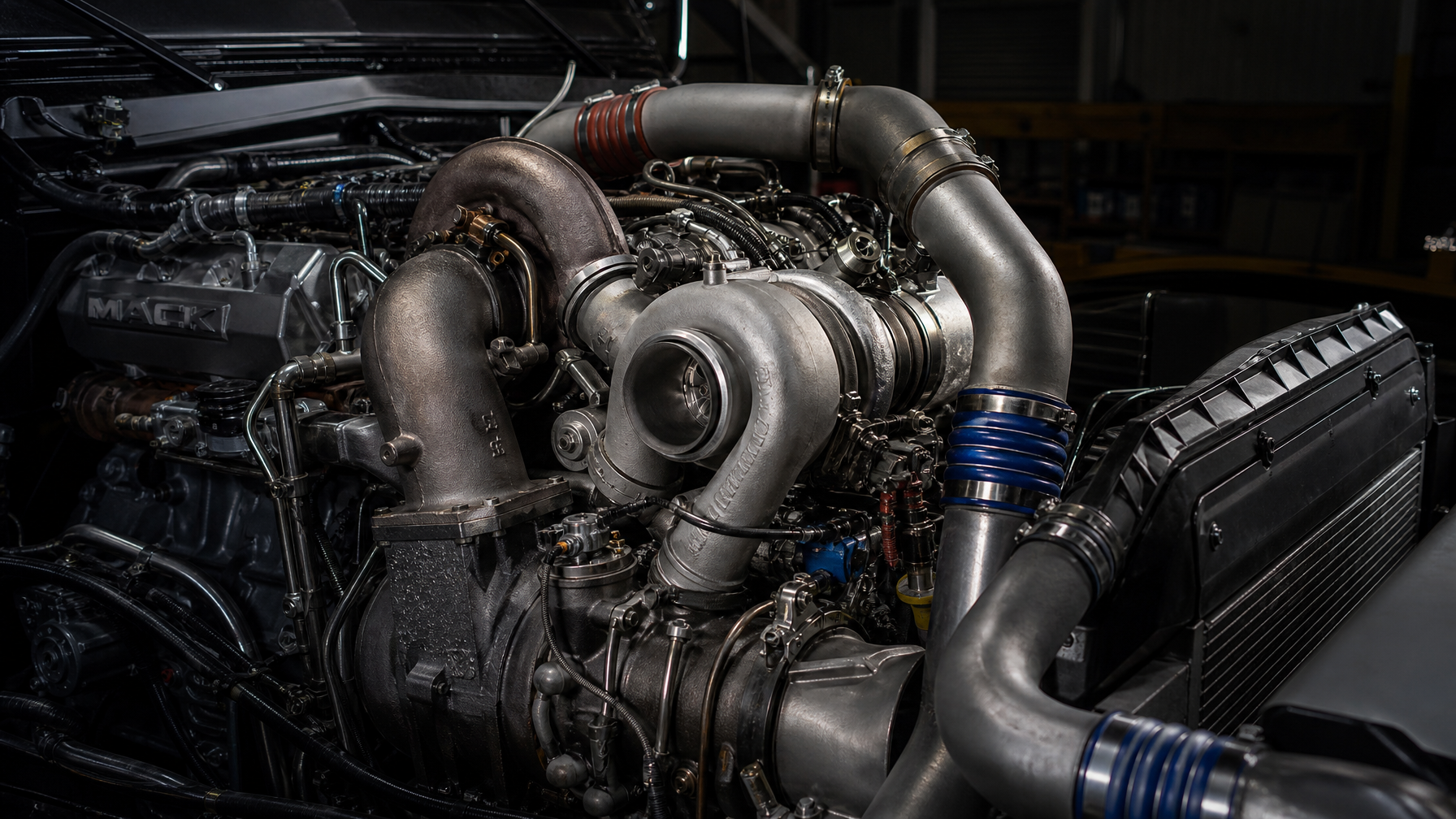
Diesel tuning is its own discipline. We tune diesel platforms on EFILive — the professional standard for Cummins and Duramax — and HP Tuners for Powerstroke applications, giving full access to injection timing, rail pressure, boost targets, torque management tables, and emissions calibrations.
The 6.0 Powerstroke generates nearly 2,000 monthly searches for performance tuning alone — and the factory calibration is constrained by torque management tables that limit the engine well below its mechanical capability. A proper custom calibration removes torque management, optimizes injection timing, raises boost targets, and calibrates fuel delivery to match the actual hardware. For the 6.7 Cummins on EFILive, the combination of custom calibration and upgraded hardware routinely pushes 600+ RWHP while maintaining long-term reliability.
Dyno Tune vs Street Tune:
Why the Dyno Wins.
Street tuning exists because not everyone has dyno access. For bolt-on naturally aspirated cars on pump gas, the difference in final result is small. For forced induction, E85, high compression, or any application where the margin between peak power and engine damage is narrow — street tuning is the wrong tool.
For bolt-on naturally aspirated cars on pump gas, both approaches produce functional results. For forced induction, E85, high-compression engines, diesel platforms with complex injection tables, or any application where the margin between peak power and engine damage is narrow — the dyno is not a luxury. It's the minimum standard of care.
The Software Behind
the Calibration.
The tuning software determines what parameters can be accessed and how precisely they can be calibrated. Professional-grade tools give full access to every table in the ECU. We use the professional tools.
The professional standard for GM/LS/LT, Ford Coyote, EcoBoost, and Powerstroke tuning. HP Tuners gives full access to every calibration table in the ECU — fuel, timing, boost, transmission, torque management, cam timing, variable valve overlap — paired with a wideband O2 and data logger for real-time parameter monitoring during dyno pulls. HP Tuners generates 49,500 monthly searches on its own — when a shop mentions it by name, it signals professional capability, not a mail-order device.
The platform of choice for Subaru (WRX, STI, EJ/FA), BMW (N54, N55, B58), Ford Focus ST/RS, and Porsche. COBB ProTune on the dyno is the standard process for these platforms: a custom map dialed specifically for the car's hardware, fuel, and boost target — not a pre-loaded off-the-shelf file. For Subaru in particular, the combination of COBB Accessport hardware and a dyno ProTune is the gold standard, giving the tuner access to the key calibration tables that matter for bolt-on and forced induction builds.
The Ford specialist platform — SCT X4 and BDX devices with custom tune files are the dominant approach for Mustang GT, GT500, F150 5.0, and EcoBoost tuning in the Ford community. "6.0 Powerstroke SCT performance tune" generates over 1,900 monthly searches on its own. We write custom SCT tunes for Ford platforms on the dyno — not loaded preset maps written for generic hardware combinations, but calibrations built for the specific parts on the specific car in front of us.
The professional standard for Cummins, Duramax, and late-model GM diesel platform tuning. EFILive allows full ECU and TCM (transmission control module) access — injection timing, rail pressure, boost targets, torque management, transmission shift calibration, and emissions system parameters. For the 6.7 Cummins, EFILive-based custom tunes combined with upgraded hardware represent the most direct path to serious diesel power while maintaining long-term reliability. Not every shop has EFILive capability. We do.
For engine swaps into chassis that never had that engine from the factory, full race engines where the factory ECU's parameter set is too limiting, or any application where engine management needs to be built from scratch — a standalone ECU is the answer. We tune on Haltech, AEM Infinity, and Motec platforms. Standalone tuning takes longer and requires more sensor infrastructure, but it removes every constraint of the factory ECU and opens the full parameter space for a professional calibration on any combination imaginable.
E85 has an octane equivalent of 100–105 RON — timing can be advanced significantly further before knock occurs compared to 93-octane pump gas. More timing advance equals more power from the same hardware. We map the full range from pump gas through E98 on supported platforms, and configure the flex fuel sensor so the ECU adjusts timing and fuel delivery in real time based on ethanol content in the tank. The car optimizes on whatever fuel is available — no second tune session when you switch fuels. Fuel system upgrades (injectors, pump) are confirmed before the E85 tune session.
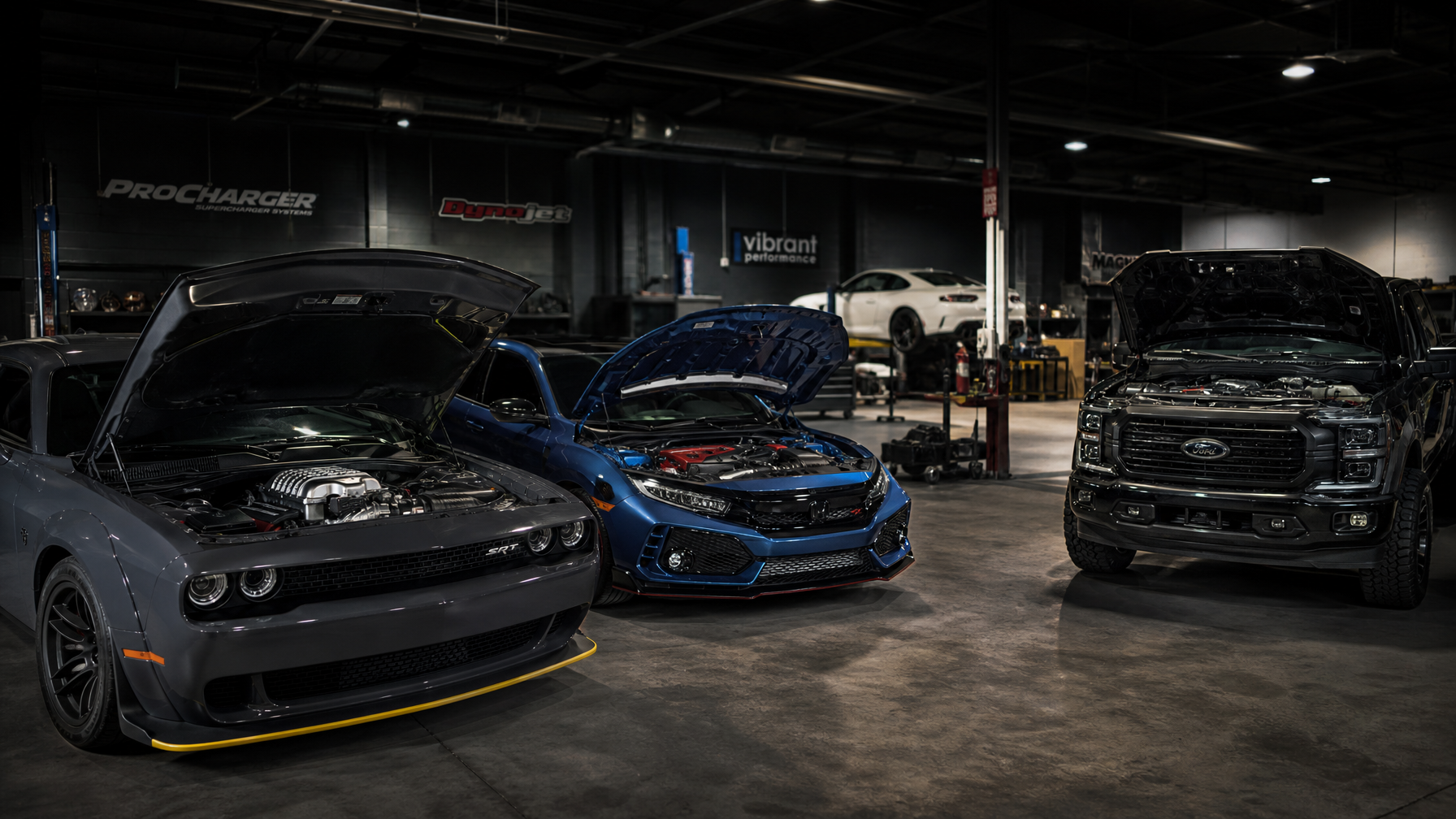
We Know Your Platform's
Calibration Ceiling.
Every platform has factory calibration logic built in for warranty protection and emissions compliance. Here's what we unlock on the platforms we tune most in Houston.
The LS family is the most tuned domestic platform in the country, and HP Tuners is the tool that unlocked it. Factory LS calibrations run conservative ignition timing, aggressive torque management that limits power through the transmission, and boost cut strategies on supercharged LT4 and ZL1 variants. A custom HP Tuners dyno tune removes torque management, advances timing to the knock limit for the fuel and compression, raises fuel delivery to match injector size, and on supercharged platforms, adjusts boost control maps. LS dyno tuning near me is a known high-intent local search — if you're in Houston, bring it here.
The Coyote 5.0 responds well to tuning because the factory calibration leaves real timing on the table — particularly in the mid-RPM range. An HP Tuners or SCT-based custom tune on a bolt-on Mustang GT typically yields 20–35 RWHP on 93 octane from timing and fuel optimization alone. For E85 builds, custom tunes routinely add 40–60+ RWHP over a 93-octane tune on the same hardware. GT500 tuning requires additional attention to factory boost control tables and, on the Voodoo flat-plane crank engine, specific timing requirements at high RPM.
The EcoBoost family is one of the most rewarding platforms to tune because Ford shipped it with conservative boost targets and timing tables with significant headroom. The 2.3L EcoBoost (Mustang, Focus RS) responds dramatically to COBB or HP Tuners calibrations — upgraded boost, optimized timing for 93 or E85, adjusted boost-by-gear maps. The 3.5L twin-turbo becomes genuinely serious with a custom tune — 93-octane tunes push 380–420 RWHP on stock turbos, and E85 tunes with upgraded charge pipe and FMIC push well past 500 RWHP.
The 6.0 Powerstroke is the highest-volume diesel tuning search term at nearly 2,000 monthly searches. The factory calibration is constrained by torque management tables and conservative injection timing well below mechanical capability. A proper custom calibration removes torque management, optimizes injection timing, raises boost targets, and dials fuel delivery to match the hardware. For 6.7 Cummins on EFILive, the combination of custom calibration and upgraded hardware routinely exceeds 600 RWHP while maintaining long-term reliability — a strong bottom end combined with a proper calibration is what makes that possible.
BMW ECU tuning generates significant search volume across N54, N55, and B58 platforms — and the payoff is real. The factory BMW calibration is conservative on boost targets and timing advance. A COBB ProTune or full flash tune on the N54/N55 typically adds 60–100 RWHP on 93 octane with upgraded charge pipe, high-flow downpipes, and upgraded FMIC. The B58 responds similarly with slightly tighter factory calibration headroom but significant room on upgraded hardware. BMW ECU tuning requires specific knowledge of knock sensor sensitivity and fuel quality sensitivity on these platforms — over-advancing timing on a B58 without confirming fuel quality causes detonation the factory knock learning system masks temporarily.
COBB ProTune on the dyno is the gold standard for Subaru tuning — the combination of COBB Accessport hardware and a custom map dialed for the specific car's hardware, fuel, and boost target. The WRX and STI respond dramatically to custom tunes because the factory calibration is conservative on boost targets and timing advance, particularly on E85. Flex fuel mapping is especially effective on Subaru platforms — the combination of E85's octane advantage and the EJ/FA engine's high knock resistance on ethanol produces significant power gains over 93-octane tunes on the same hardware.
Inside a Dyno Session.
Stage by Stage.
Most people have never been in a dyno cell during a pull. Here's what a professional dyno tuning session looks like from inspection to dyno sheet.
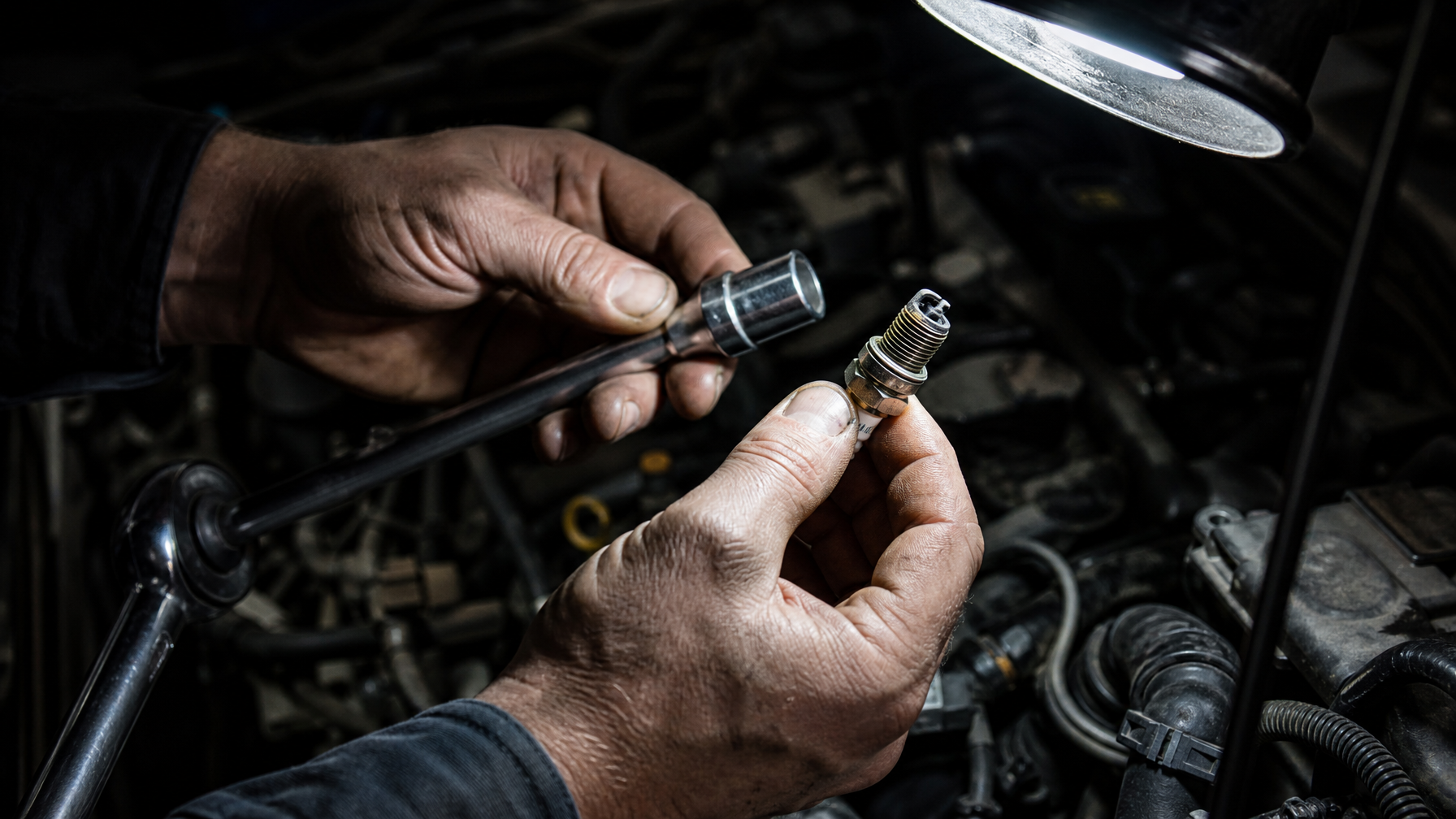
Before the car goes on the rollers, we inspect baseline mechanical condition. Boost leaks on forced induction cars are found here — a boost leak throws off the entire fuel and timing calibration and produces a tune that's wrong the moment the leak is fixed. Spark plug condition is checked; a misfiring plug creates a false knock signal that causes the tuner to pull timing unnecessarily. Fuel system pressure is confirmed for the power target. Logging all factory trouble codes before beginning gives a baseline to compare against at the end. A car with an undiagnosed mechanical issue produces a tune built around that issue — we find them first.
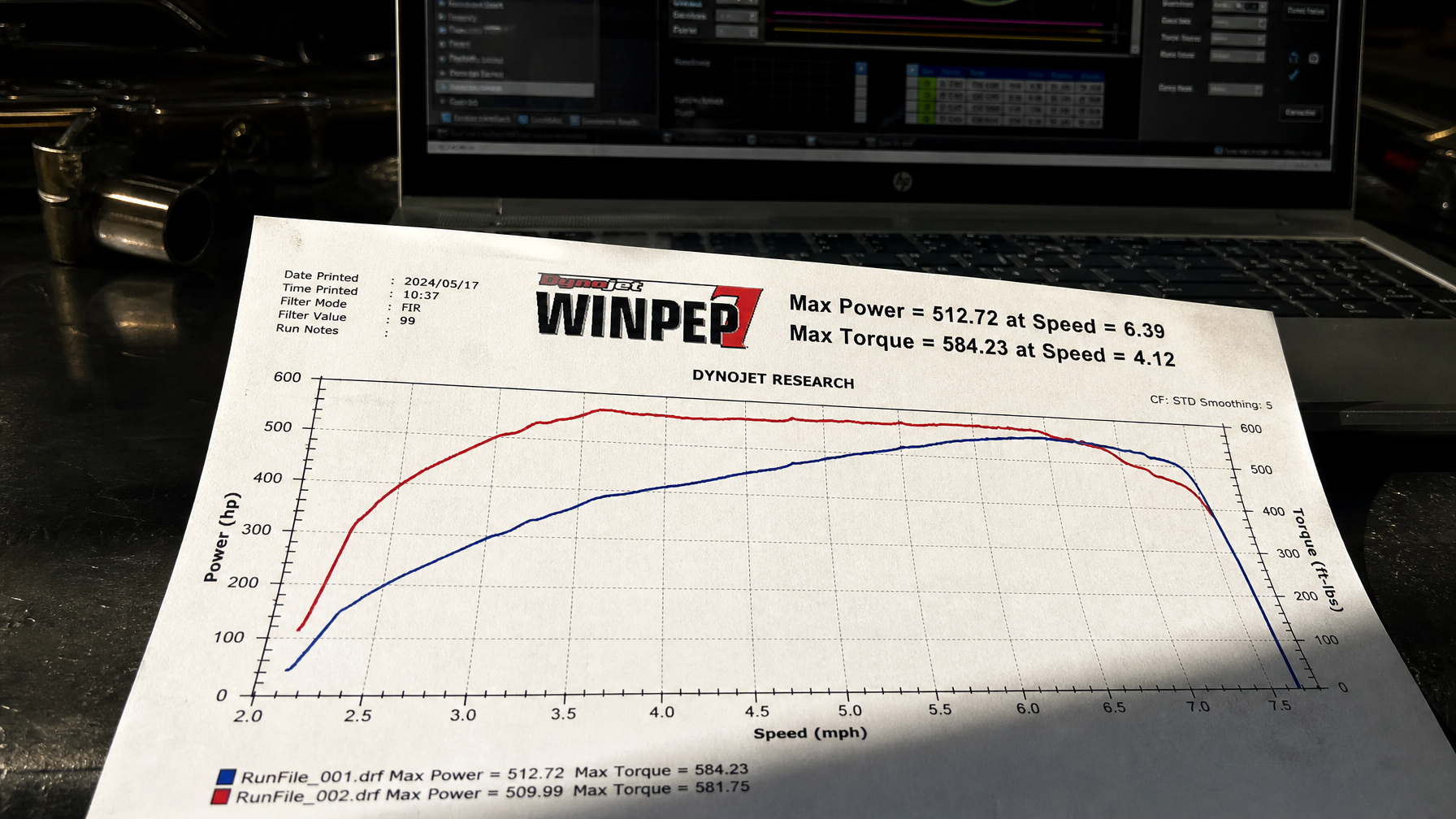
The car makes 3–5 pulls at wide-open throttle through the RPM range on the existing calibration, on the fuel being used for the session. The baseline pull documents the current state — power, torque, AFR, timing advance, knock count — and gives the tuner the starting point. On a factory-calibrated car, the baseline frequently shows lean conditions in the mid-range, conservative timing in the upper RPM, and sometimes active knock retard the factory calibration was already pulling to compensate for a suboptimal table. These are the opportunities the tune is built around.
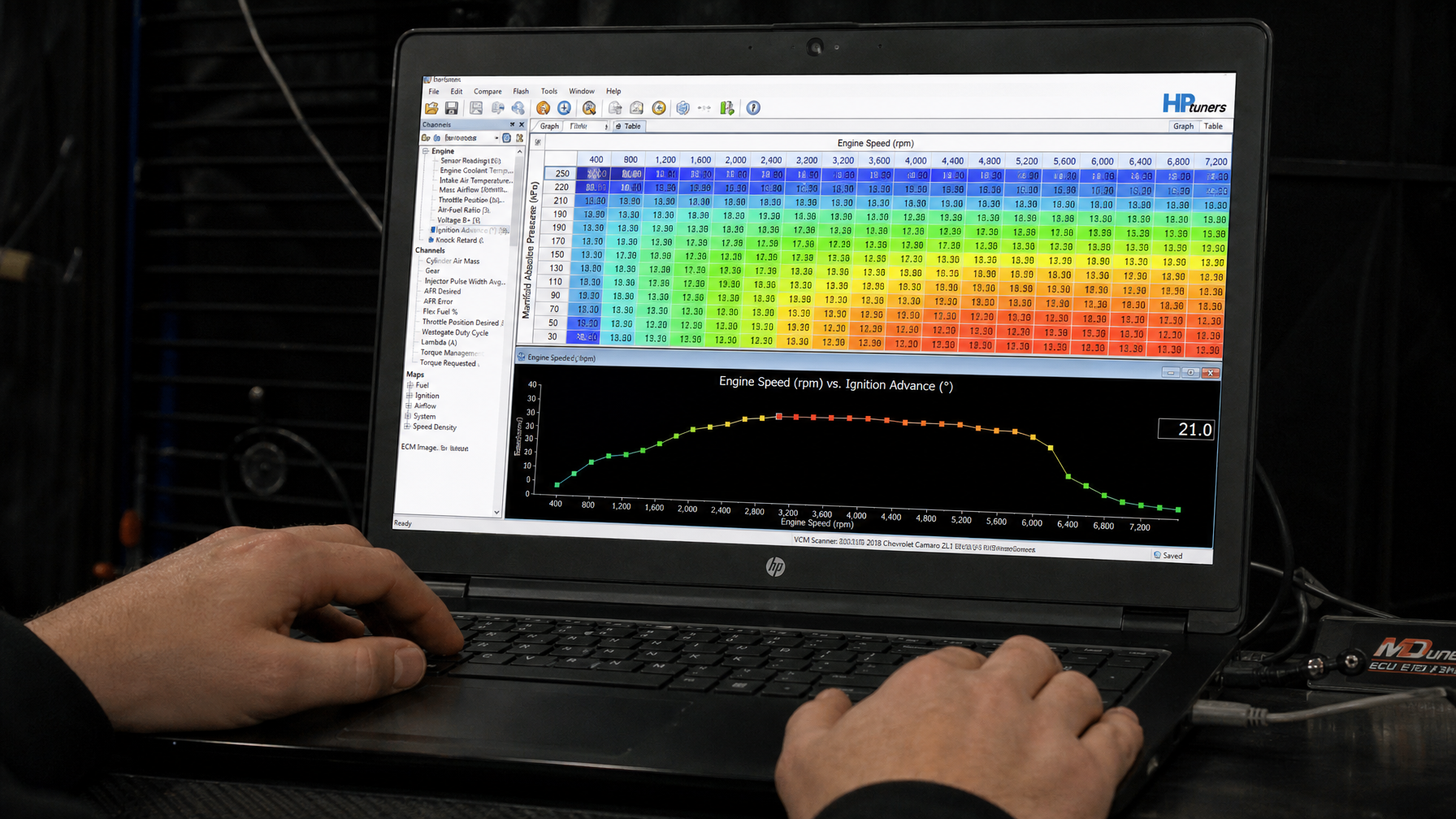
This is the work. The tuner accesses the ECU through the tuning software, modifies the relevant tables, flashes the new calibration to the ECU, and makes another pull. Timing is advanced incrementally until knock is detected, then retarded to a safe margin. Fuel is adjusted to the correct air-fuel ratio at each load point. On boosted cars, boost targets are adjusted by RPM and wastegate duty cycle is calibrated to hold target without boost creep. The number of pulls in this stage depends entirely on how far the calibration needs to move — a bolt-on tune on a stock car takes fewer pulls than a full custom E85 forced induction calibration on a platform the tuner is seeing for the first time.
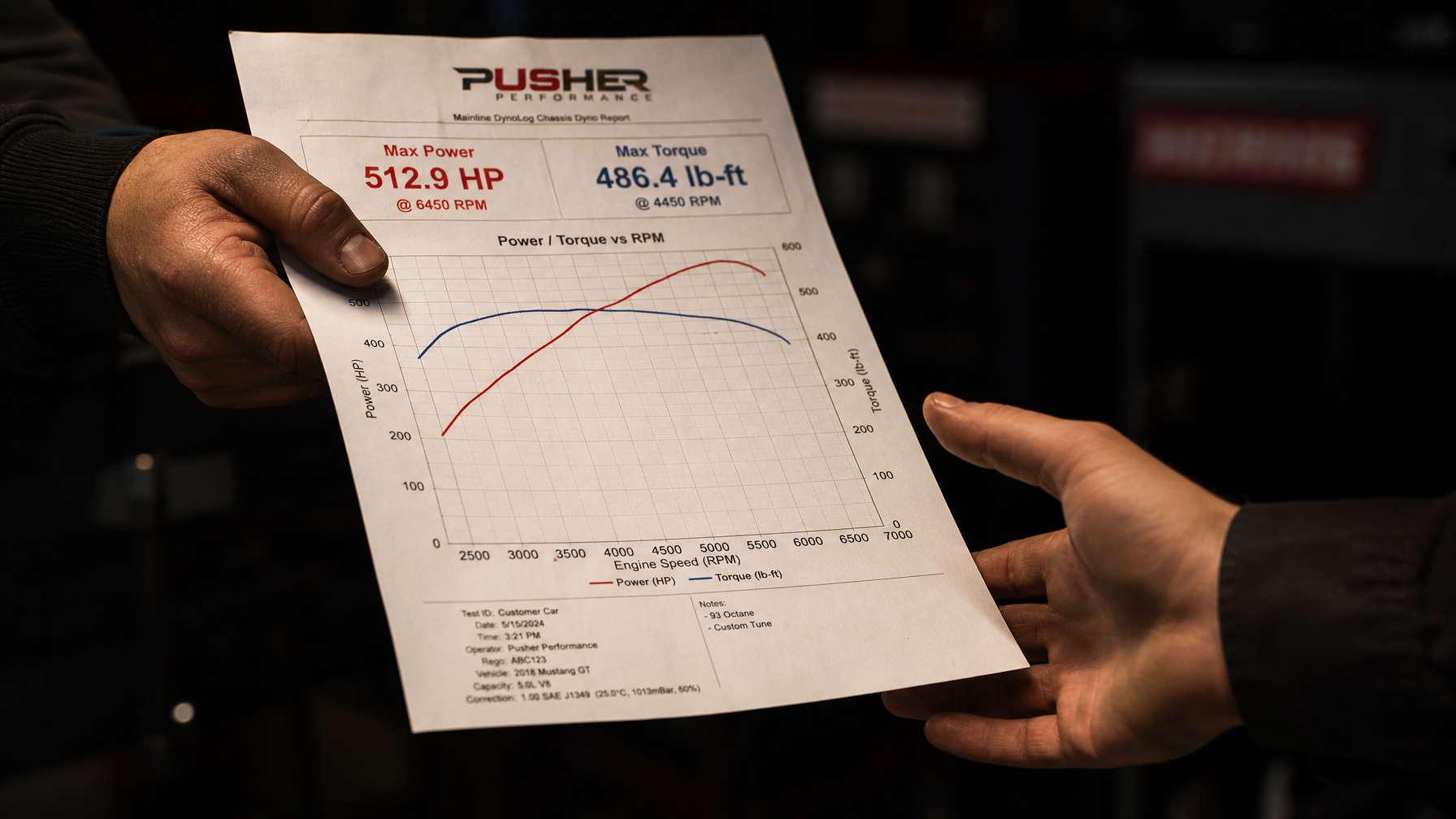
When the calibration is stable and consistent across repeated pulls, the tuner runs final power pulls at operating temperature. The dyno software records wheel horsepower and torque through the RPM range, and the best run is documented on a printed dyno sheet. The sheet shows peak wheel HP, peak wheel torque, and the power curve through the RPM range. You leave with the calibration file and the printed dyno sheet — the calibration is the car's new operating map, and the sheet is the documented proof of what it produces under measured load.
Transparent Pricing.
No Surprises.
"Dyno tune cost" and "dyno tune price" generate nearly 1,000 monthly searches combined. We answer it directly — itemized, before the car comes in.
Baseline documentation, before-and-after verification, or power certification for a racing class. No calibration work — pull session only. The correct starting point for anyone wanting to know what their car actually makes after a modification, or who needs documented power for a sanctioned class.
Bolt-on modifications on a stock or near-stock naturally aspirated engine — intake, exhaust, and tune. For common platforms (LS, Coyote, EcoBoost, WRX) with established aftermarket tune bases, this is the most efficient session. The calibration has a known starting point and the tuner can move through the parameter set quickly.
Turbocharger, supercharger, E85, flex fuel, or any combination that requires building the calibration from scratch — where the factory parameter set is too far from the target to use as a starting point. These sessions are longer: more variables, more pulls to confirm consistency across the operating range.
6.0 and 6.7 Powerstroke on HP Tuners and SCT. 6.7 Cummins and Duramax on EFILive. Full access to injection timing, rail pressure, boost control, and torque management tables. Range reflects platform complexity — a 6.7 Cummins with compound turbos and upgraded injectors is a different session than a stock 6.0 Powerstroke torque management removal.
Haltech, AEM Infinity, and Motec platforms for engine swaps, full race builds, or any application where the factory ECU's parameter set is too limiting. Sensor infrastructure, base map development, and dyno time are scoped and quoted as a single project. These sessions typically run multiple days.
Every dyno tune session at Iron Ridge includes the tuning session, the calibration file, and the printed dyno sheet. No hidden fees for dyno time, software access, or documentation. You know the session cost before the car goes on the rollers. No surprises at checkout.
Houston's Dyno Tuning Shop
That Builds What It Tunes.
The difference between a shop that tunes and a shop that builds and tunes: we already know what the hardware is supposed to do before the car goes on the dyno. That context changes the quality of the calibration.
When we tune a forced induction build we also installed, we know the exact turbo compressor map, wastegate spring rating, injector flow rate, and fuel pump capacity. The tune is written around documented hardware specifications — not assumptions. That's not possible at a shop that only sees the car on dyno day.
HP Tuners, SCT, COBB, EFILive, Haltech, AEM, Motec. We don't use consumer OBD-II devices or pre-loaded tune files sent from a remote tuner who has never seen the car. Every calibration is created specifically for the car on the dyno that day on the fuel that car is running.
AWD-capable chassis dynos are not universal — many shops can only safely dyno RWD or FWD vehicles. Our dyno handles AWD vehicles: STI, WRX, EVO, AWD EcoBoost, AWD F150, GT-R, Audi quattro. If you have an AWD vehicle that needs a dyno tune in Houston, we can do it.
We include the dyno session in every forced induction install we do. This is not an add-on. The calibration is part of the installation. If you bring us a car we installed boost on, the dyno sheet is already in the package — not a separate charge.
We map the full E85 and flex fuel range — from pump gas through E98 — on supported platforms. Flex fuel mapping means the ECU adjusts timing and fuel delivery in real time based on ethanol content in the tank. The car optimizes on whatever fuel is available without a second tune session.
Every session ends with a dyno sheet and a calibration file you own. You know what the session costs before the car goes on the rollers. No mystery packages, no "we'll tell you the price when we're done," no separate charge for the dyno time you just watched us use.
Dyno Tuning FAQ
The questions we hear before every session. Real answers.
Ready to Find Out What
Your Car Actually Makes?
Tell us your platform, what it's running, and what the goal is. We'll scope the session before the car comes in.
Tell Us About Your
Dyno Tuning Project
Let us know what you're running, what tuning software your platform requires, and what the goal is. We respond within one business day.
We review every submission and respond within one business day. No spam, no pressure — just a real conversation about your session.

IRON RIDGE MOTORSPORTS


