
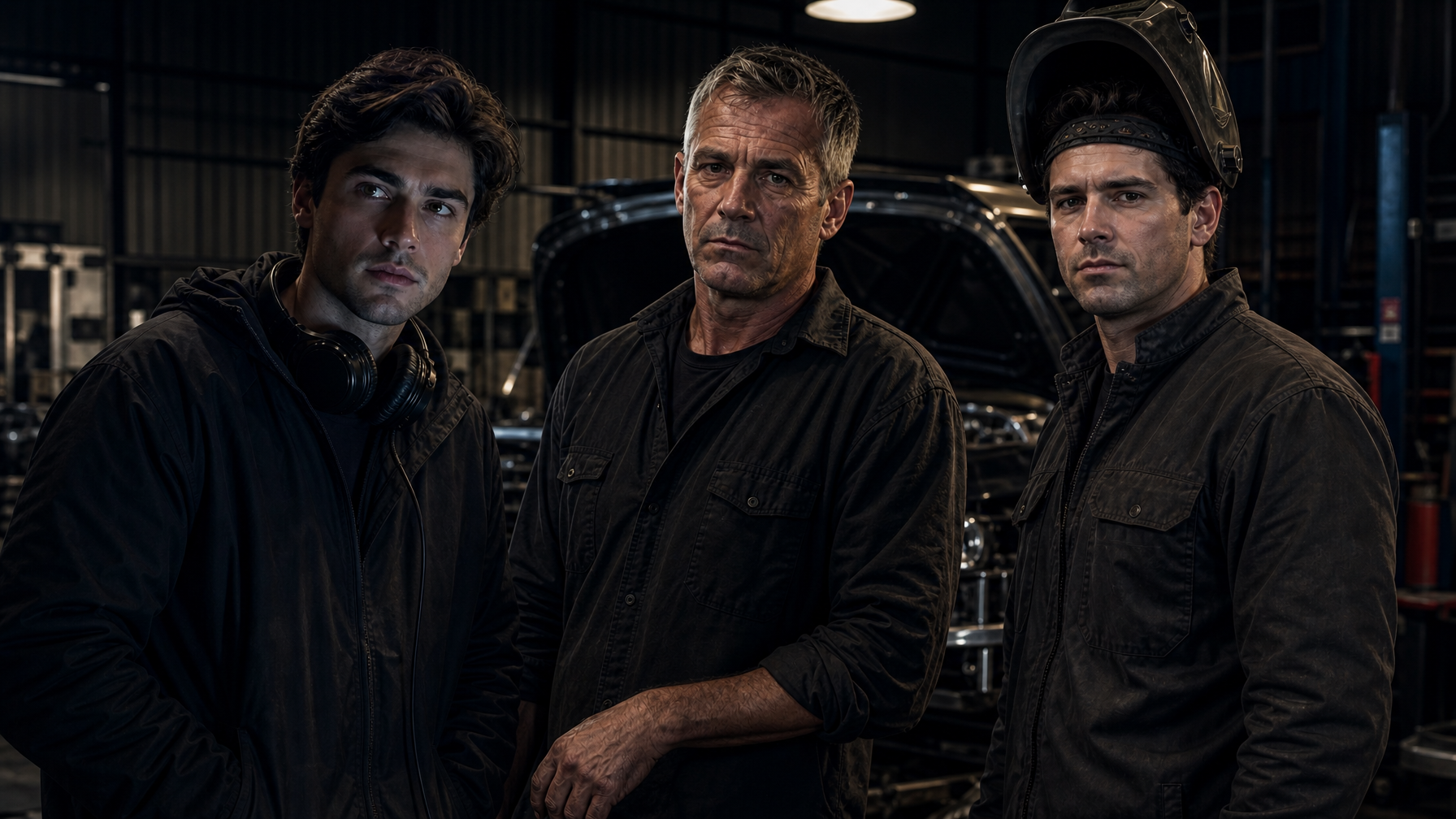
Three People.
Three Disciplines.
One Shop That
Does It Right.
Iron Ridge Motorsports is a family-owned performance shop in Katy, Texas — founded by an engine builder, run by a fabricator and a data analyst, and held together by the same standard: every car leaves better documented and better performing than when it arrived.
Thirty-Five Years of
Building Engines.
One Day He Decided
to Do It Properly.
Jim Harmon spent the first twenty years of his career building performance engines out of borrowed garage space. In the mid-1980s he was working days at a machine shop in Katy and nights on other people's race cars — for the money at first, then because the phone stopped stopping. By the time his sons were old enough to hand him tools, he had a reputation in the Houston motorsport community that had been built entirely by word of mouth. If you needed an engine built correctly — not built fast, not built cheaply, but built correctly — you called Jim Harmon.
What Jim was known for wasn't just the quality of the work. It was the conversation before the work. He would sit down with a customer, understand what the car was being built to do, and then tell them what it actually needed — including the parts they hadn't asked for and the modifications that had to happen before the work they requested would produce the result they wanted. The customers who didn't want to hear it went somewhere else. The ones who stayed became regulars.
Iron Ridge Motorsports opened officially in 2008, after two decades of building out of rented bays and borrowed equipment. By the time the shop opened, both of Jim's sons were in the building: Travis, who had gone deep on fabrication and structural work, and Derek, who had gone deep on data acquisition, tuning, and electronics. Three people. Three disciplines. A complete shop.
Three People.
The Whole Picture.
A founder who builds engines. A son who builds cages. A son who reads the data. The three disciplines that make a complete performance shop.
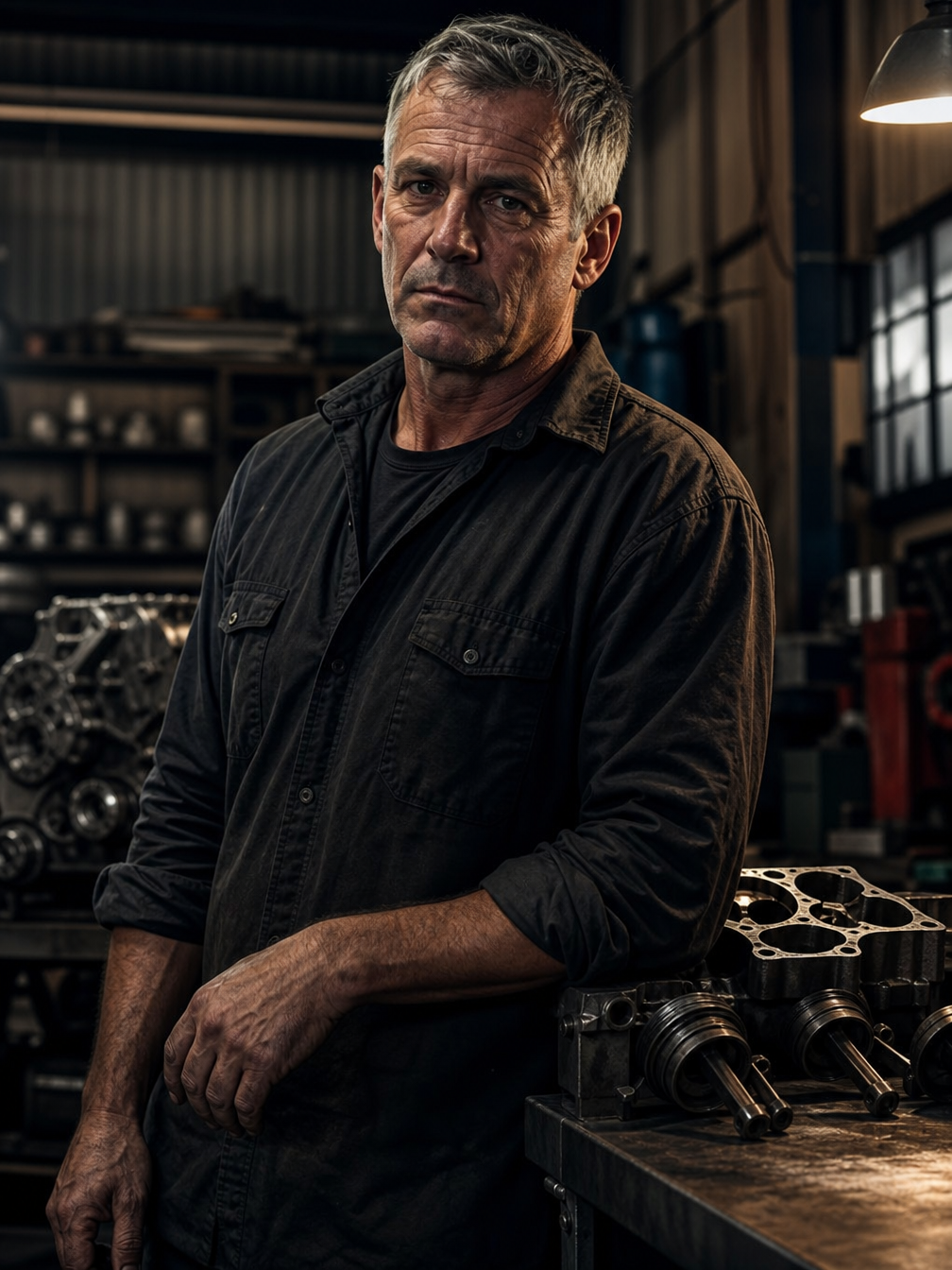
Jim Harmon
Jim started rebuilding engines at 22 with a copy of a factory service manual, a set of basic tools, and access to a friend's garage on weekends. He was not a formal mechanic. He was a machinist by trade who understood tolerances, surface finishes, and the relationship between dimensional accuracy and component life — and he brought that precision to engine building at a time when most performance work in the Houston area was done by feel and habit rather than measurement and documentation.
His first race engine was a small-block Chevy for a friend running regional autocross in 1987. It made more power than anyone expected and ran longer than the rest of the field's engines because Jim built it to a documented spec rather than to tradition. Word spread the way it does in small racing communities — slowly, then all at once.
The discipline Jim is known for inside Iron Ridge is the honesty of the initial consultation. He will tell a customer that the power target they want requires more than the parts they asked for. He will tell them when a platform's stock internals will not hold the boost level being discussed. He will tell them when an engine that "just needs a tune" actually has a bearing problem that needs to be addressed first. These conversations occasionally lose the shop a job in the short term. They have never once cost the shop a long-term customer.
"The most expensive engine build is the one you do twice." — Jim Harmon
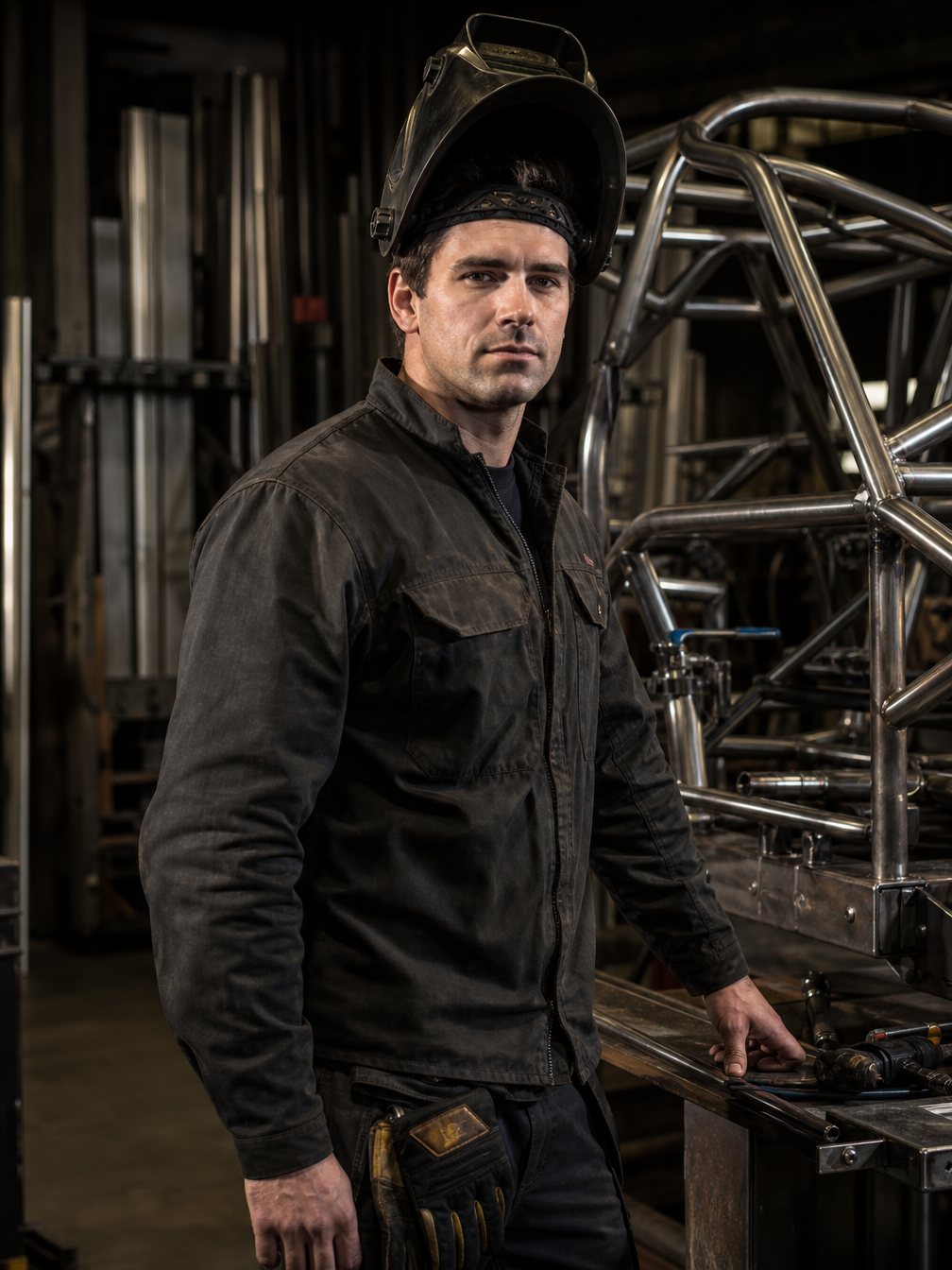
Travis Harmon
Travis grew up in the shop — handing tools, watching teardowns, learning the language of performance work before he had a formal name for any of it. But the part of the work that grabbed him wasn't the engines. It was the structure. How cars were held together. What happened to them in accidents. What the difference was between a cage that looked right and a cage that would actually protect someone.
At 19 he built his first roll cage — for a friend's track-prepared Miata for a NASA HPDE event. The cage failed tech inspection on two points: the main hoop height was 0.5 inches below minimum for the driver's seated height, and one door bar attachment was mispositioned relative to the class rules' specified range. Travis pulled the cage, rebuilt both sections, and passed on the second inspection. He tells that story at the start of every safety build consultation. The two failed inspection points were the education.
Travis spent three years as a chassis technician with a regional road racing team before coming back to Iron Ridge full-time — years of building and rebuilding cages under real racing conditions, learning the failure modes that happen when corners are cut on structural fabrication. He is the one who established the shop's practice of measuring the driver in race gear before the first tube is bent, and who requires an alignment re-check after every corner balance session. If you ask him whether a bolt-in cage is adequate for serious track use, he'll tell you no and explain exactly why.
"The cage doesn't know how fast the car was going." — Travis Harmon

Derek Harmon
Derek is Jim's younger son, and the most formally data-driven person in the building. Where Jim reads an engine by measurements and experience and Travis reads a chassis by geometry and feel, Derek reads a car by its data — and he has been doing it since before he could legally drive.
At 17 he bought an AiM Solo data logger for the family's track car with money from a summer job. Within three months he was identifying driver-technique patterns and car-behavior anomalies in the data that no one else in the regional autocross community was looking for. He started correlating lateral acceleration traces with corner entry techniques. He built a spreadsheet-based analysis system for track days that became a shared resource in the local HPDE community before he turned 20.
His path into tuning was a natural extension of the data work — ECU calibration is, at its core, building accurate lookup tables for what the engine needs at every operating condition, and Derek approached it the way he approaches everything: systematically, with documentation, verifying each table against measured data rather than against assumptions. The documentation culture at Iron Ridge is substantially his fingerprint. The practice of recording bearing clearances, generating alignment printouts with before and after values, delivering calibration files with every tune — these disciplines became systematic because Derek insisted that the shop should be able to explain, with data, exactly why every car it touched performed better than when it arrived.
"If you can't explain it with the data, you don't actually know what happened." — Derek Harmon
The Honest Conversation
Is the Most Valuable
Thing We Offer.
The performance industry has a well-documented tendency to tell customers what they want to hear. Power numbers are quoted without discussing what the platform's internals will hold. Tunes are delivered without discussing what the car was actually doing on the dyno — not just the peak numbers, but the knock counts and fuel trims that tell the real story.
We don't do this. Not because we're unusually principled — though we are — but because it doesn't produce good outcomes for anyone. Our philosophy has three parts that don't vary.
If the build as requested won't produce the result as described, that conversation happens in the consultation. If the platform's internals won't hold the target power, you hear it before anything is ordered. If the fuel system needs to change before the forced induction makes sense, that's in the scope. Not as a way to sell more services — as a way to produce a build that actually does what the customer needs it to do.
Every critical measurement during an engine build. Every alignment value before and after. Every dyno session on paper. Every calibration file in the customer's hands. The documentation is not marketing material. It's the record of what was done and what it produced — and it belongs to the customer, permanently. This discipline came from Derek insisting that the shop should be able to explain, with data, every result it produced. It became the standard for the whole shop.
Engine builds go on the dyno. Coilover installs get a post-install alignment. Safety builds get signed off with the driver in the car. The car does not leave until the verification step confirms that the work produced the intended result. This is not a policy we invented. It's the minimum standard of professional performance work — and it's the step most shops skip because it costs time and requires accountability.
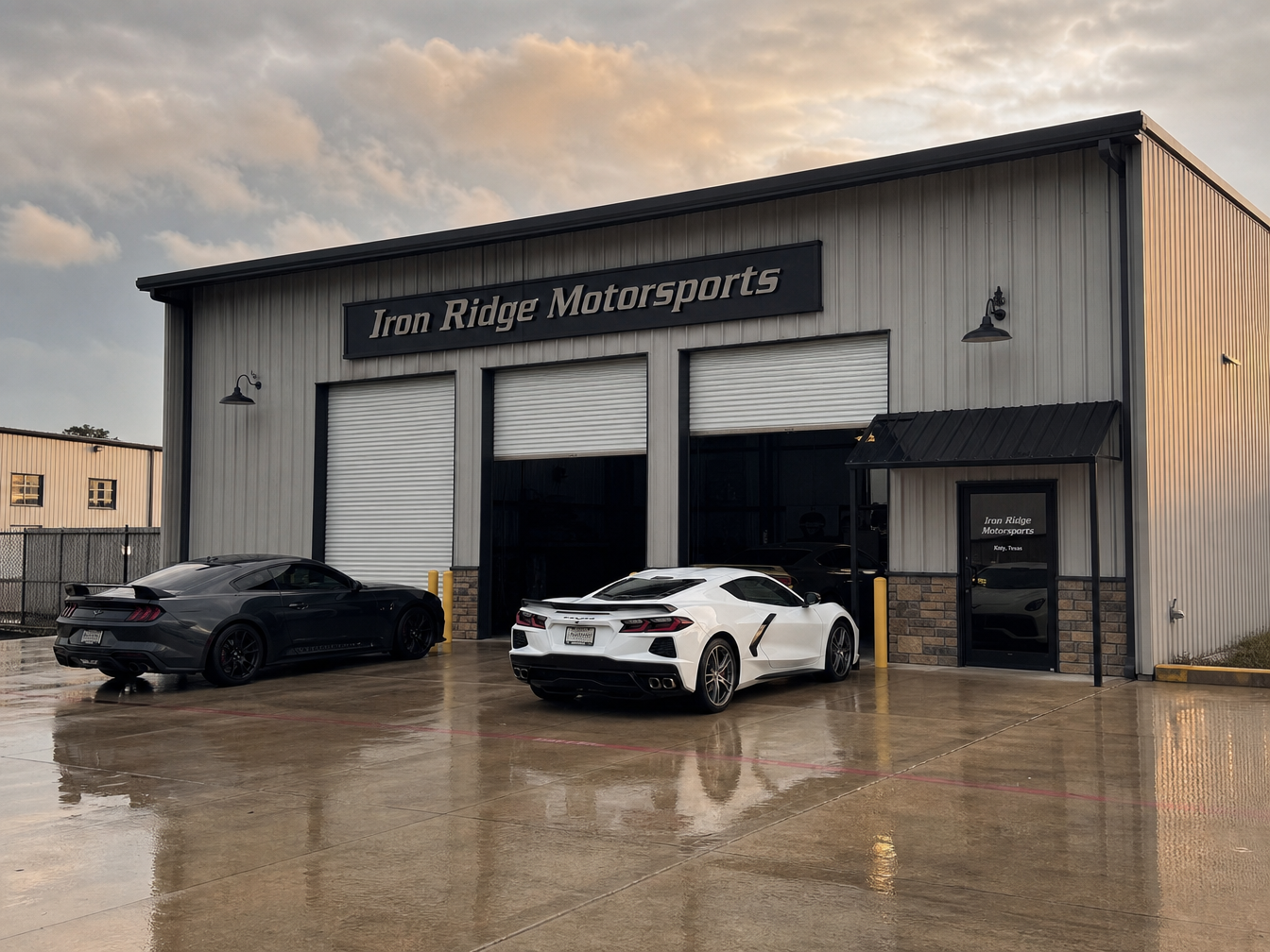
Katy, Texas.
Built for the Work.
Iron Ridge is in Katy — 30 minutes west of downtown Houston, close enough to the city that most of Houston's motorsport community is within reasonable reach, far enough that the shop has the space to do serious work without the overhead of an urban location.
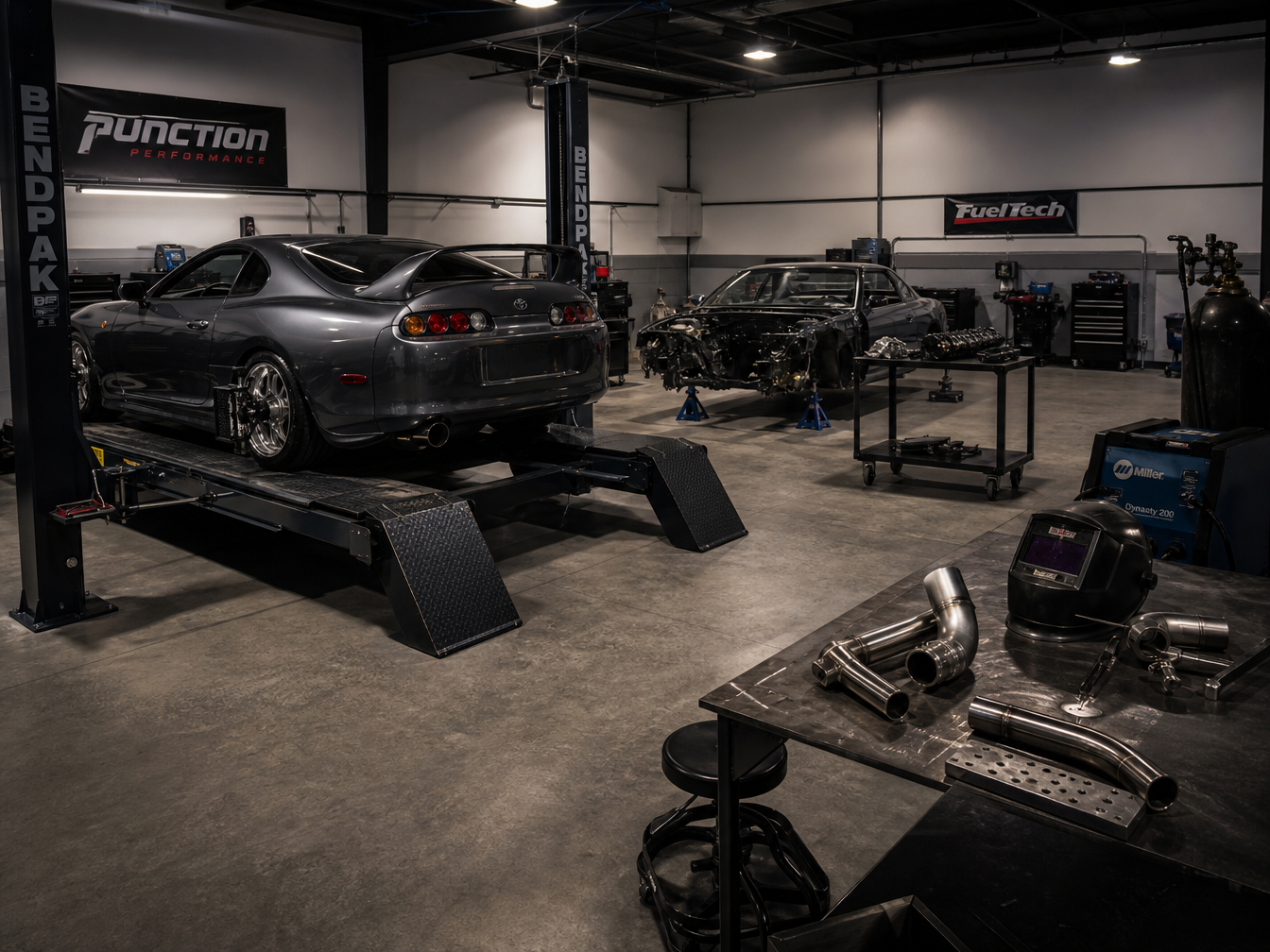
The building was designed for performance shop use: a machine shop floor capable of supporting a full engine build program, a fabrication bay with dedicated welding stations for both MIG and TIG work, a chassis dyno cell, an alignment rack, and the corner balance platform for everything from track day prep to full competition corner weight optimization.
The shop serves customers from across the greater Houston metro. MSR Houston is 45 minutes. COTA is three hours. Eagles Canyon and Motorsport Ranch Cresson are within a half-day's drive. We know those tracks, we know what they demand from a car's preparation, and we build and tune accordingly. The phone number is on every page of the site. Jim answers it.
Every Service We Offer
Is a Discipline
We Actually Know.
Three people. Six services. Every one of them done in-house by the person who owns that discipline.
Small-block to big-block, forced induction to naturally aspirated, street engines to competition builds. Every build measured, documented, and dyno verified before it leaves.
Engine Build Services →Turbocharger and supercharger installation, sizing, and integration. Jim specifies and installs the hardware. Derek calibrates every FI build on the dyno. No forced induction build leaves without a pressure check and a verified dyno sheet.
Forced Induction Services →HP Tuners, EFILive, COBB, SCT, Haltech, AEM. Every platform we tune, we understand at the hardware level. The calibration is specific to the car — not pulled from a database.
Dyno Tuning Services →Coilover installation, performance alignment, corner balance. Travis handles the corner balance platform. Derek verifies the geometry data. Every suspension build leaves with a documented alignment printout.
Suspension Services →DOM and chromoly, MIG and TIG, SCCA and NASA compliant, mandrel-bent, full-penetration welds, driver-specific geometry. The cage doesn't get signed off until the driver is in it.
Safety Fabrication Services →Pre-event brake service, inspection, performance alignment, and the honest assessment of what the car actually needs before it goes on track. We know MSR Houston, COTA, Eagles Canyon, and Motorsport Ranch Cresson. We prep accordingly.
Track Day Prep Guide →One Family.
One Shop.
The Work
Speaks for Itself.
When Jim builds the engine, Derek tunes it, and Travis builds the cage, every decision in each discipline was made with full knowledge of the others. That's not something you can replicate by coordinating between three different shops. The tune knows what compression ratio the engine was built to. The cage knows what the car makes. The suspension setup knows how the power is delivered.
We tell you what the car needs, not what's easiest to sell. If that means the consultation ends with a scope that's larger than you expected, it also means the build ends with a car that does what it was supposed to do. Jim has been having that conversation for 35 years. He's gotten efficient at it.
Every car leaves with documentation. The dyno sheet, the calibration file, the alignment printout, the build record. The paper trail is part of the job — it came from Derek's insistence that the shop should be able to explain, with data, every result it produces. It's now the standard for everything that leaves the shop.
Jim answers the phone. Travis answers questions about the cage. Derek answers questions about the tune. The person who did the work is the person you talk to — not a service writer, not a front desk, not someone who will relay the question to the technician and call you back. This is a family business. The accountability is personal.
Ready to Start
the Conversation?
Tell us what you're driving and what you want it to do. Jim takes it from there.
Tell Us What
You're Building
Doesn't matter where you are in the process — early idea or parts already ordered. Tell us the car, the goal, and where it is now. Jim responds to every inquiry personally.
We respond to every inquiry within one business day. No deposit required. No pressure. Jim reads every one of these himself.

IRON RIDGE MOTORSPORTS


